Creative Operations · 2026-04-27 · 6 min read
Collecting comments is easy. Turning them into one fair, traceable and final decision is the creative-operations work that protects time, quality and customer trust.
Many creative projects do not fail because the team lacks ideas or technical skill. They lose momentum because feedback arrives from several channels, reviewers apply different standards and nobody has been named to make the final decision.
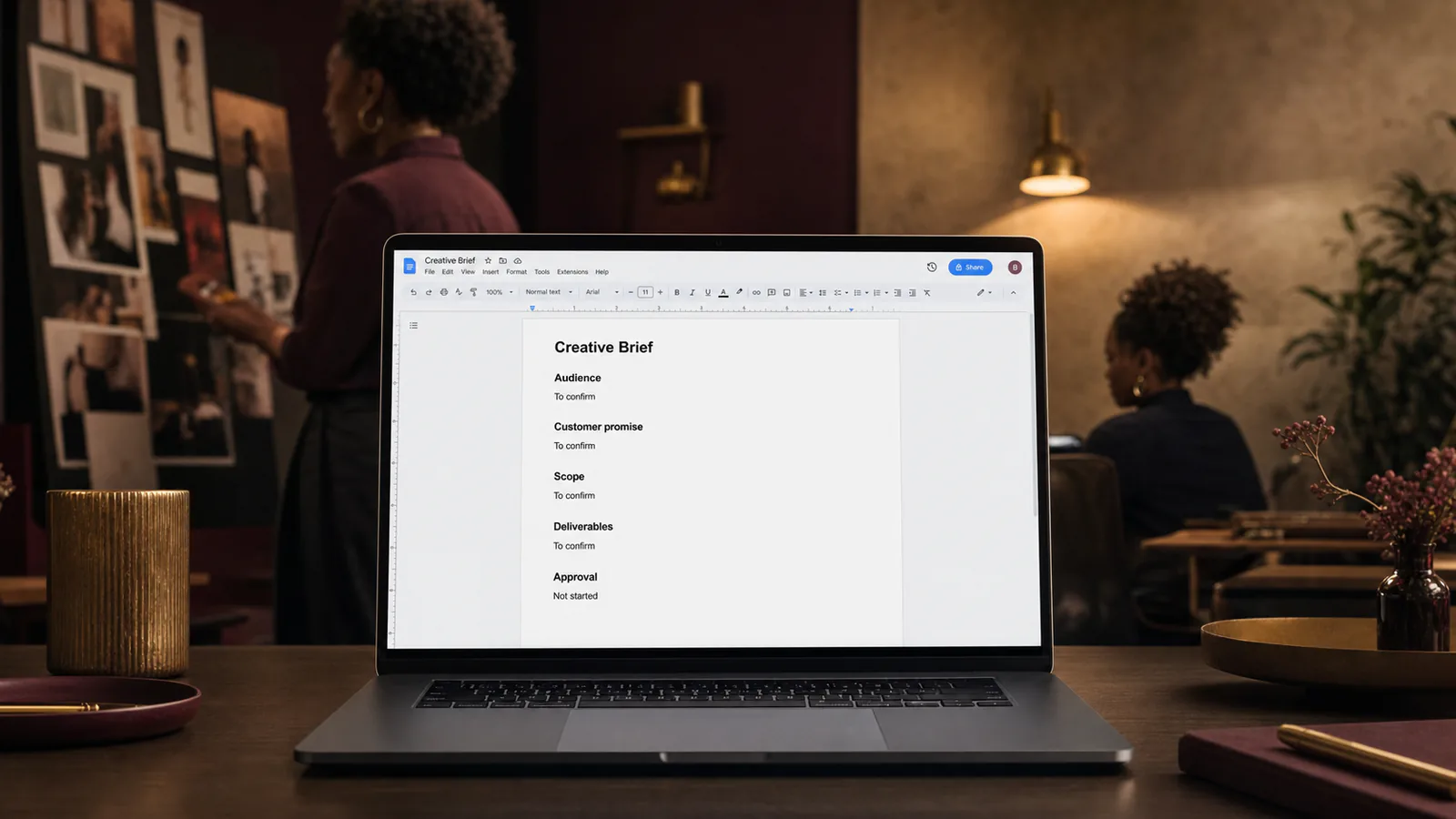
A shared document full of comments is not yet a workflow. The project still needs a review purpose, the right reviewers, one consolidated instruction, controlled versions and an approval that genuinely closes the stage.
I organise feedback as a decision process. That protects contributors from contradictory direction, gives stakeholders a clear opportunity to influence the work and helps the customer understand when an asset is ready to move forward.
Key takeaways
- Every review round needs a defined question and decision owner.
- Invite reviewers for a specific responsibility, not simply because they are senior.
- Consolidate comments before sending instructions to contributors.
- Use version and approval controls so settled work does not reopen invisibly.
- Close the review with a recorded decision, remaining actions and next milestone.
Section 01
I define what the review is meant to decide
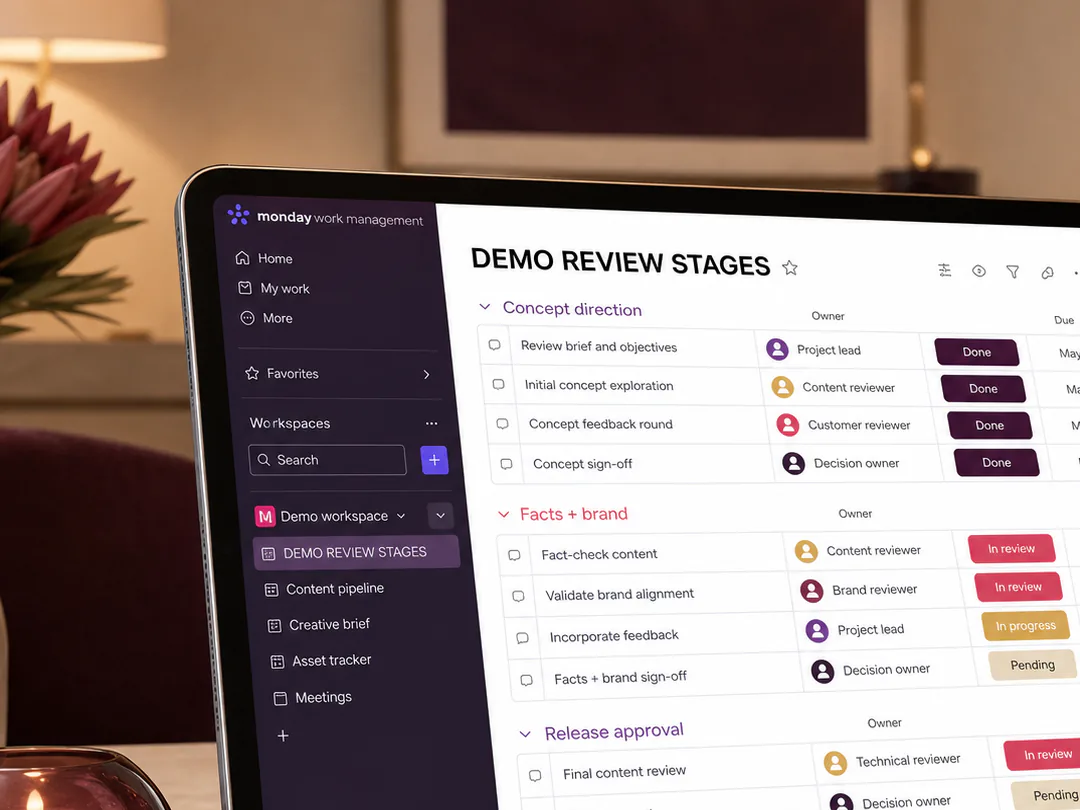
A concept review, factual review, brand review, technical check and final approval are different activities. I state the purpose of the round so stakeholders know whether they are choosing a direction, checking accuracy or confirming release readiness.
This prevents early exploratory work from being judged as a finished asset and prevents final approval from becoming another open brainstorming session.
Section 02
I select reviewers by responsibility
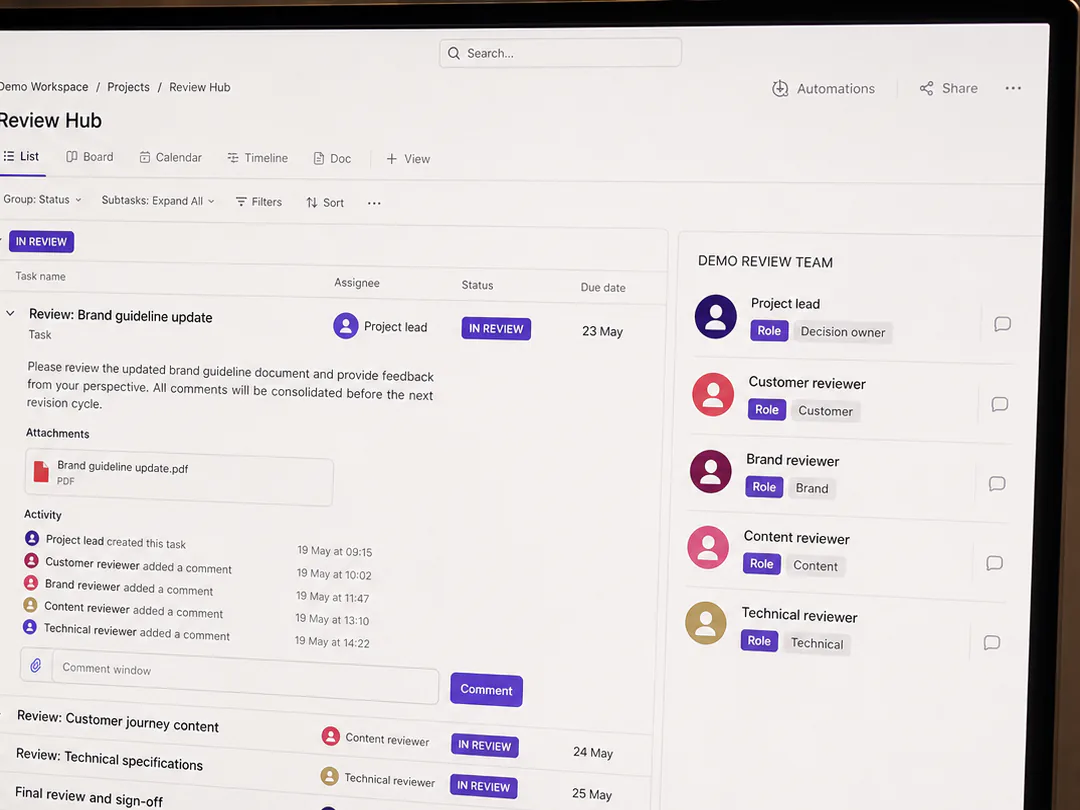
I identify who owns the customer requirement, content accuracy, brand, technical delivery, legal or regulatory concerns and final release. Not every person needs to comment on every detail.
Clear reviewer roles reduce duplication and make it easier to understand which feedback is mandatory, advisory or outside the agreed scope.
Section 03
I use one channel and one review window
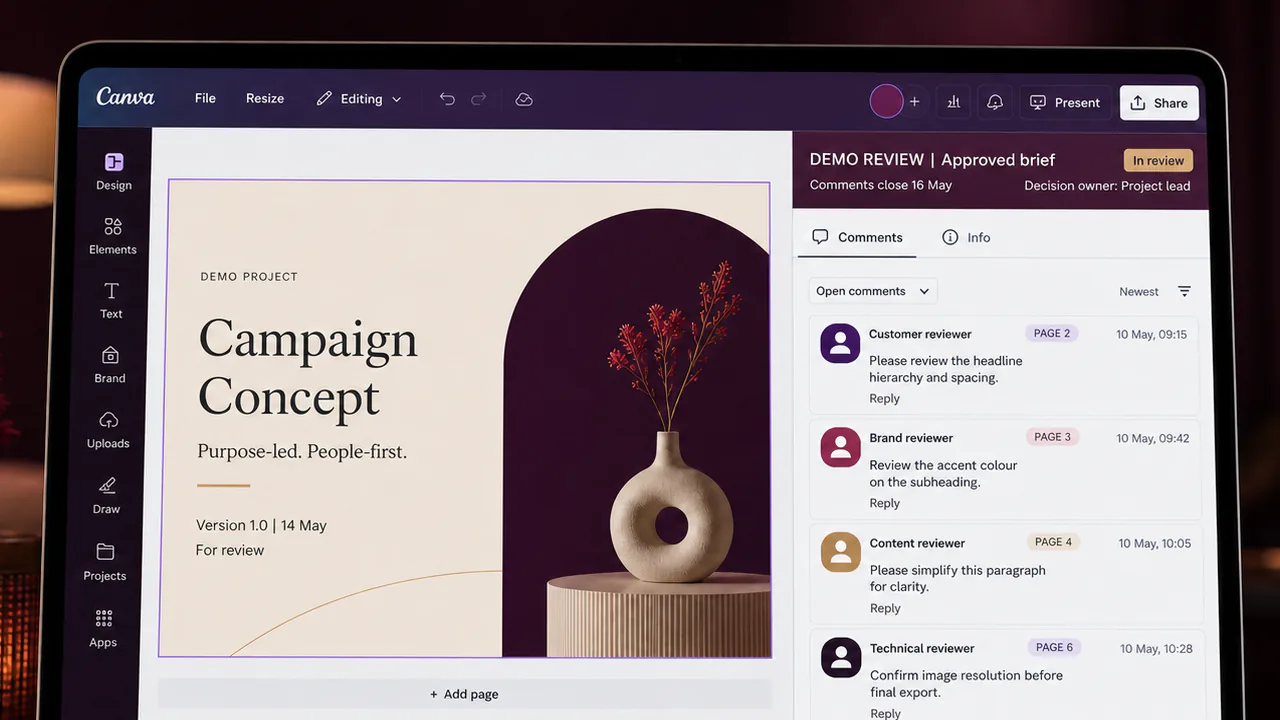
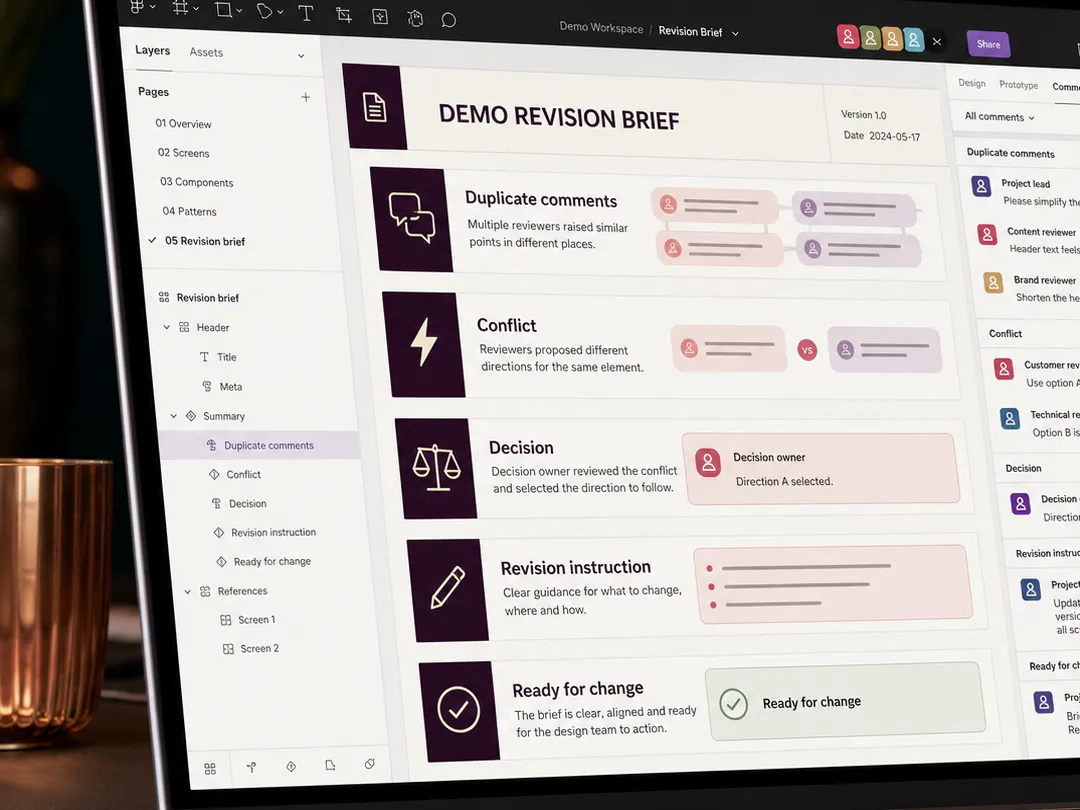
Comments spread across email, messaging, calls and marked-up files create gaps and repeated work. I establish one review location, a deadline and a method for late or urgent input.
The shared window also gives reviewers visibility into one another’s comments, which can surface conflicts before the contributor receives them.
Bring the moving parts into one delivery process.
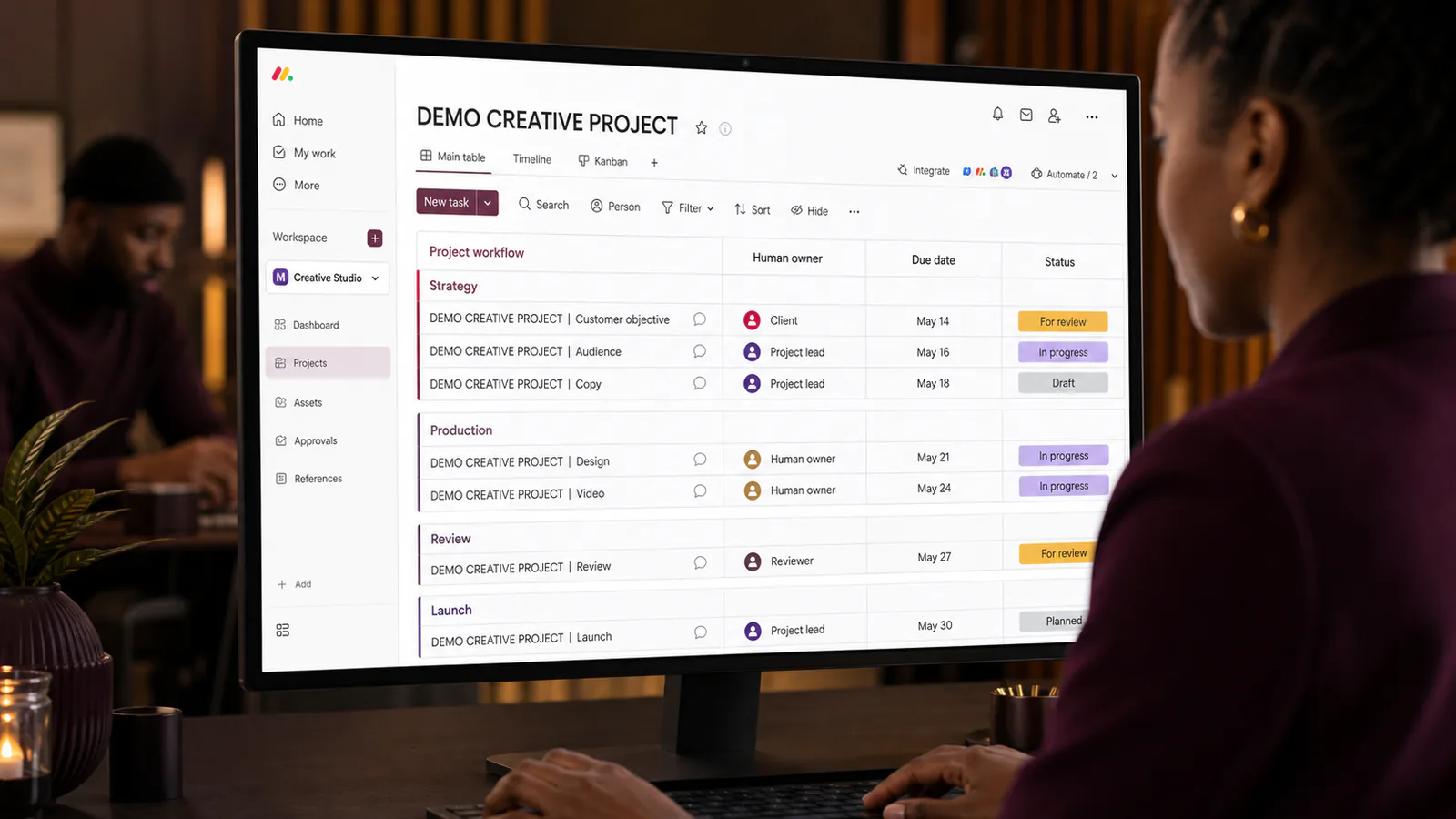
I can design or recover a creative review process by defining review stages, stakeholder roles, feedback rules, version status, approval evidence and the handoff from one stage to the next.
Section 04
I consolidate comments into an actionable instruction
I group duplicate points, clarify vague language, test requests against the brief and flag conflicts for the decision owner. The contributor should receive a coherent change list rather than having to negotiate between stakeholders while doing the work.
Where a request changes the agreed outcome, format, deadline or quantity, I identify it as a scope decision rather than hiding it inside ordinary feedback.
Section 05
I protect versions and decision history
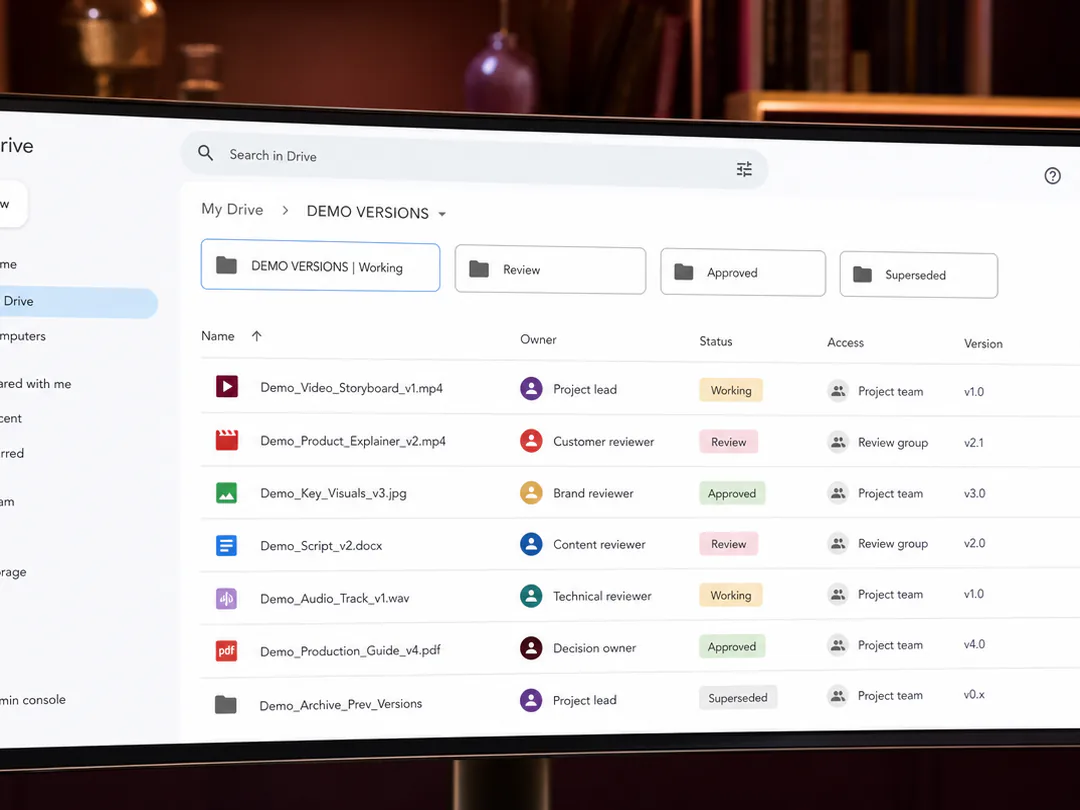
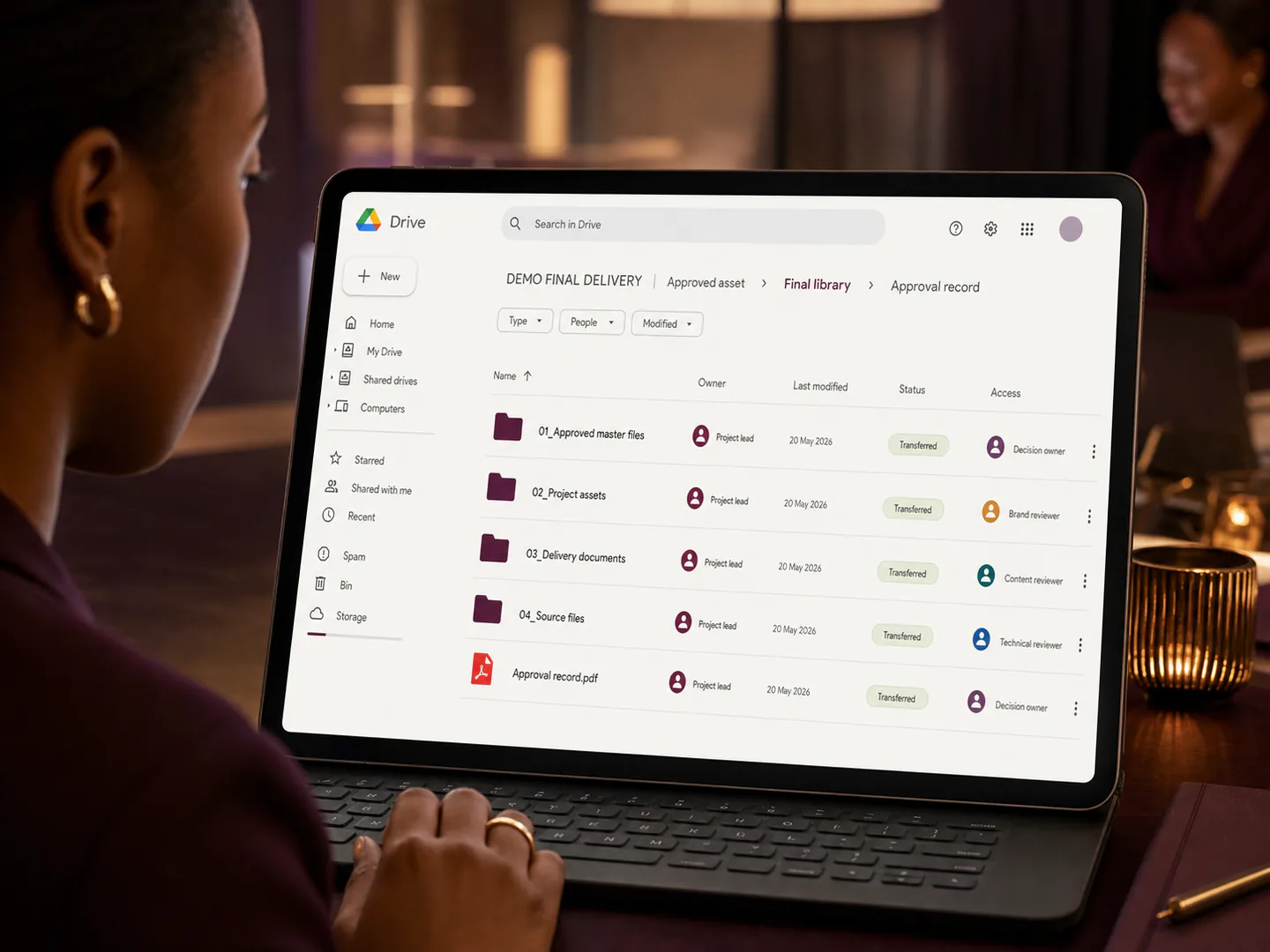
Every review file needs a clear status: working, submitted for review, changes requested, approved or superseded. I keep the approved reference and record which comments were accepted, declined or deferred.
This prevents an old file from returning to the workflow and gives the team evidence when a settled decision is questioned later.
Section 06
I distinguish approval from silence
A missed deadline is not automatically approval unless the governance has explicitly established that rule and stakeholders understand it. For material customer-facing work, I require a named approval or a documented escalation route.
The decision should identify the approved version, any conditions and the person taking responsibility for release.
Section 07
I close the round and prepare the next stage
I communicate what was decided, what remains open, who owns each action and when the next milestone begins. Approved assets are moved into the correct delivery location rather than left among review drafts.
A clean review close protects the customer from accidental publication of the wrong version and gives contributors confidence that the work can progress.
Turn this insight into an organised next step.
Feedback becomes useful when it leads to a clear decision. The project manager’s role is not to remove stakeholder input, but to organise that input so the team can act without confusion and the customer can trust the approved result.
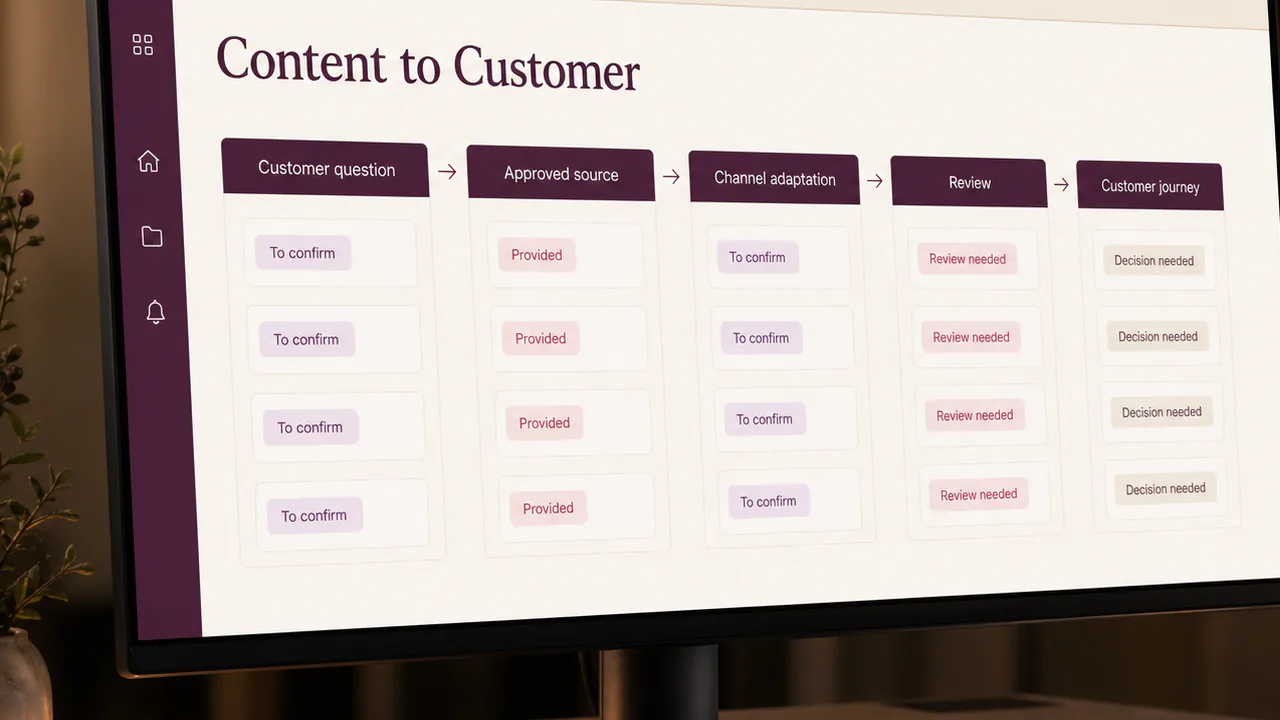
When review cycles keep repeating or contributors receive conflicting direction, I can help establish one visible route from comment to decision, revision, approval and final handover.
Start with the short version: the outcome, intended audience, deadline, available assets, stakeholders and the delivery problem that is currently blocking progress.
Sources and related reading
- PMI — Step Up: Redefining the Path to Project Success with M.O.R.E. (December 2025) — Project success increasingly depends on ownership, perception management, reassessment and a wider view of value.
- Adobe — 2026 AI and Digital Trends Report — Customers give promotional content only seconds to earn attention and still expect AI-assisted experiences to feel human and brand-aligned.
- Google Search Central — Creating Helpful, Reliable, People-First Content — Useful content should be created primarily for people; meaningful disclosure can explain substantial automation or AI assistance.