Creative Operations · 2026-01-12 · 6 min read
A brief is not complete because it contains a slogan, a deadline and a list of assets. It is complete when the team can understand the customer outcome, make responsible decisions and recognise an acceptable delivery.
Creative projects often begin with energetic language: make it modern, make it viral, tell our story, launch quickly. Those phrases can start a conversation, but they cannot safely carry a team through production, review and approval.
I treat the brief as a customer promise. It should explain what will change for the intended audience, what the team must deliver, which constraints matter and who has authority to accept the work. Without that clarity, the project usually pays later through rework, conflicting feedback and missed expectations.
Before activity begins, I settle seven practical questions. They create enough structure for creativity to move with confidence rather than being repeatedly redirected.
Key takeaways
- A brief should define the audience outcome before describing the output.
- Deliverables need formats, quantities, channels and acceptance criteria.
- The team must know which assets and information already exist and which are still missing.
- Feedback and approval responsibilities should be agreed before the first review.
- A clear brief protects both creative freedom and the customer’s investment.
Section 01
Question one: what must be different for the audience?
I ask what the audience should understand, feel, decide or do after encountering the work. “Create a campaign” is an output request. “Help first-time customers understand the service and feel confident enough to enquire” is a project outcome.
That outcome guides the message, content hierarchy, format and measurement. It also gives the team a reason to reject attractive ideas that do not serve the customer journey.

Section 02
Question two: what exactly must be delivered?
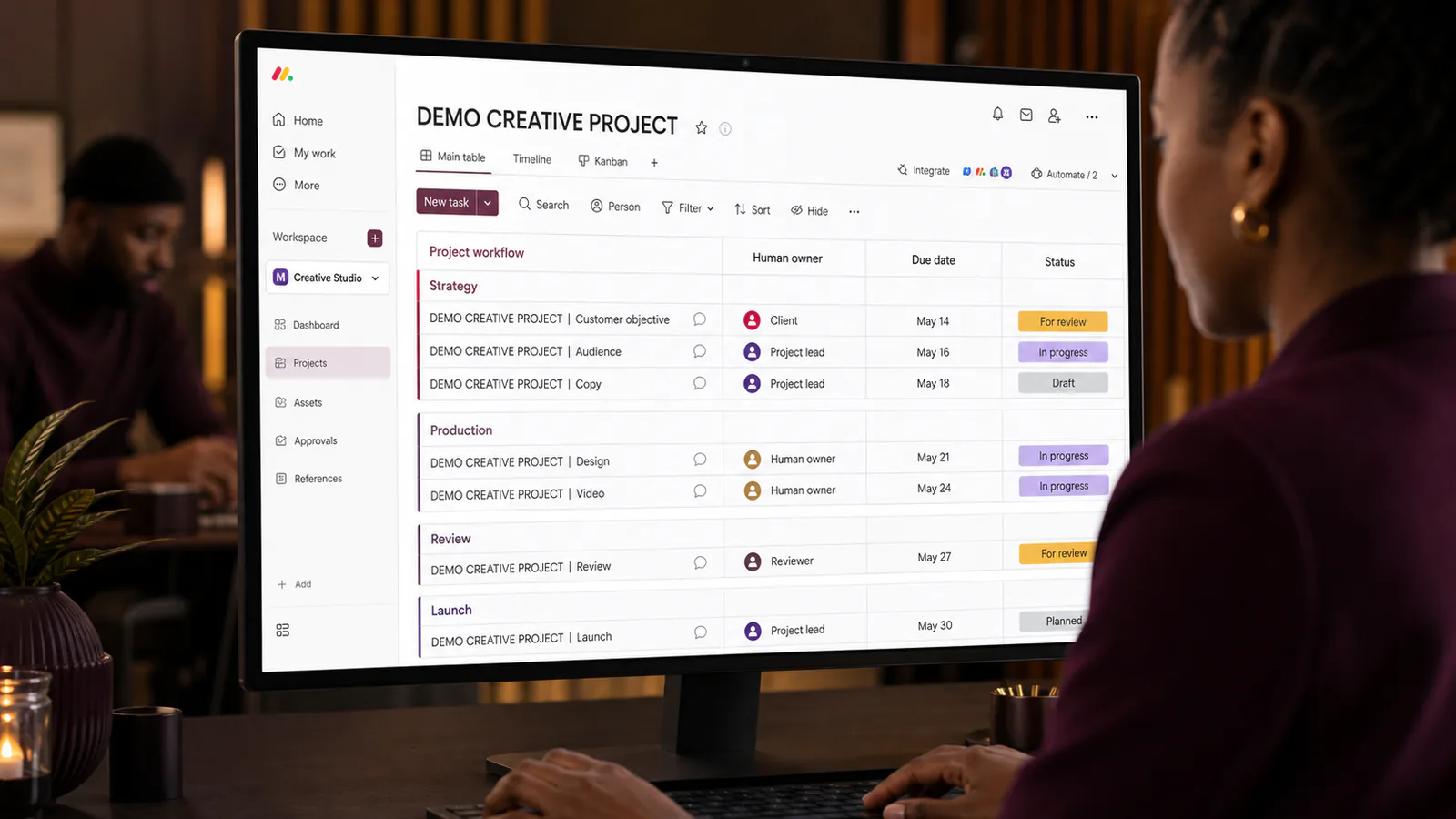
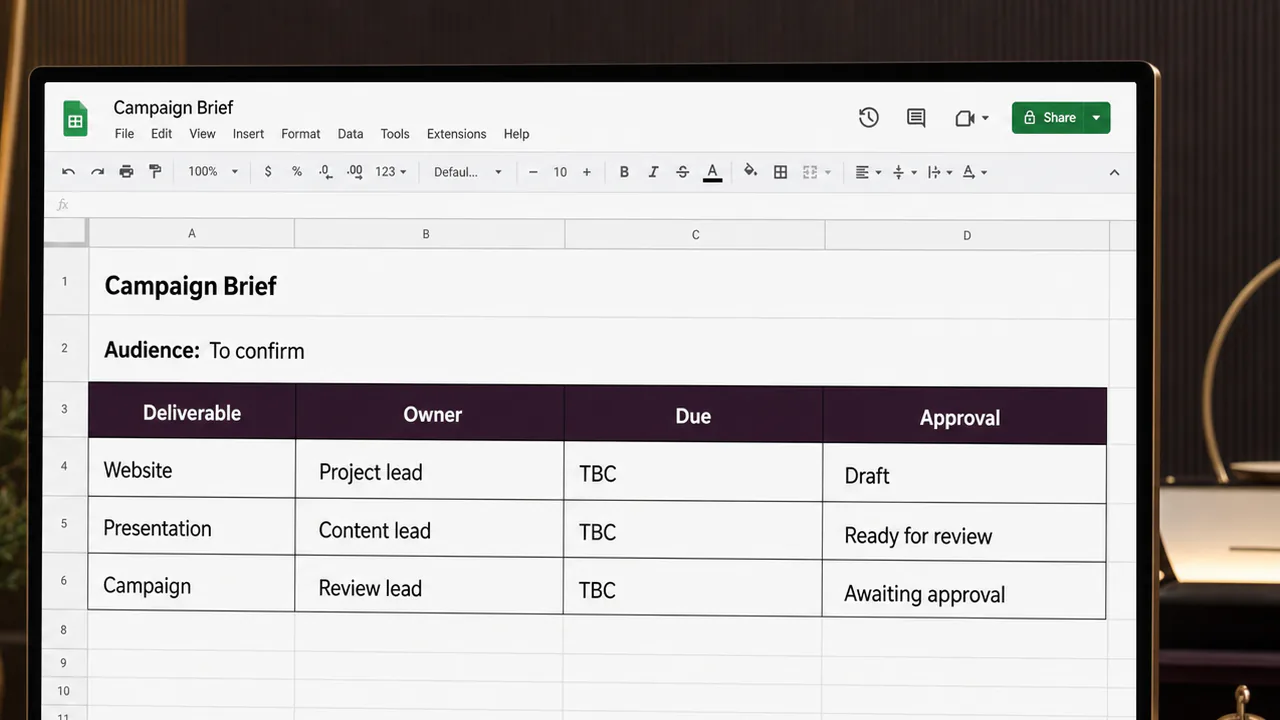
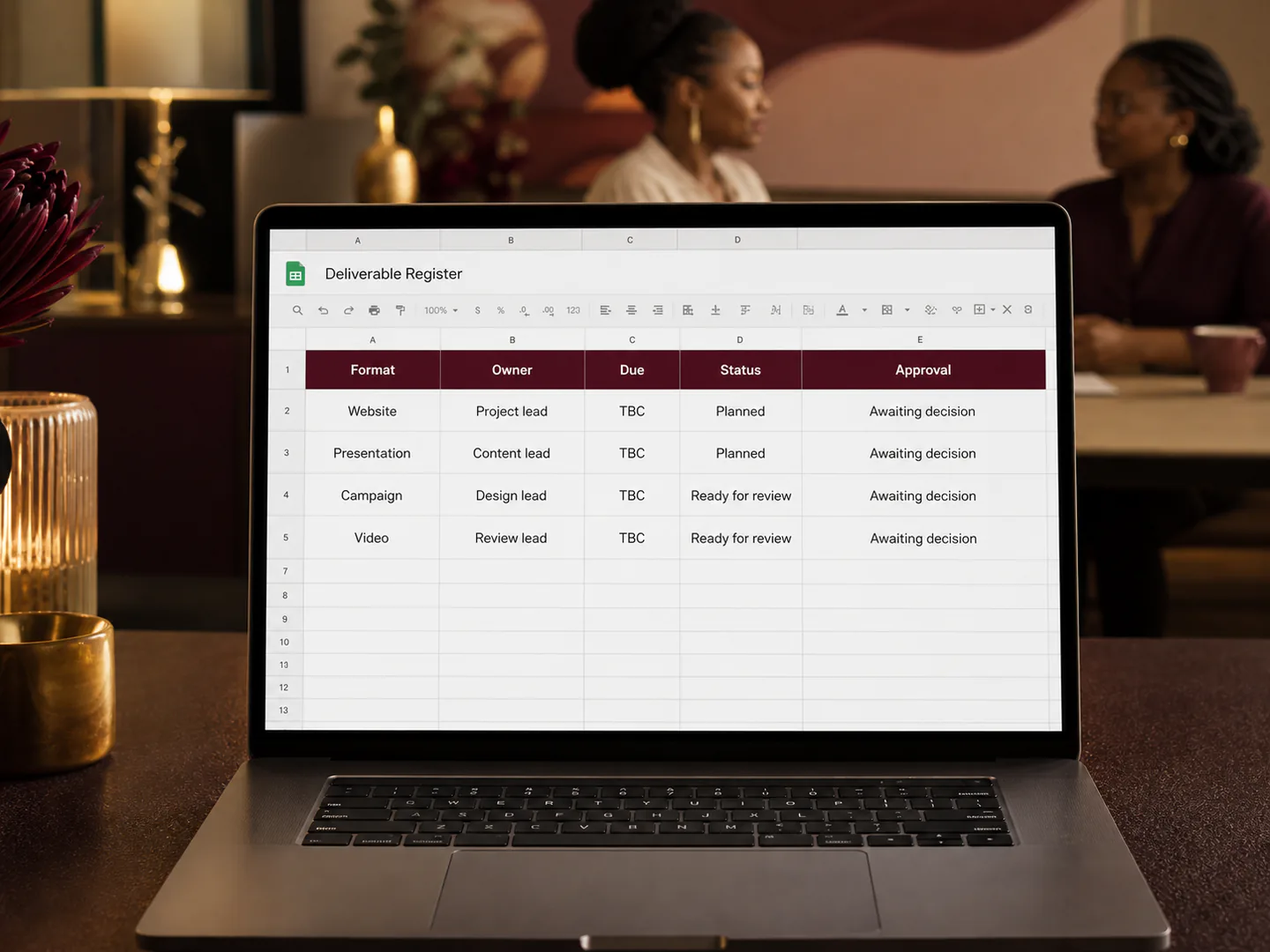
I define the asset list in operational terms: page copy, presentation, short video, campaign variants, social formats, captions, thumbnails, source files or handover notes. Each item needs an owner, format, destination and deadline.
A phrase such as “social media content” can hide dozens of assumptions. A defined deliverable list prevents scope from expanding silently while still allowing formal changes when the customer’s needs genuinely evolve.
Section 03
Question three: what evidence and assets may the team rely on?
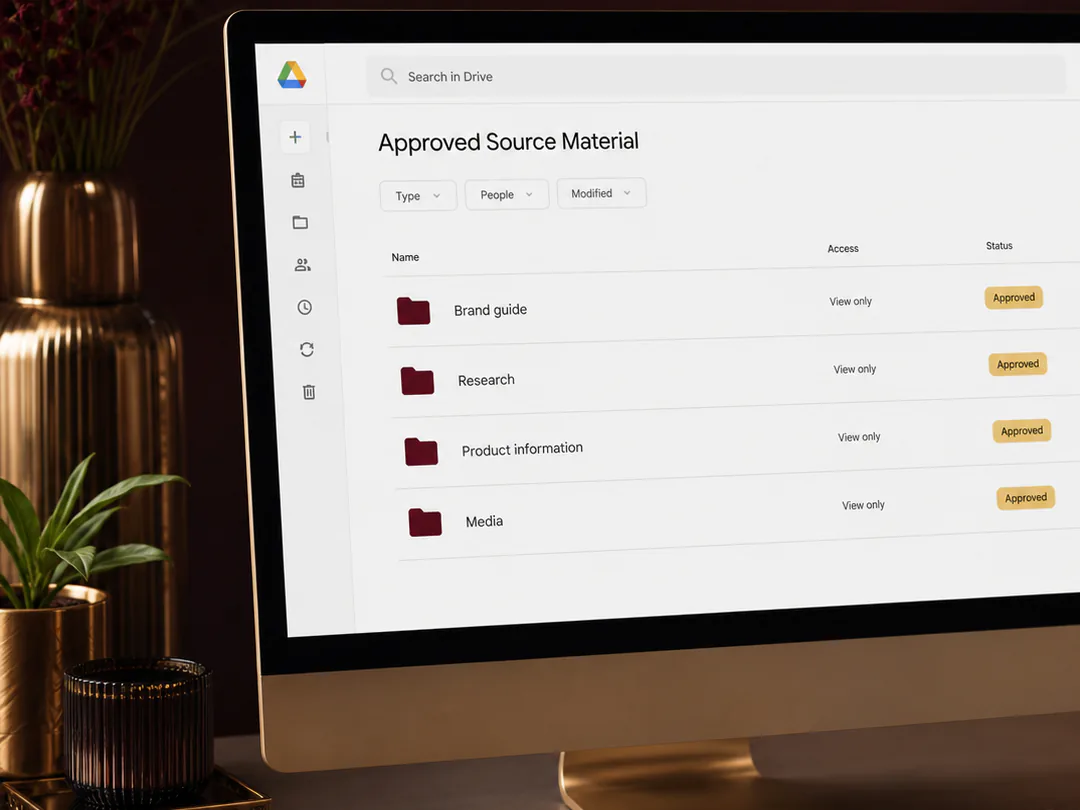
The brief should name approved source material, brand guidance, customer research, existing content, product information, legal wording and available media. I also record what is missing and when it must arrive.
This matters even more when AI-assisted tools are used. A tool can structure or transform supplied information, but it should not invent a customer promise, product fact or testimonial that the organisation cannot verify.
Bring the moving parts into one delivery process.
I can turn an open-ended creative or digital request into a practical brief, deliverable register, responsibility map, review route and acceptance checklist before avoidable rework begins.
Section 04
Question four: who owns each decision?
I identify the person who may approve scope, content, brand, legal claims and final release. Where those decisions belong to different people, the sequence must be visible.
The purpose is not hierarchy for its own sake. It is to prevent a late stakeholder from reopening settled decisions because their role was never recognised in the workflow.

Section 05
Question five: how will review work?
I agree the number of review rounds, the format for feedback, the deadline for comments and the method for resolving conflicts. Feedback should refer to the brief, audience and acceptance criteria rather than becoming a collection of unrelated preferences.
A consolidated review protects the customer from paying for the same issue twice and protects contributors from receiving contradictory instructions through separate channels.
Section 06
Question six: what could block delivery?
I ask about unavailable people, unconfirmed dates, missing permissions, platform limits, data sensitivities, third-party dependencies and launch conditions. Naming a risk does not create negativity. It creates room to respond while options still exist.
I record the owner and response for each material risk. The customer should know which decisions are time-critical and what the effect of delay will be.
Section 07
Question seven: what will count as accepted?
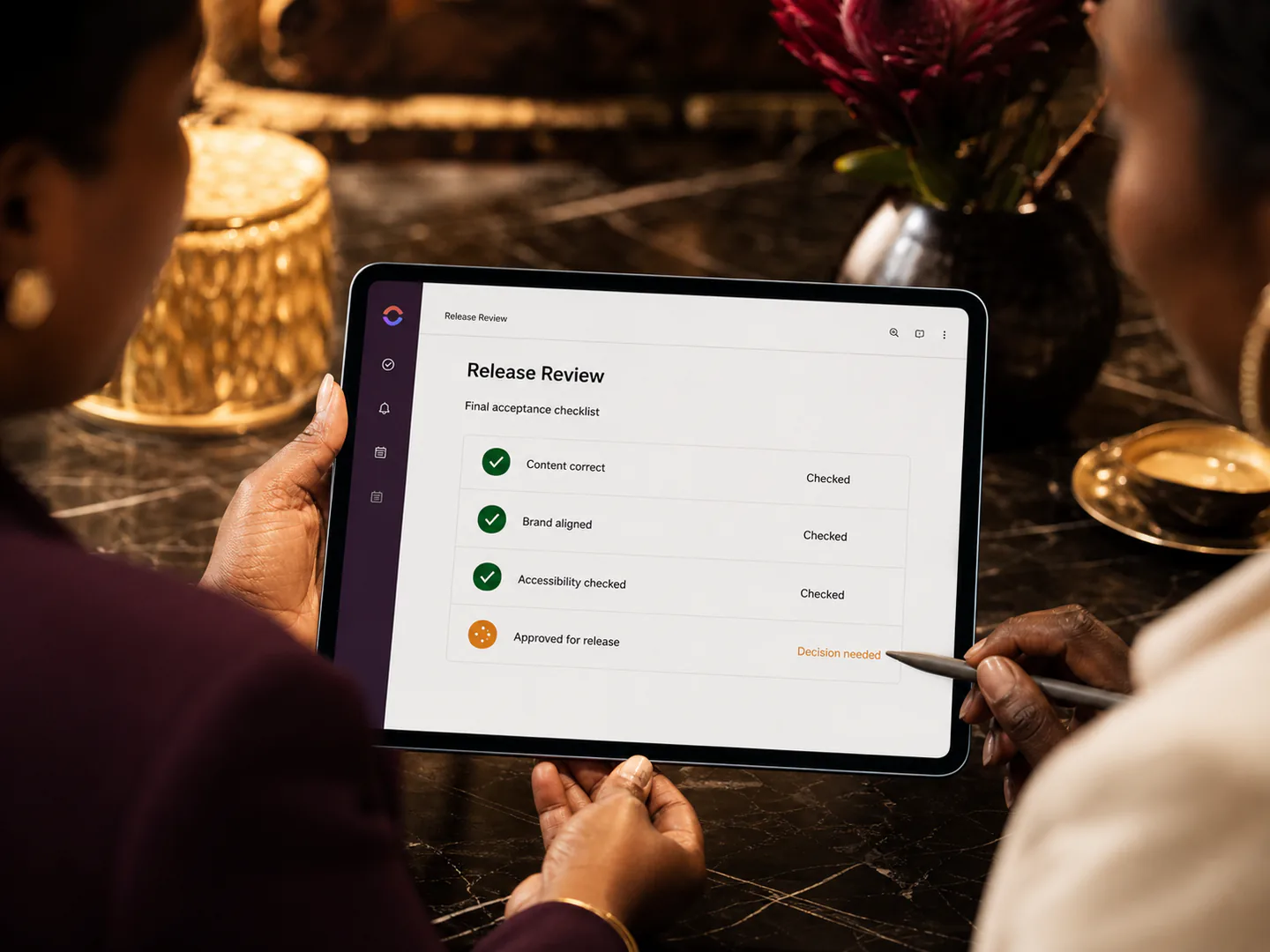
The brief needs a completion test: correct message, approved content, required formats, working links, accessible presentation, technical quality, organised files and documented approval. These conditions should be proportionate to the project, but they should not remain implicit.
Acceptance criteria make the final conversation fair. The customer can see that the agreed promise has been met, and the team can close the project without endless informal changes.
Turn this insight into an organised next step.
The strongest brief does not restrict creativity. It protects the space in which good creative decisions can be made. It gives contributors a clear problem, gives stakeholders a fair review process and gives the customer a dependable route to the intended result.
When a project has already started without this clarity, the brief can still be recovered. I can help consolidate requirements, identify unresolved decisions and reset the work around a shared outcome.
Start with the short version: the outcome, intended audience, deadline, available assets, stakeholders and the delivery problem that is currently blocking progress.
Sources and related reading
- PMI — Step Up: Redefining the Path to Project Success with M.O.R.E. (December 2025) — Project success increasingly depends on ownership, perception management, reassessment and a wider view of value.
- Google Search Central — Creating Helpful, Reliable, People-First Content — Useful content should be created primarily for people; meaningful disclosure can explain substantial automation or AI assistance.