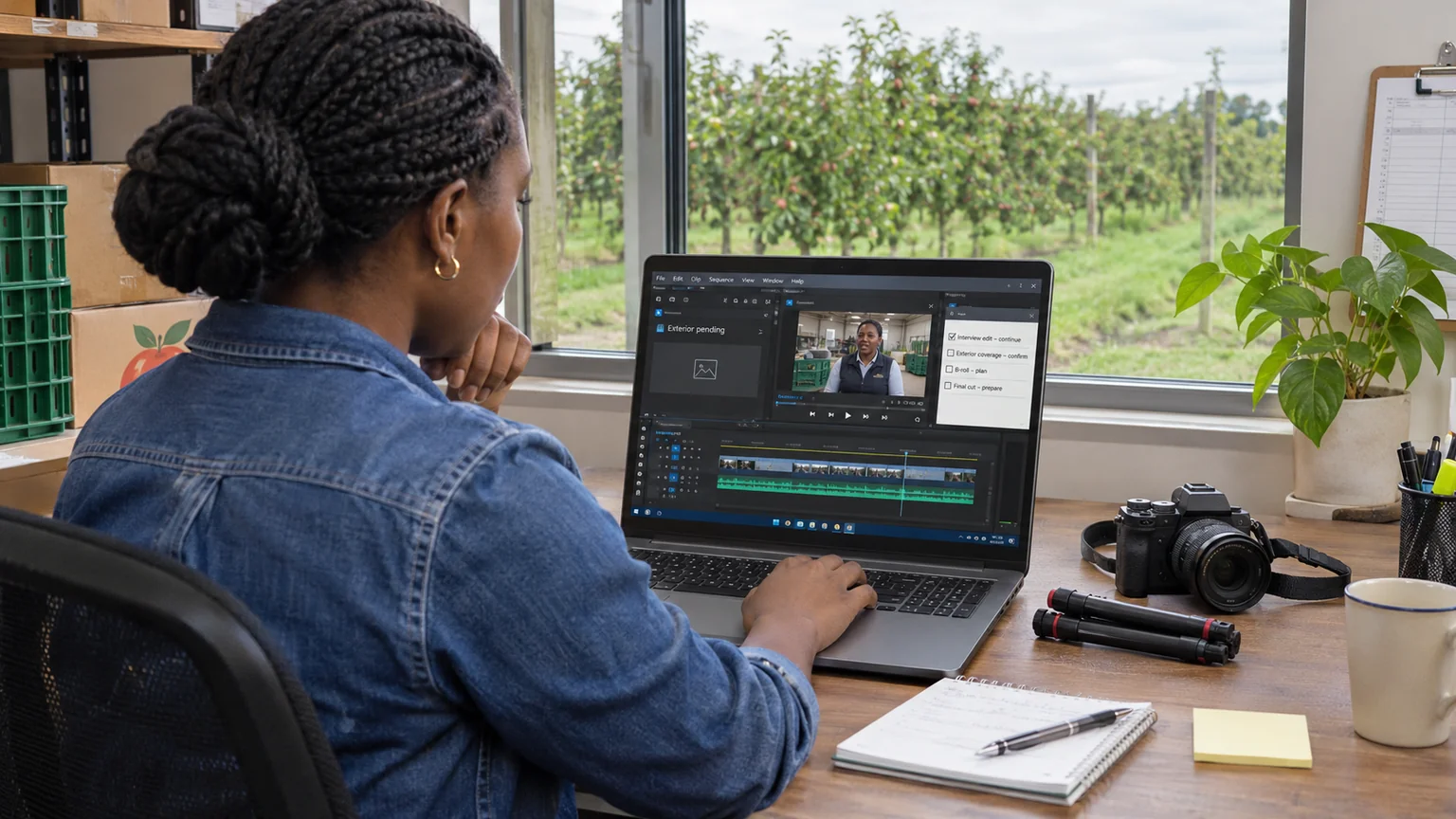
A field-production date is a proposal until the people responsible for the location confirm that the activity can happen. I would not treat an attractive forecast icon as approval to bring a camera crew onto a farm. Weather information, site access, the agricultural programme and the production brief answer different questions.
For this example, imagine a fictional agricultural business commissioning a short introduction to its packing and distribution process. The requested material includes an interview, exterior views and a sequence showing how the team prepares an order. I would build a plan that can change without losing the purpose of the film. This is a production-coordination example, not advice about farming operations or working safely in particular conditions.
I identify what actually depends on the field visit
My first task would be to divide the story into requirements. An interview might be recorded in an agreed indoor location. Exterior views depend on access and conditions. A process sequence depends on the relevant activity taking place and the responsible person authorising filming.
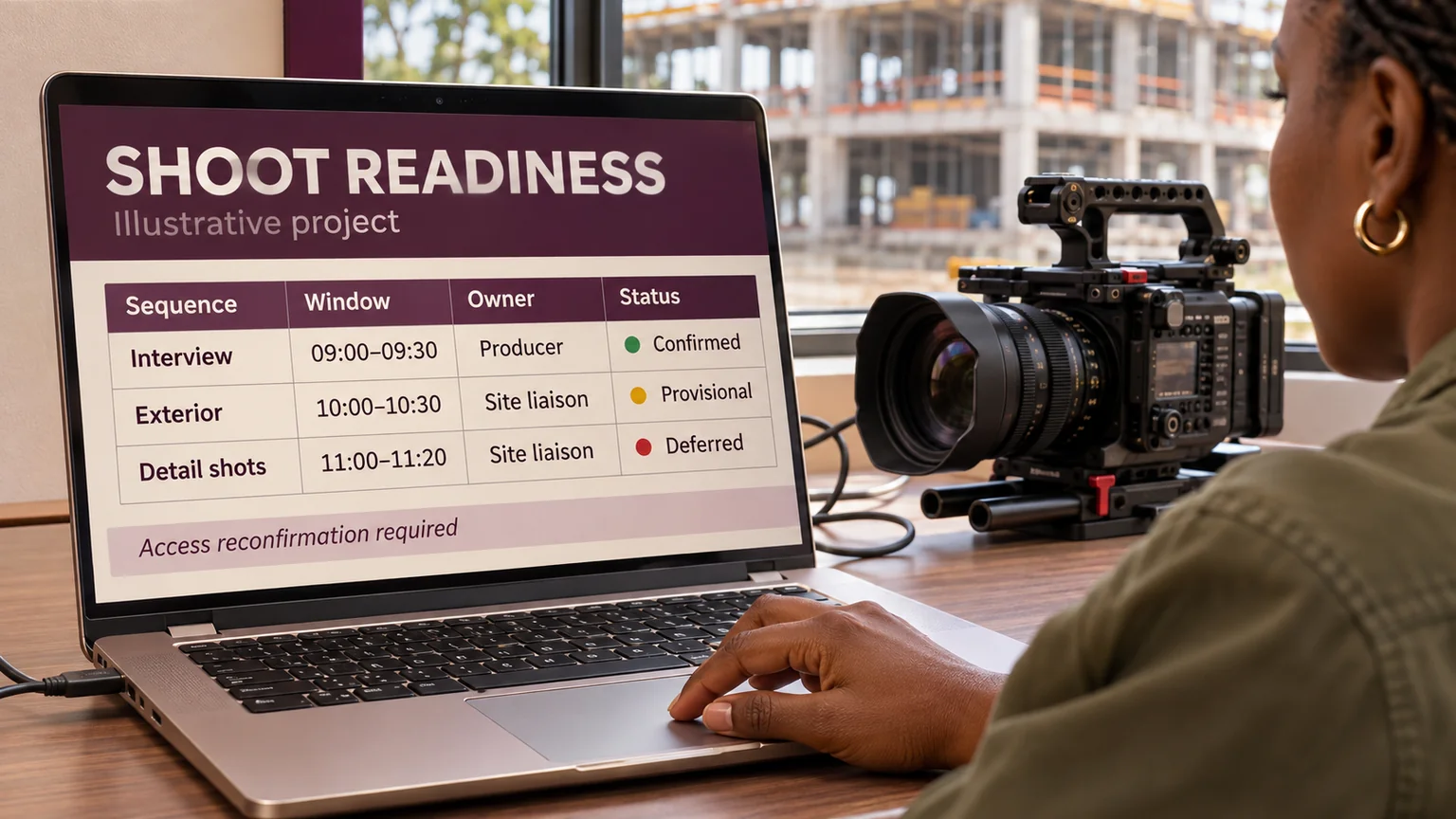
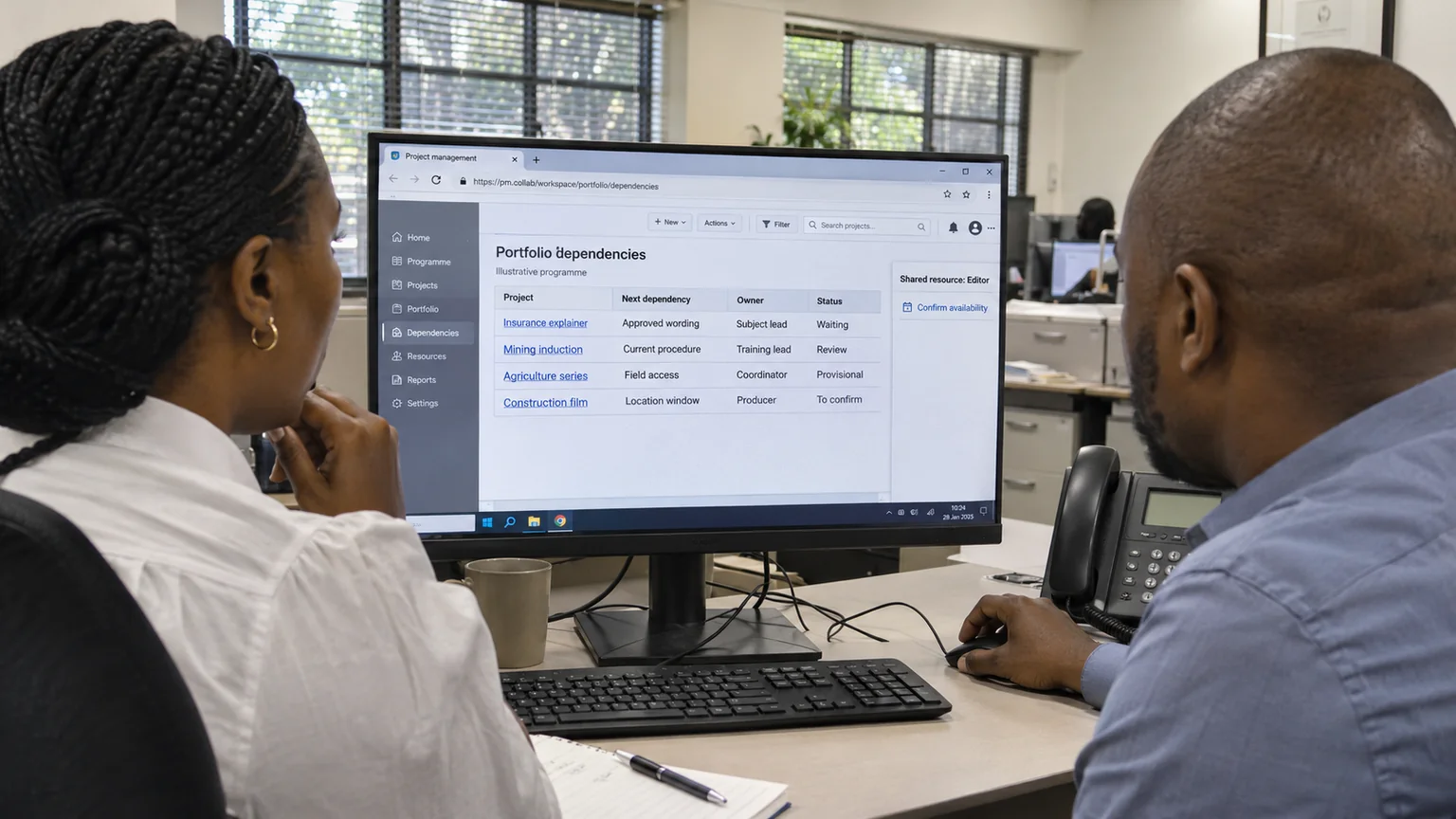
I would put those dependencies beside each shot package in the project tracker. The row would explain what the sequence communicates, which location it requires, who confirms availability and what evidence makes it ready. That is more useful than a single task called farm shoot with a green status.
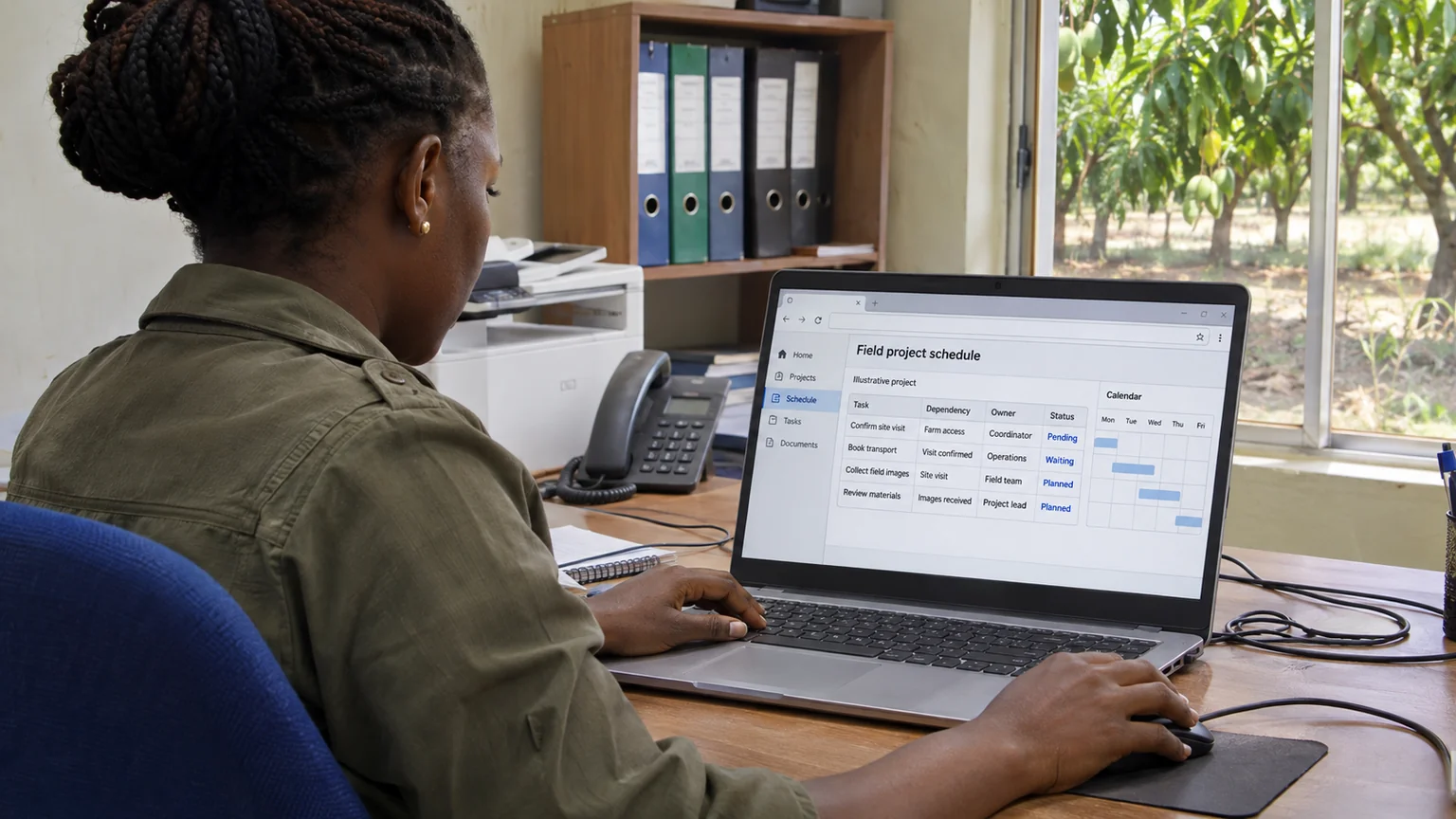
The distinction also helps with scope. If the purpose is to explain the distribution process, an attractive orchard panorama cannot replace a missing process sequence. I would keep the story requirement visible so that a change of plan does not quietly become a different deliverable.
I separate weather information from the production decision
The South African Weather Service explains impact-based warnings in terms of both the expected impact and the likelihood of that impact. That is a useful reminder that a simple weather symbol does not describe every consequence for a particular location. SAWS explanation of impact-based warnings.
I would record the official information checked, its issue time and the person responsible for assessing what it means for the planned activity. I would also ask the location owner which local arrangements and decisions apply. My production tracker would preserve the outcome of that discussion; it would not attempt to replace specialist judgement with a formula.
The decision row might read: exterior sequence provisional, location owner to confirm access at the agreed review point. It should not read weather checked, therefore safe. Those statements mean different things, and the second goes beyond my role in coordinating content.
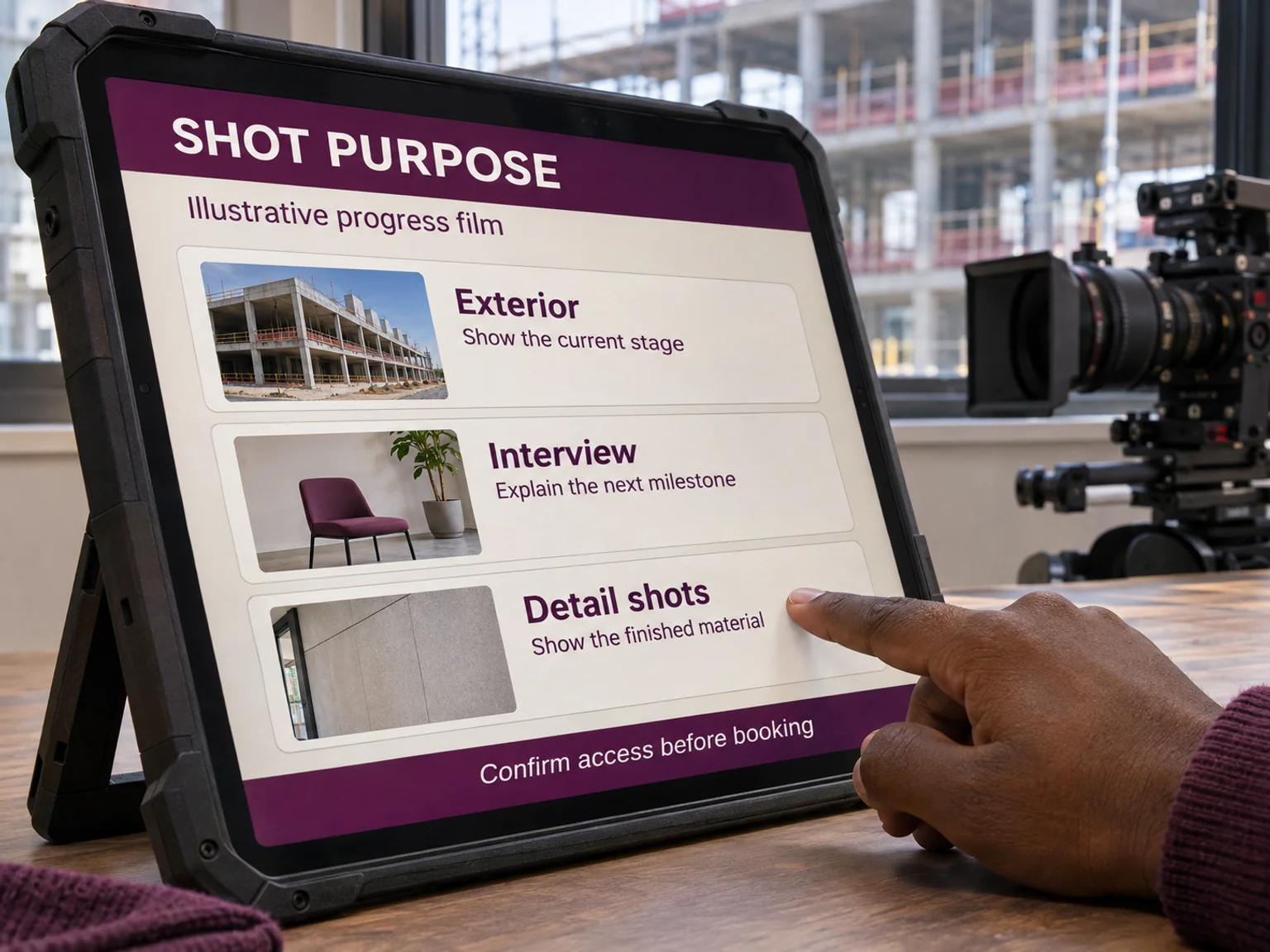
I give the alternative a real owner and a useful purpose
A contingency that says reschedule if necessary is incomplete. I would want to know which alternative can be used, who can authorise it and what the change does to the remaining work.
In the fictional project, an indoor interview could move forward while the exterior sequence moves to a reserved later window. That alternative works only if the interviewee, room and crew are available. The reserve window also needs a status: proposed, held or confirmed. A date written in a calendar does not reserve somebody else's time.
I would ask the editor what can progress without the exterior footage. They might assemble the interview and identify the remaining visual requirements. I would not promise a finished edit merely because part of the production day can still happen.
I connect the change to the delivery schedule
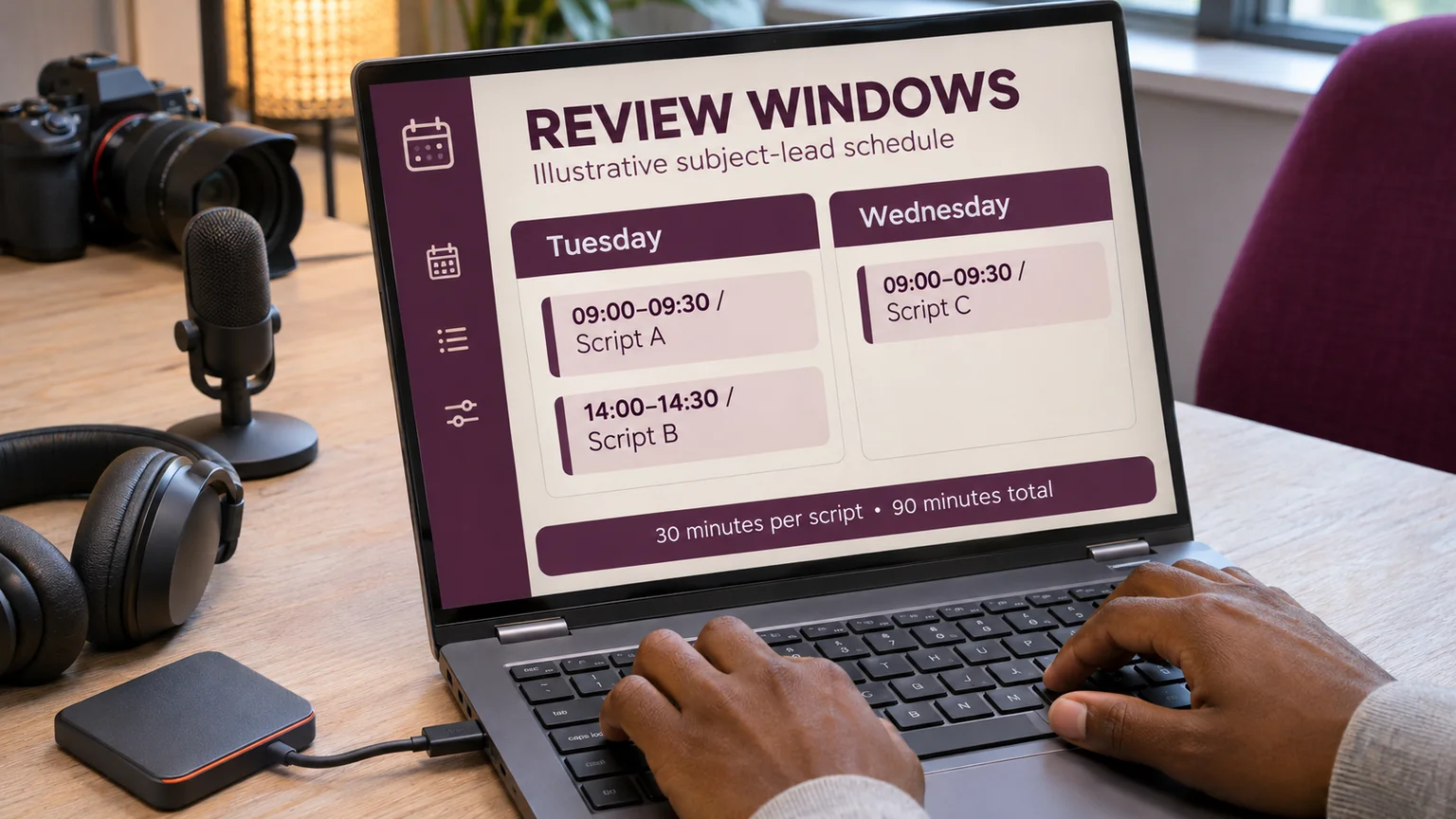
Suppose the planned field sequence moves by two working days. I would check the effect on footage intake, editing, review and final delivery before confirming that the overall deadline remains unchanged.
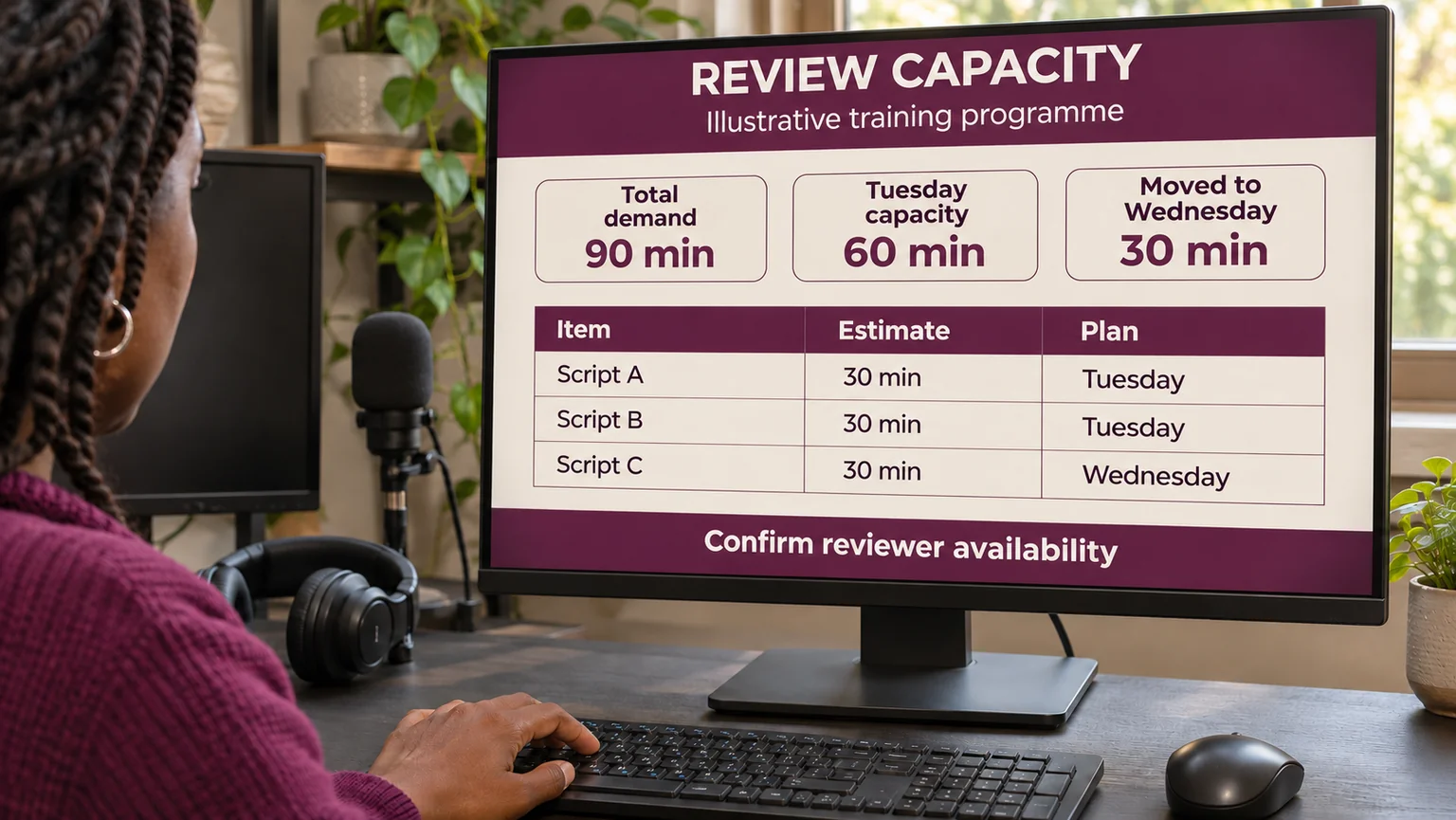
The important dependency may be a reviewer who is only available on one afternoon. Losing that slot could matter more than the filming delay itself. My revised schedule would therefore include both the new filming window and the downstream decisions that need reconfirmation.
I would show the client the available options in plain language. We could retain the full brief and move delivery, agree a smaller first release, or use approved existing material where its purpose and usage permission fit. Each option needs explicit acceptance. I would not hide a reduction in coverage inside a revised shot list.
I keep the crew's latest instructions easy to find

A changed plan creates a communication task. I would issue a clearly versioned production update with the date, location, call time, confirmed activities and unresolved decisions. The update should identify which previous version it replaces.
I would record who needs to acknowledge it: the production team, location contact, interviewee and anyone arranging equipment or transport. A message being sent is not the same as the relevant person having the current plan.
My dashboard would link to one current production brief. Old versions can remain in the archive, but the active link should not require the crew to compare several attachments and guess which one governs the visit.
I record what the camera actually captured
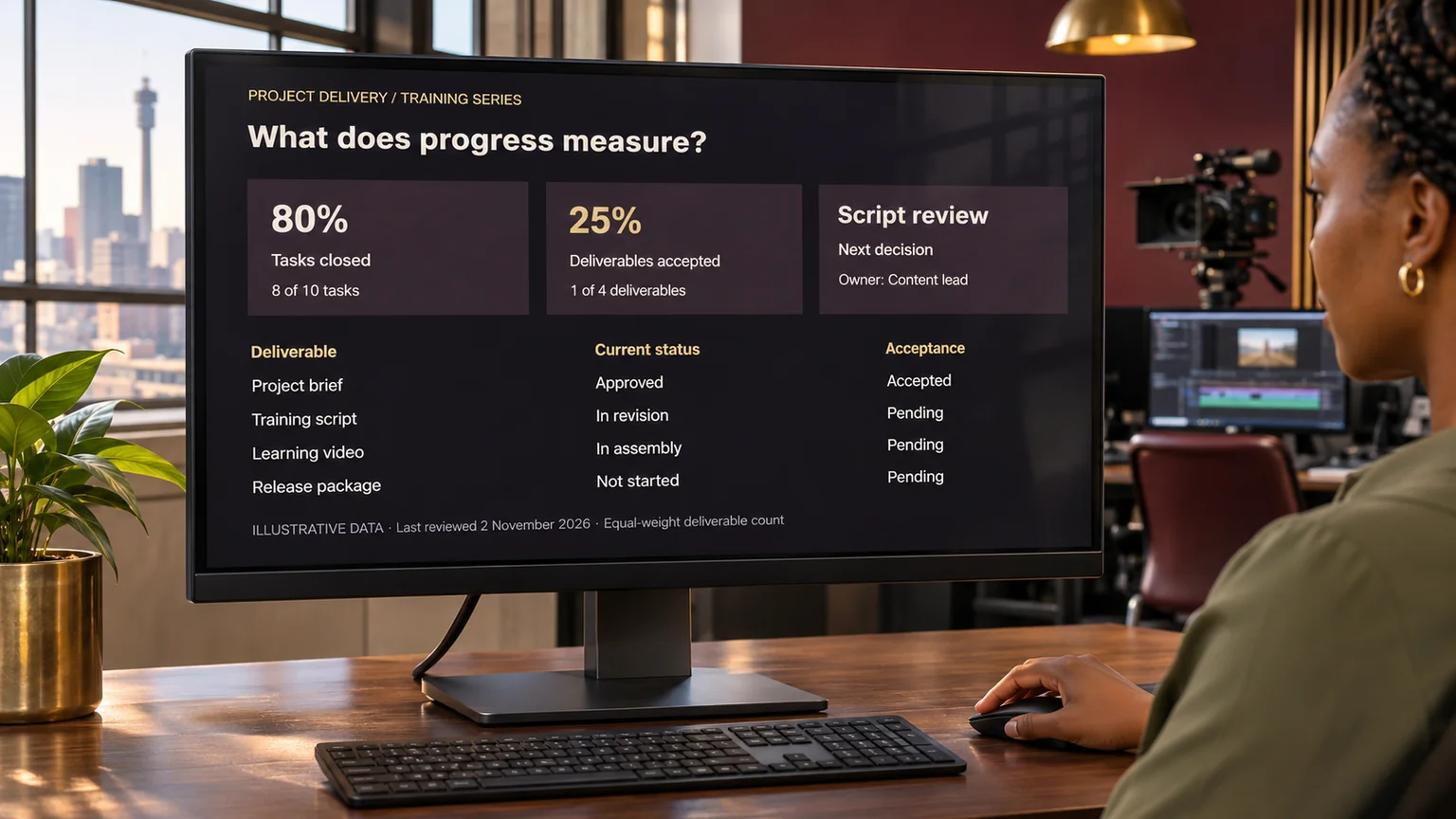
After the visit, I would reconcile the shot plan with the footage received. A sequence can be planned, attempted, captured or accepted for the edit. Those are separate states.
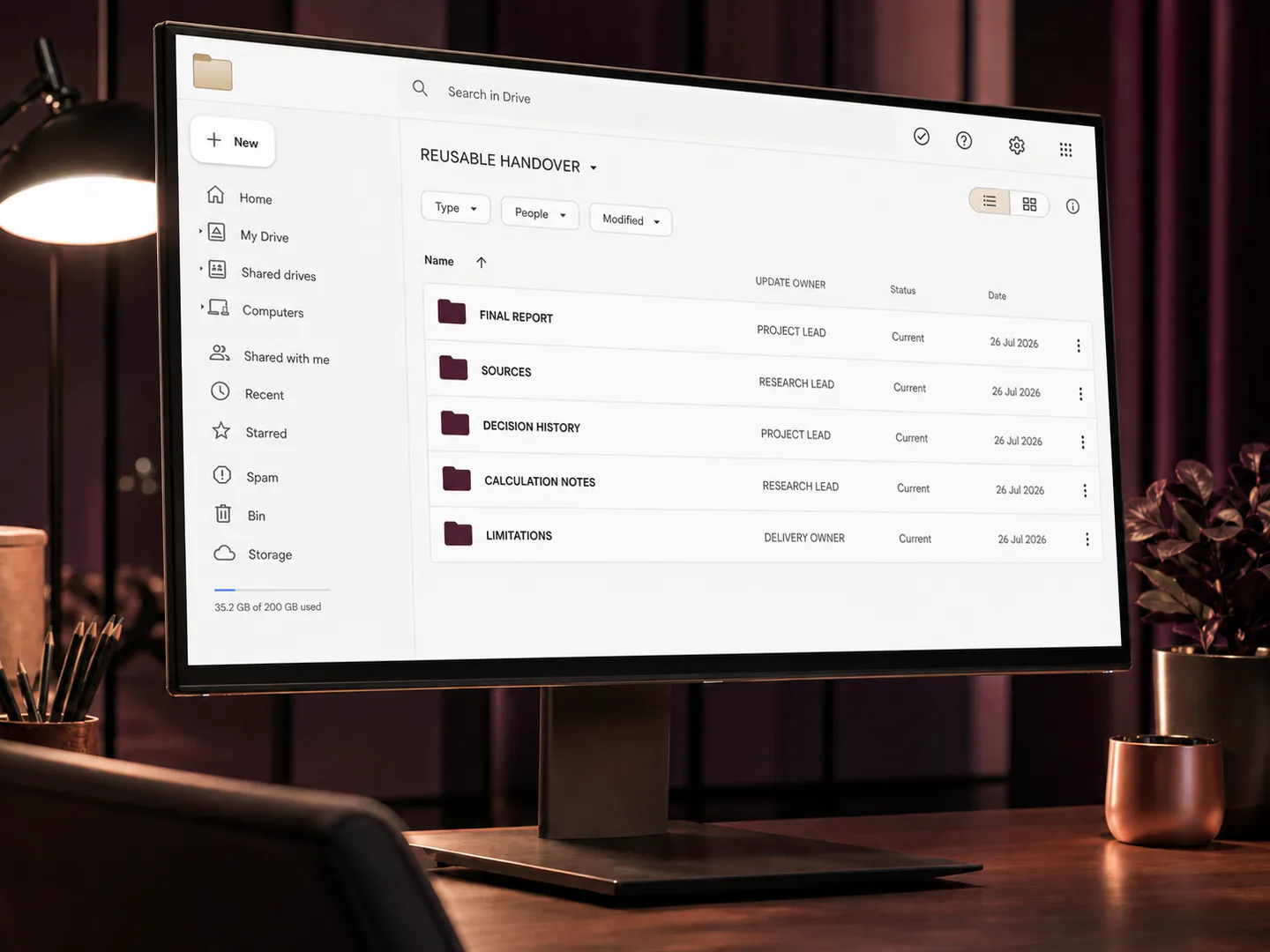
If the exterior footage is unavailable, I would record that gap and the agreed next action. If a substitute is used, I would keep its source, permission and relevance visible. The editor should not have to discover the change by opening a folder that contains fewer clips than expected.
I would also note the practical lesson for the next production. Perhaps the review point was too late to change transport arrangements, or the reserve window was never confirmed. A useful lesson changes one part of the next plan rather than simply repeating that weather is unpredictable.
For me, a workable contingency preserves the purpose of the content while making changed commitments visible. It gives the people responsible for the location room to make their decisions, and gives the production team a clear route from that decision to a revised deliverable.
Research and example note
Prepared on 3 November 2026 for the 6 November slot using published background material available before the campaign's 2 November research cutoff. The source explains a general warning concept; this article supplies no live forecast, operating threshold or site-safety instruction. The business, production scenario and proposed workflow are fictional.