A production schedule can look achievable when every writer, designer and editor has time allocated. It can still fail when the people who must review the work have no space left to make the decisions. I would therefore plan review effort alongside production effort, rather than leave it inside an optimistic final milestone.
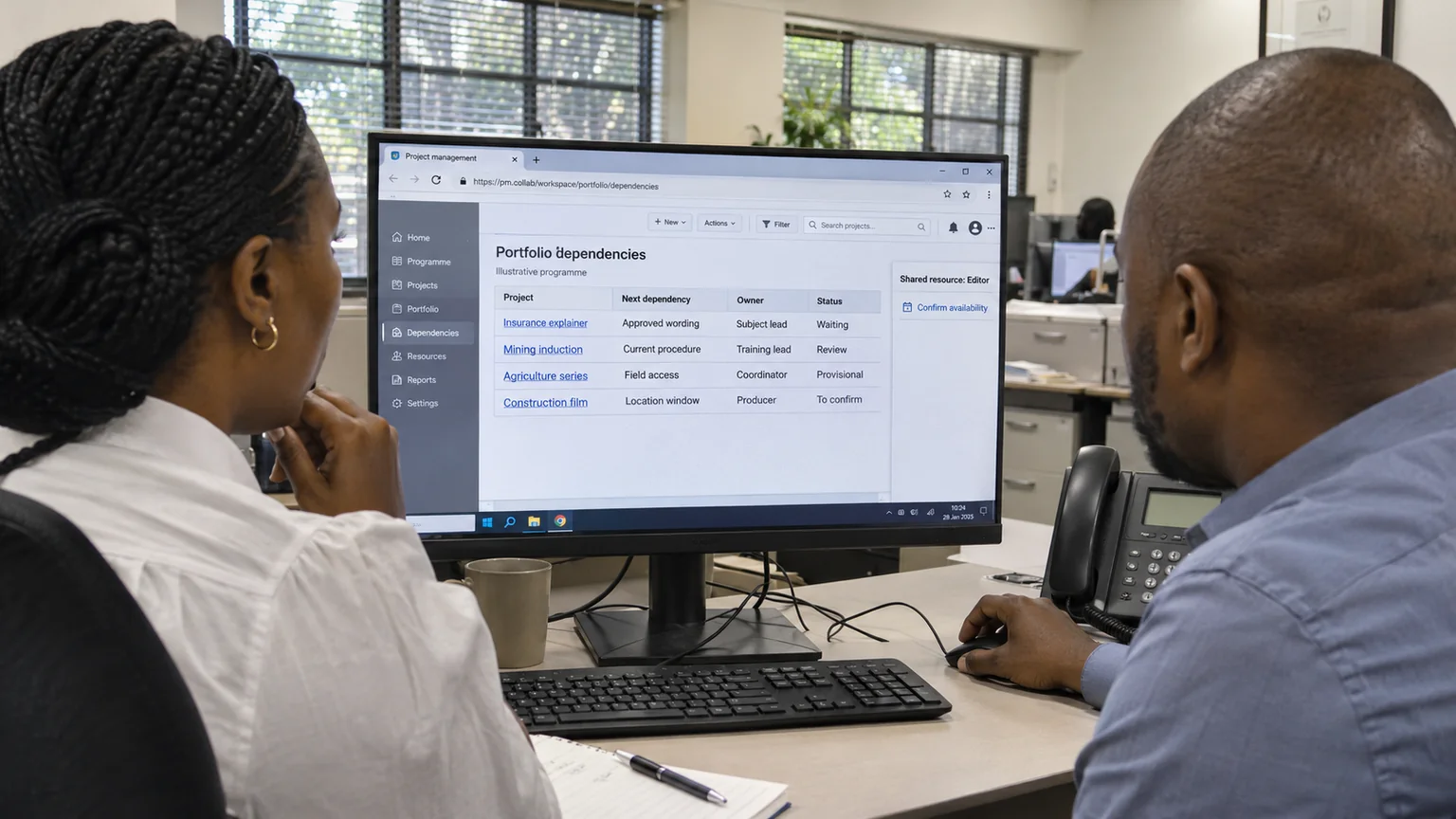
This is particularly important when a small group of specialists supports several projects. The same person may be asked to check a script, approve an explanation and respond to a stakeholder question in one afternoon. Listing that person's name against each task does not establish that all three commitments fit.
My example is a fictional learning-content programme with three short videos. It is a planning exercise, not a client case study. I would use it to make the workload visible, test assumptions and agree what happens when review demand exceeds the available time.
I count the work needed to make a decision
For each review, I would estimate the preparation, inspection and response work. Watching a three-minute video once may take three minutes. Comparing its claims with a source document, checking a changed demonstration and explaining corrections can take considerably longer.

I would ask the reviewer to help estimate that effort. A production team can describe the asset and the questions, but it should not invent the reviewer's capacity. Where the work is unfamiliar, I would use a small sample to learn how much review is actually needed.
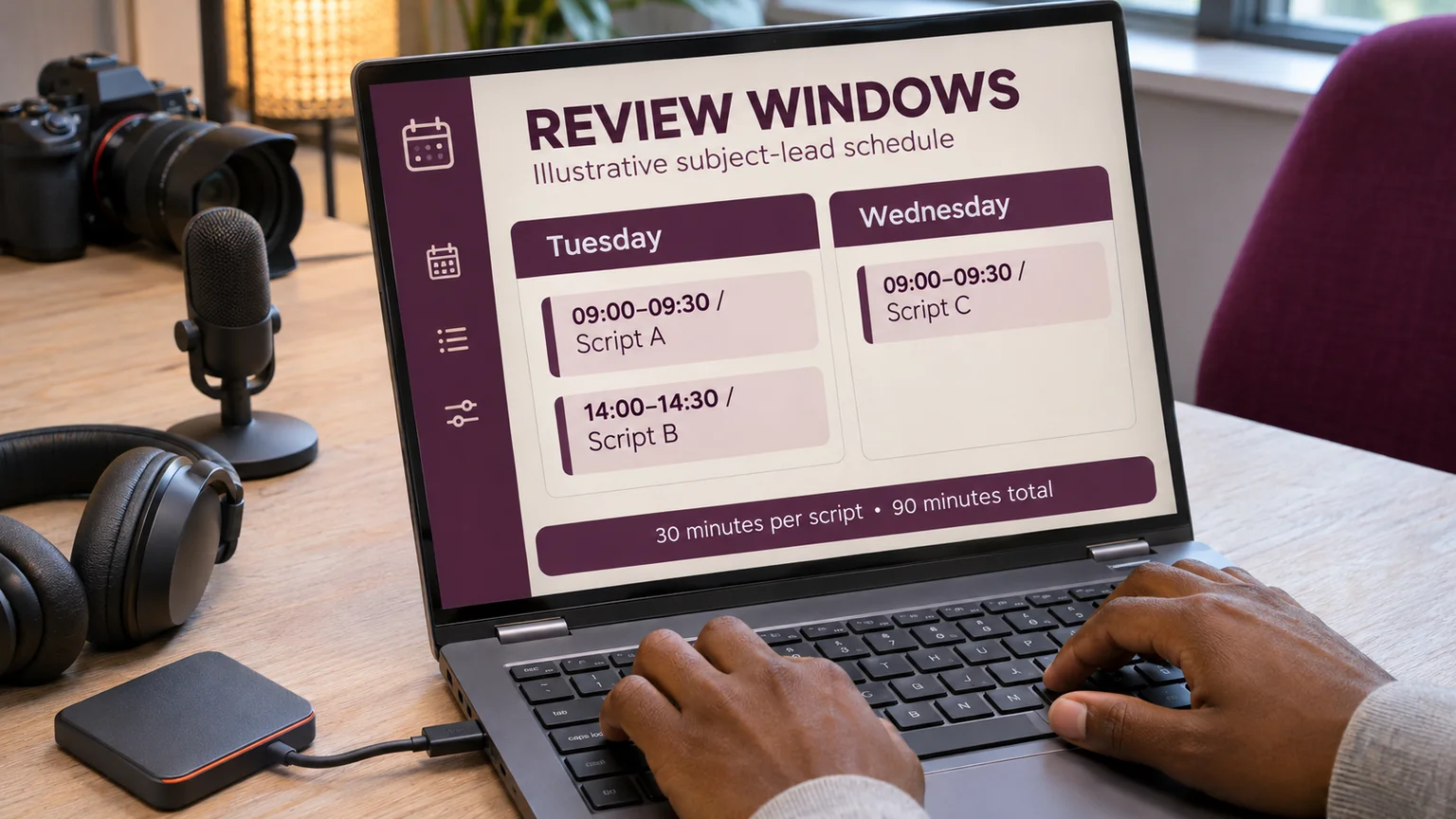
In the fictional programme, each of three scripts needs an estimated 30-minute factual review. That is 90 minutes of review demand before allowing for questions or a second pass. If the subject lead has only one hour available that day, the plan is already overcommitted. The problem exists even if every script arrives exactly on time.
I separate availability from the working day
I would not treat an eight-hour working day as eight hours available to this project. Meetings, operational duties, other projects and ordinary interruptions all matter. I want the time the reviewer can actually commit to this particular queue.
The subject lead might offer two 30-minute windows on Tuesday and another on Wednesday. I would plan around those windows and discuss which script should arrive first. If recording depends on the first script, that dependency helps decide the order.
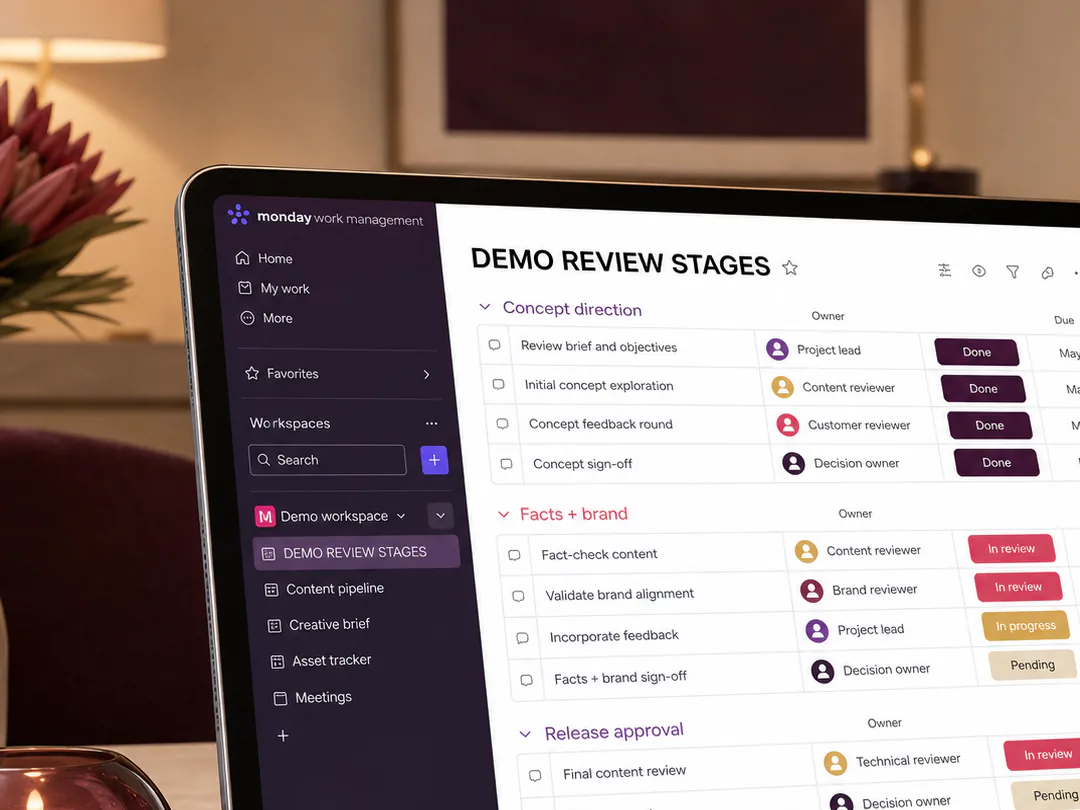
I would also confirm the time zone and any expected absence. A date without an agreed handoff time can hide a full day's delay between teams. A schedule should state enough to support coordination without pretending that every minute is predictable.
I release reviewable batches deliberately
Sending all three scripts at once may be convenient for the writer, but it can make it harder to identify which decision matters first. I would consider whether a smaller, complete batch lets the reviewer finish one useful decision before moving to the next.
A smaller batch is not an excuse to send incomplete work. The first script still needs its source references, current version and clear review question. Otherwise the apparent early handoff merely moves preparation work to the reviewer.
The Kanban Guide discusses controlling work in progress and using defined workflow measures to inform decisions. I take that as relevant context for making review demand visible; my proposed batch size and allocation example are project-specific choices. The Kanban Guide, May 2025.

I reserve time for the response to feedback
The review is not the end of the schedule if changes are likely. I would identify who can make the revisions, when that person is available and whether the revised asset needs another decision.
For the training programme, the editor might be booked on a different shoot when the subject lead returns comments. I would rather discover that conflict while planning than describe the project as blocked by a reviewer who has actually completed the agreed work.
I would keep the size of the allowance proportionate to uncertainty. A familiar template with a minor update may need less contingency than a new subject with several stakeholders. I would explain the assumption and revisit it after the first review, rather than add an unexplained percentage to every task.

I make overload an explicit choice
If demand still exceeds capacity, I would present the trade-off. We could move a delivery, resequence the assets, agree an appropriately qualified deputy or change the scope. Each option has a consequence that the responsible person needs to understand.
I would not assume that another reviewer is interchangeable. The deputy needs the relevant knowledge and authority, as well as access to the material. A person who can proofread a caption may not be authorised to approve a technical demonstration.
I would record the selected option in the schedule and communicate it to the people affected. Leaving the original date in one system while discussing a different plan in messages creates two competing versions of the commitment.
I compare the estimate with the work that happened
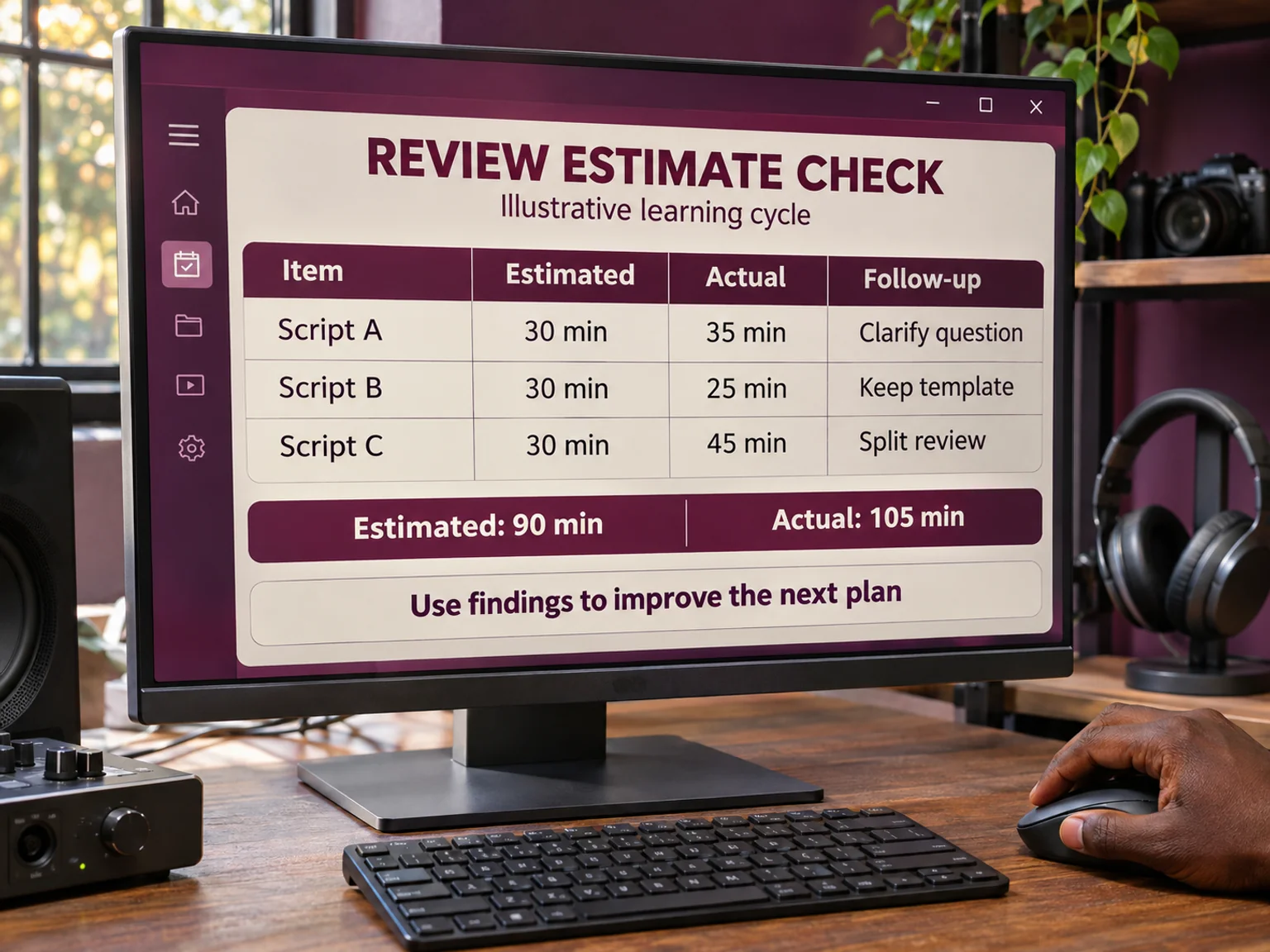
After the first cycle, I would compare estimated and actual review effort, waiting time and revision effort. I would ask what explains the difference. Was the submission unclear, the asset larger than expected or the reviewer interrupted by a higher-priority operational issue?
Those explanations matter more than using the numbers to blame an individual. The next plan should improve because the team has learned something about the work. If the review repeatedly requires an hour rather than half an hour, I would change the planning assumption or improve the submission process.
For me, treating review capacity as a resource makes the schedule more honest. It connects the people preparing the work with the people who must accept it, and gives both a realistic chance to meet the next commitment.
Editorial note
This retrospective guide uses a 28 September series date and sources checked on 2 November 2026. Publication metadata must show the actual release. All timings, roles and project details are illustrative; the arithmetic describes the fictional example rather than a universal productivity benchmark.