A polished training video can still contain an outdated instruction. Clear audio, a steady camera and a well-paced edit do not establish that the explanation is correct for the site where someone will use it. I would therefore manage the content review as a distinct part of production, with its own evidence and responsible people.
My example is a fictional update to a mining induction video. It concerns the coordination of source material, script revisions and approval. It does not describe how to operate equipment, enter a mine or respond to an emergency. Those instructions must come from the responsible specialists and the applicable site arrangements.
The South African Government's overview of the Mine Health and Safety Act identifies training and human-resource development among its purposes. That context reinforces why I would not treat induction content as an ordinary promotional edit. I am not interpreting the Act's detailed requirements here. Government overview of the Act.
## I establish which source the script is allowed to use
Before a writer revises the narration, I would ask the nominated content owner to identify the current approved source. A file found in an old project folder might be useful background, but its existence does not establish that it remains authoritative.
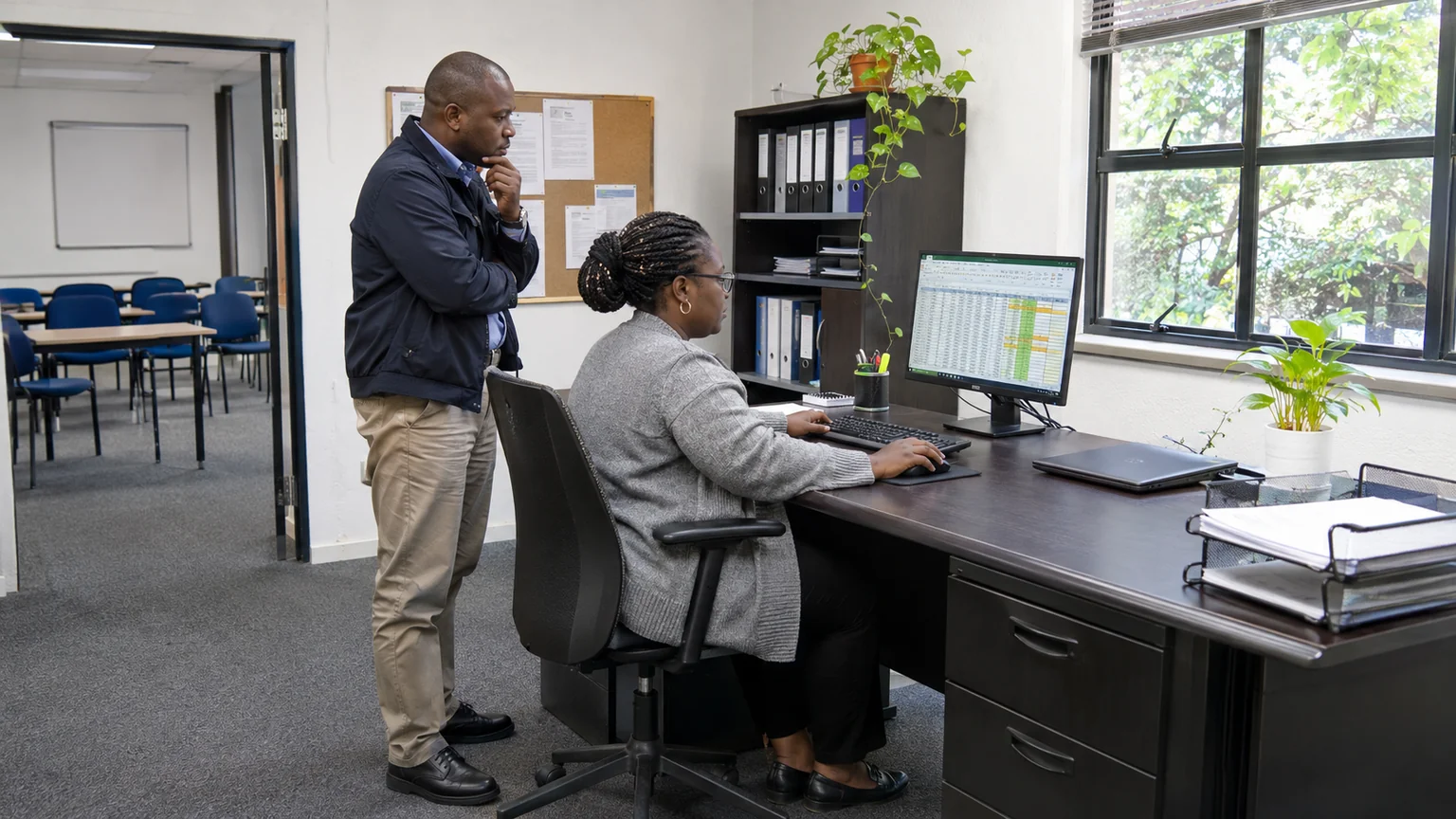
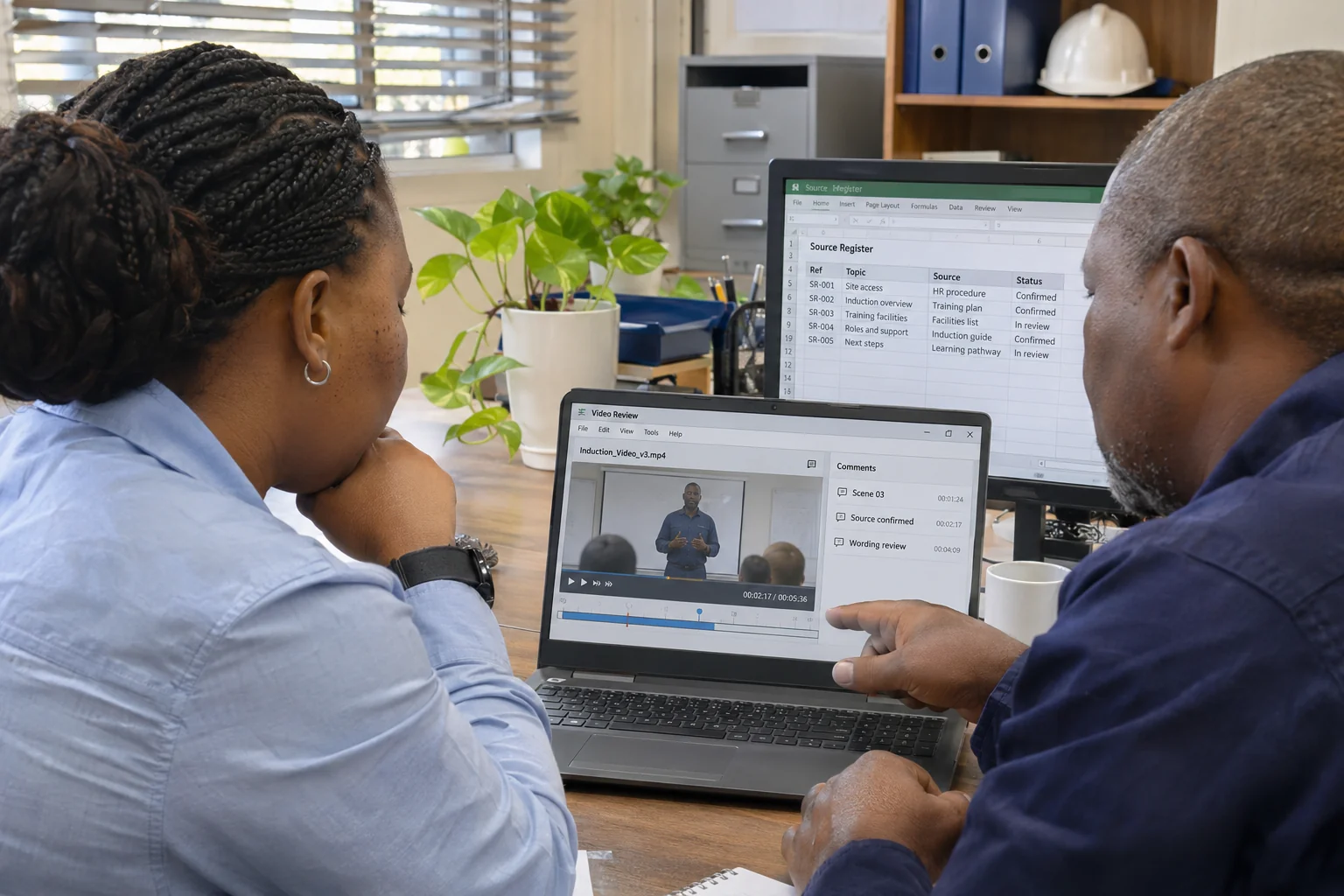
My source register would record the document identifier, version, owner and confirmation date. It would also identify which part of the video relies on it. If the source changes halfway through production, the team can then locate the affected scenes instead of searching the whole edit from memory.
For the fictional update, suppose three scenes refer to the same site introduction document. I would link all three to that source record. A change to the source would create a review task for each affected scene, not an assumption that the latest script automatically remains valid.
## I distinguish editorial clarity from technical acceptance
The producer can assess whether a sequence is understandable and the editor can check whether the sound and picture work together. Neither decision necessarily establishes that the instruction is technically appropriate.
I would ask the client to nominate the subject-matter reviewer and clarify that person's review scope. If several specialists contribute, I would identify who consolidates their decisions and who resolves a conflict. A list containing everybody's name is not a clear approval route.
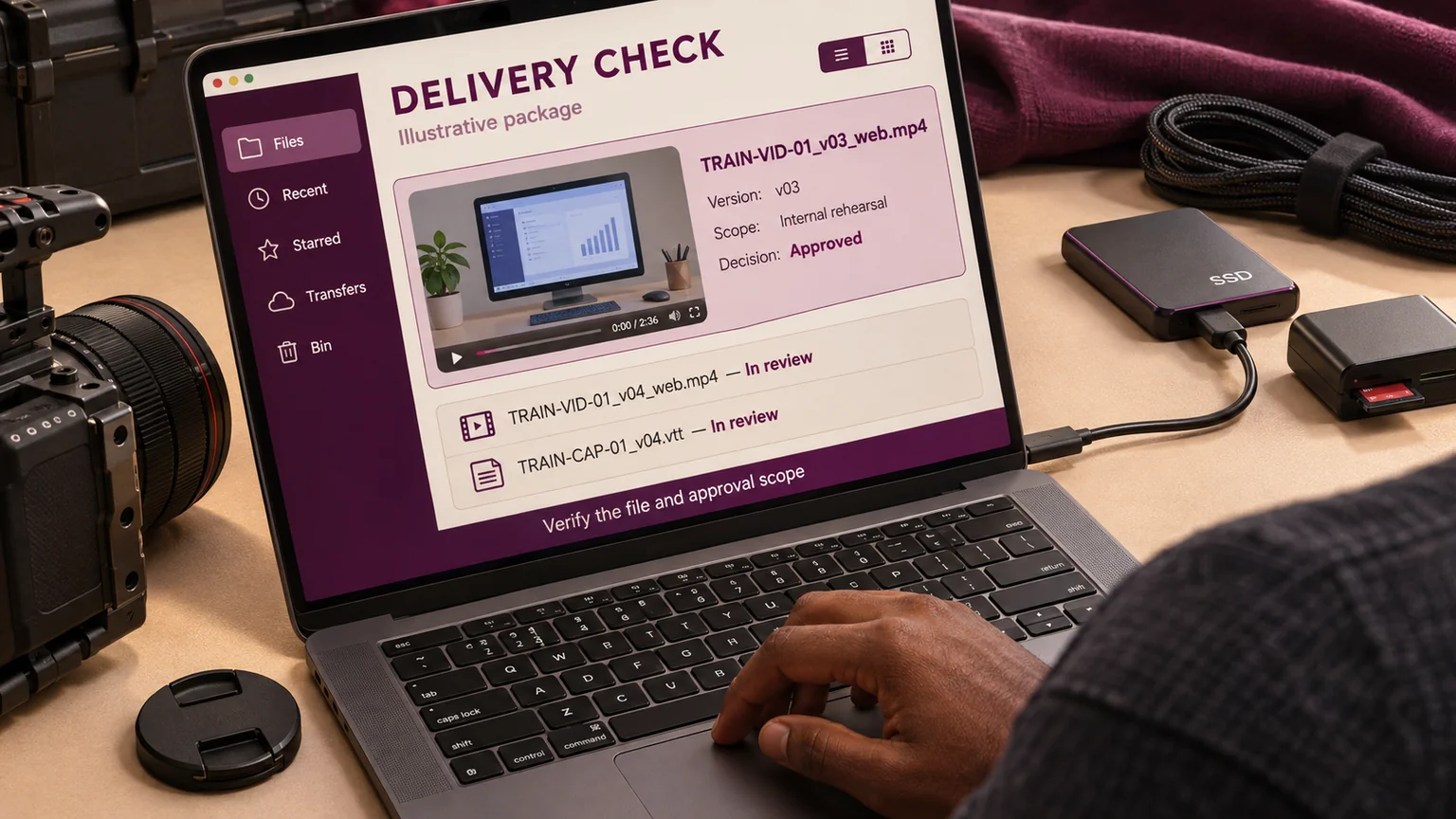
The project record would distinguish language edits, production corrections and factual decisions. That makes it possible to see whether a scene is waiting for a simpler phrase or for a substantive decision that may change what is filmed.
## I make the review request specific enough to answer
Sending a long video with the message “please approve” transfers too much interpretation to the reviewer. I would identify the version, the changed scenes, the relevant source references and the decisions required.
A useful request might say that scene three has a revised explanation based on the nominated source, and ask whether the wording and visual sequence convey that source correctly. The reviewer can respond to a bounded question while still raising a concern elsewhere in the video.
I would also confirm that the reviewer can open the actual file. A review deadline means little if the link requires access nobody has arranged. Access, availability and the expected response format belong in the production schedule.
## I keep the approved version connected to the finished file
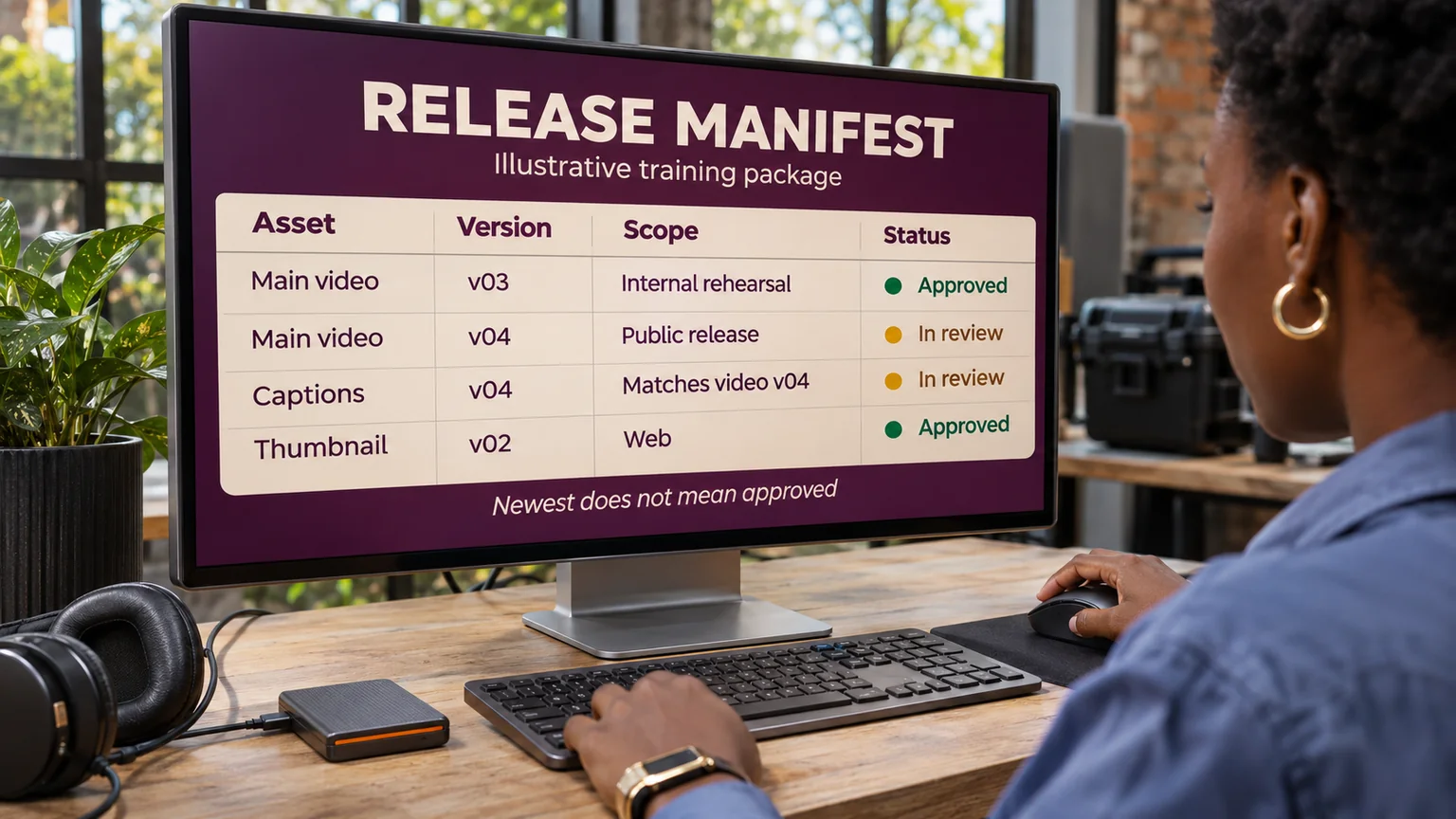
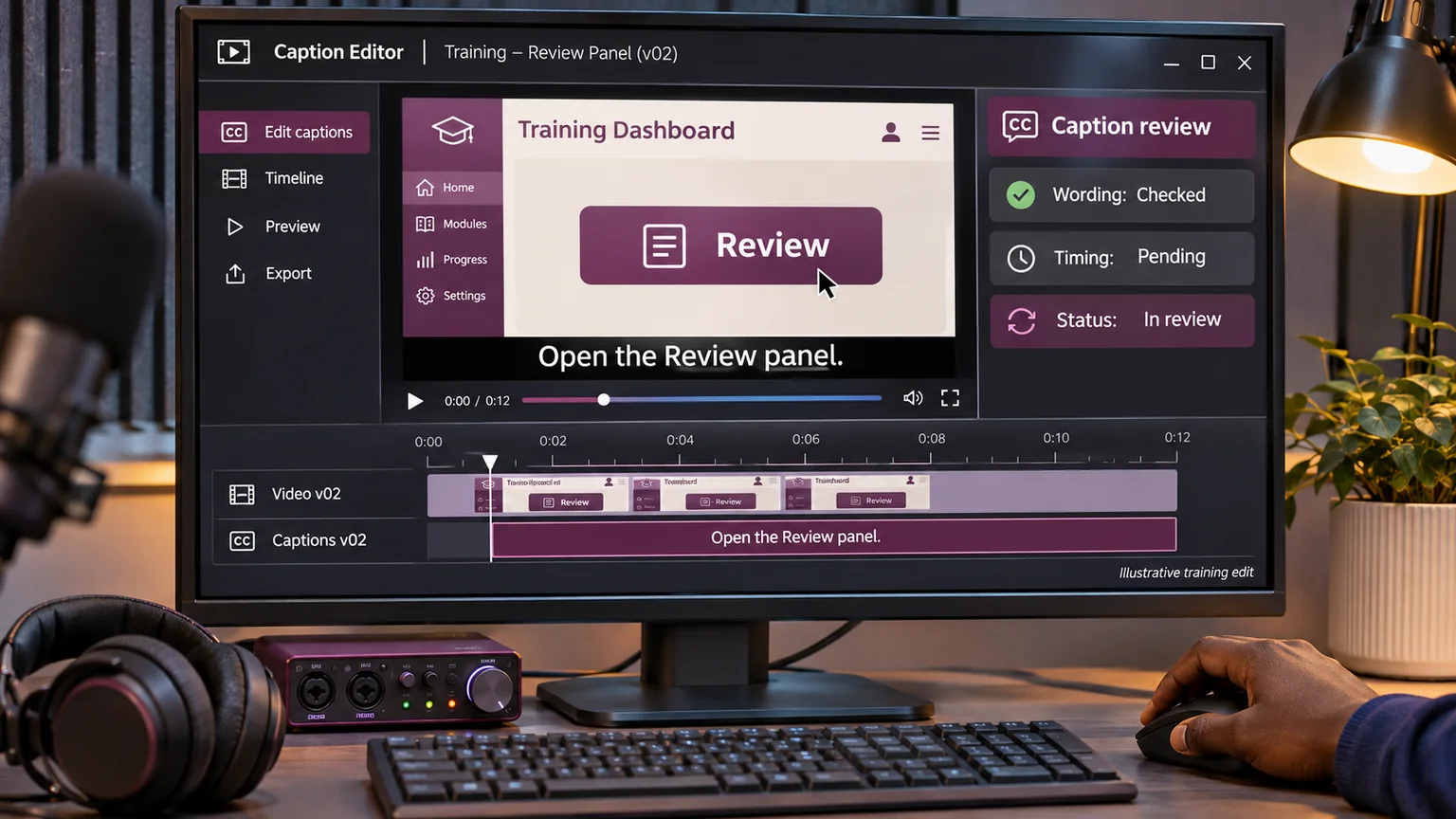
An approval against script version two does not automatically apply to video version five. Filming and editing can alter emphasis, remove context or introduce a mismatch between narration and the picture.
I would preserve the chain from source to script to review cut to release file. Each step has an identifier and a recorded status. If a later change affects the approved meaning, I would return that part to the appropriate reviewer rather than treat the change as a harmless production adjustment.
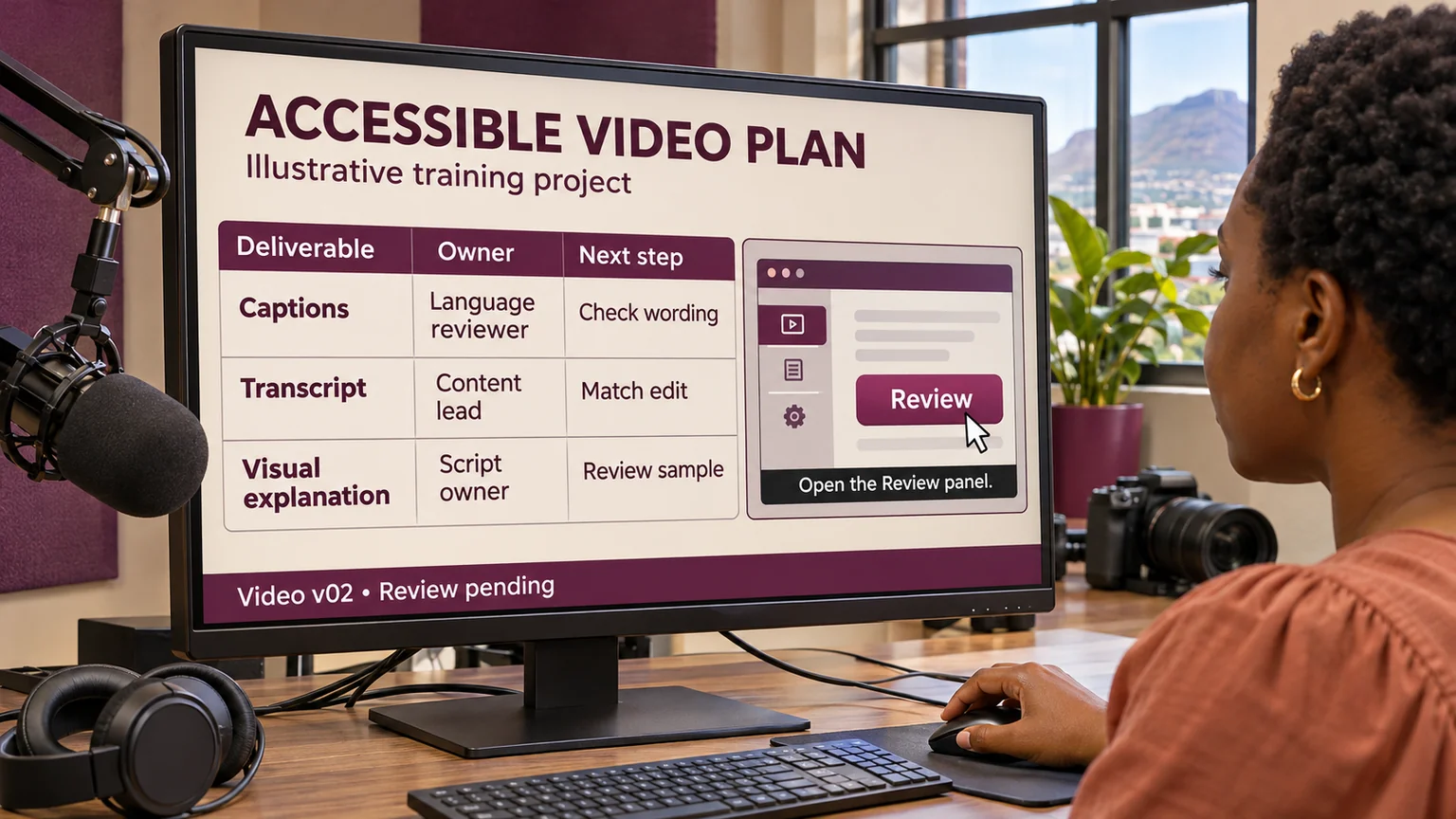
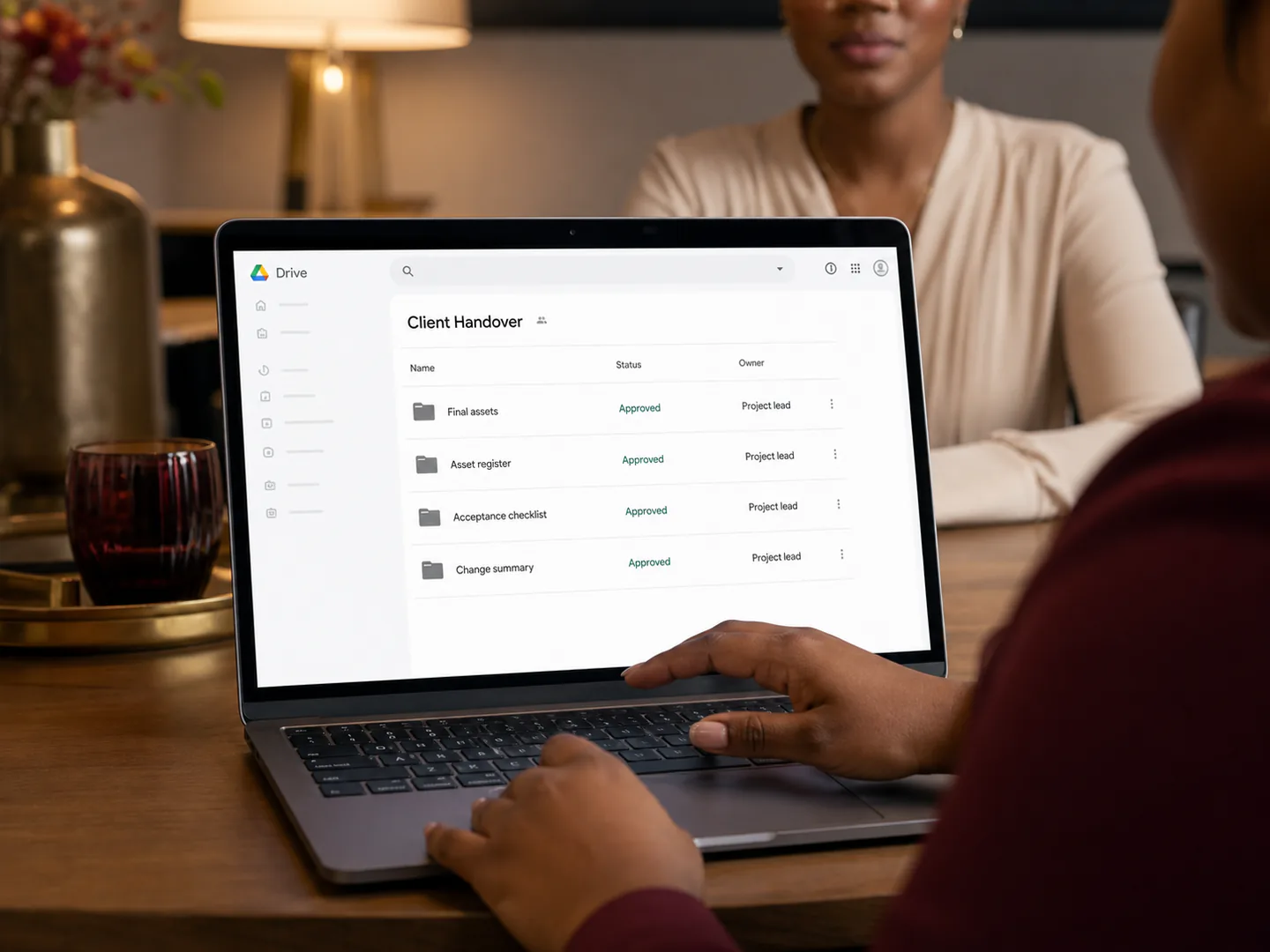
The same discipline applies to captions and translated versions. A translation needs a suitable language review as well as a check that it retains the intended subject meaning. Timing and readability require their own inspection against the actual edit.
## I avoid turning playback into evidence of understanding
A file opening successfully proves something useful about delivery, but it does not prove that the audience understands the content or can apply it. I would ask the training owner how the video fits into the wider induction process and what acceptance evidence they require.
That answer affects the production brief. The video may need to support a facilitated session, a learning platform or another defined route. I would record those requirements without inventing an assessment method or representing a view count as competence.
My handover would identify what was tested: the file, player, captions, links and agreed devices. It would separately identify the content decisions accepted by the responsible reviewers. Those are different forms of evidence and should remain distinguishable.
## I leave a route for the next revision
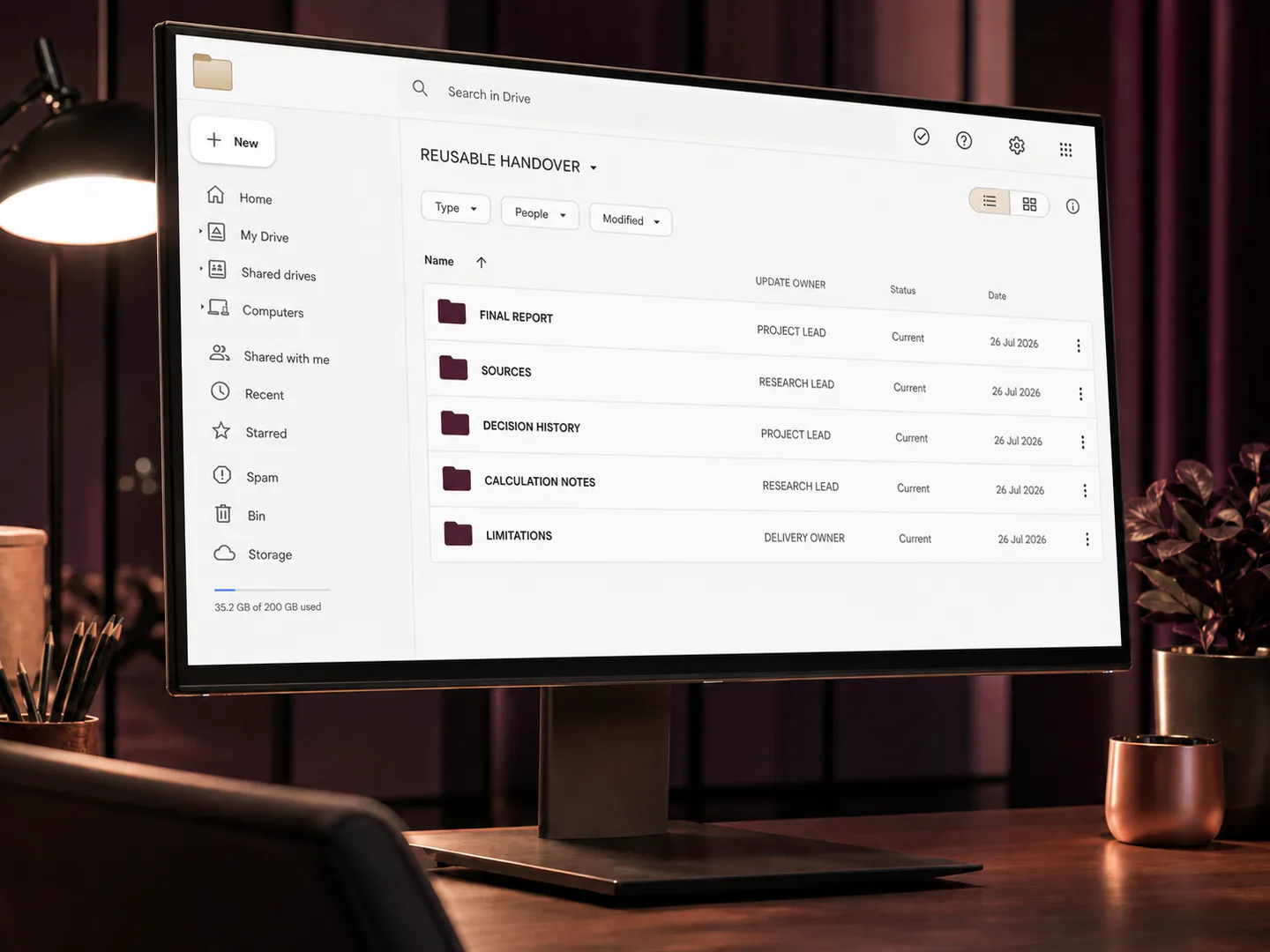
Induction material can become outdated after release. I would identify the owner who receives change notifications and the place where the current release is recorded. The project should not depend on the original editor remembering which folder contains the final export.
If an instruction changes, the owner needs a route to assess the affected material and decide what happens to the existing version. My role is to make that coordination possible: find the source, locate the scenes, identify the reviewers and track the replacement through delivery.
For me, a useful review trail explains why a particular version was accepted and where its authority came from. It supports the people responsible for the content without pretending that production quality can replace their judgement.
## Research and example note
Prepared on 2 November 2026 for the 5 November slot. The production scenario is fictional. The source is cited for broad institutional context, not as a complete statement of current legal duties. This article describes content coordination and does not provide mining, operational or safety instructions.