Customer-Centred Content Systems · 2026-07-06 · 6 min read
A customer does not experience your website, campaign, presentation and service response as separate departments. They experience one organisation—and they notice when its promises do not connect.
Organisations often manage customer-facing assets as separate tasks. A website page is updated, a presentation is approved, social content is scheduled and a service team receives a campaign later. Each output may be correct in isolation while the complete customer experience feels inconsistent.
Customers judge the relationship across those boundaries. The language that earned attention should match the explanation on the landing page. The form should ask for information the service team can use. The promised response should be possible. Accessible alternatives should carry the same meaning rather than becoming weaker versions.
I treat every asset as part of one connected promise. That approach brings project management and multimedia content together: one outcome, coordinated formats, visible responsibilities and a final readiness check from the customer’s point of view.
Key takeaways
- Define the customer promise before producing separate channel assets.
- Maintain one approved source of facts, messages, offers and conditions.
- Adapt content to each format without changing the core meaning.
- Connect publication to forms, responses, teams and service capacity.
- Test the complete journey for consistency, accessibility and handover readiness.
Section 01
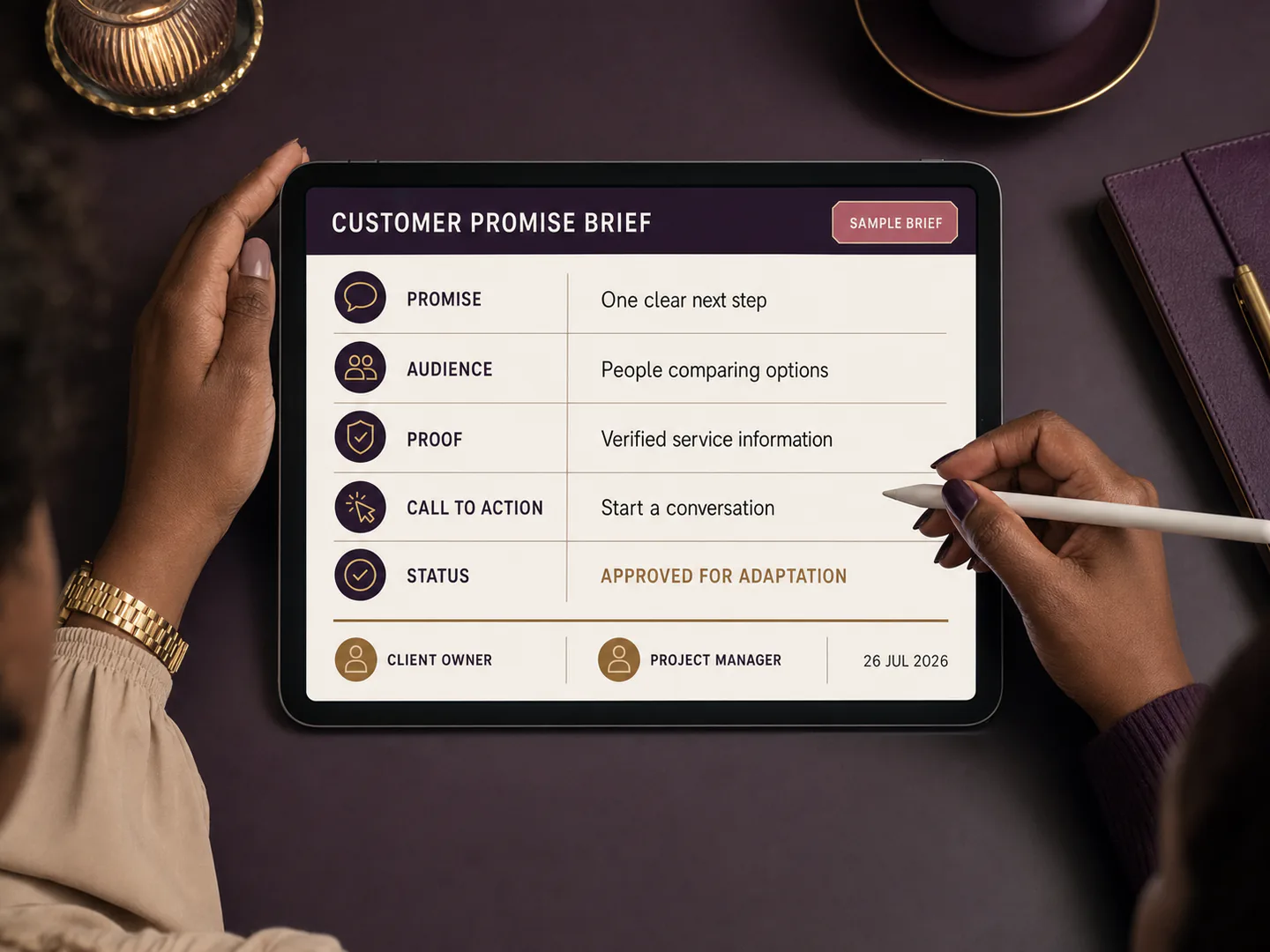
I write the promise in one clear sentence
The sentence identifies who the work serves, what value is being offered and what the organisation is prepared to do next. It becomes a reference for copy, visuals, presentations, calls to action and service preparation.
A clear promise prevents each channel from inventing a slightly different version of the organisation’s intention.
Section 02
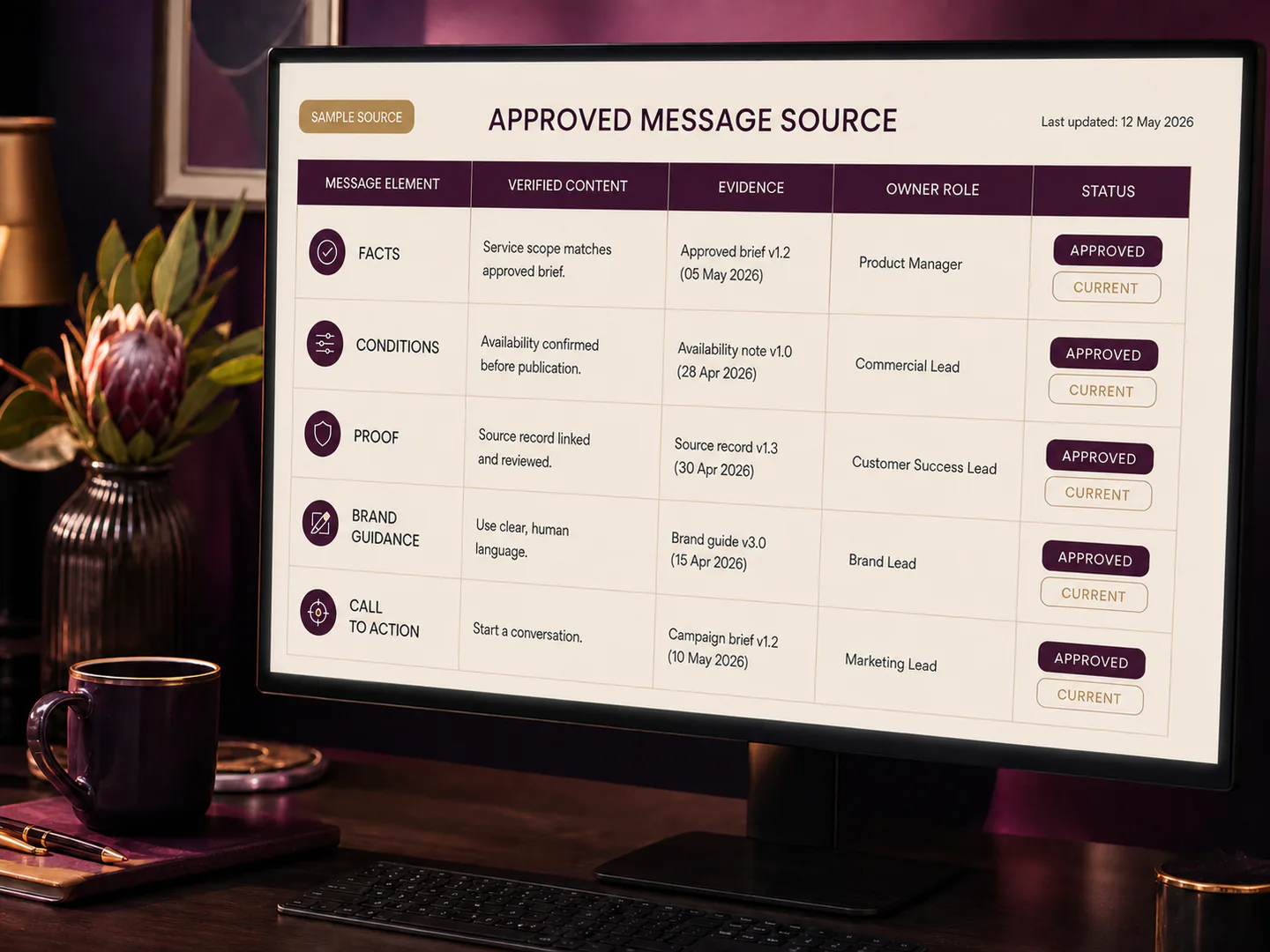
I build a shared message and evidence source
I organise approved facts, product or service details, audience language, proof, conditions, brand guidance and current calls to action. Contributors know which claims are verified and which questions still need an owner.
This reduces contradiction and makes AI-assisted adaptation safer because the workflow is transforming approved material rather than generating the promise from nothing.
Section 03
I map the complete customer journey
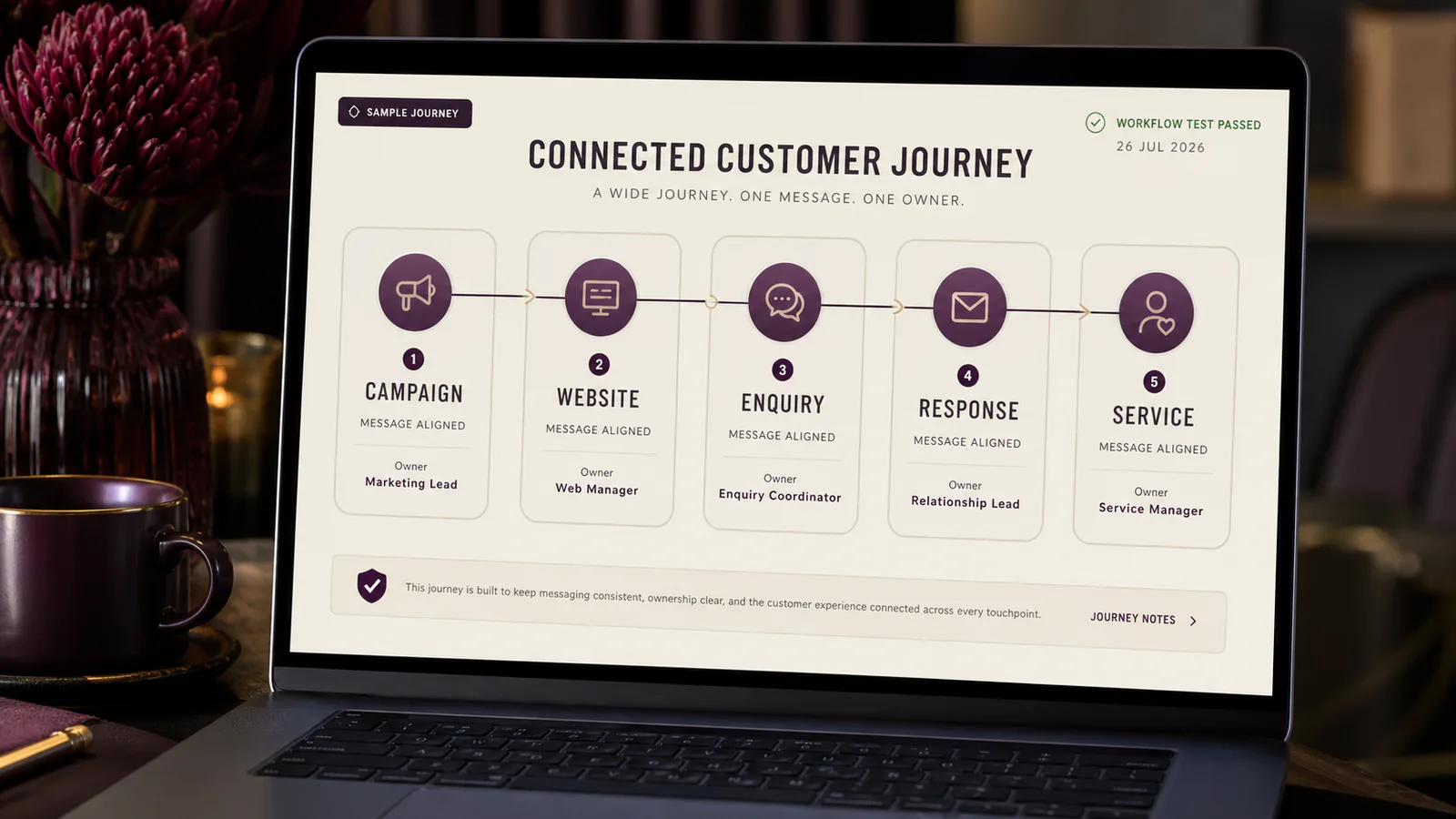
I follow the person from first exposure through deeper information, decision, enquiry, response and final service. Every handoff needs the correct context, expectation and owner.
The map often reveals that the content problem is partly operational: a strong campaign cannot repair a form that fails, an unclear response process or a team that has not received the same promise.
Bring the moving parts into one delivery process.
I can coordinate a customer-facing content system across website, campaign, presentation, social and service touchpoints—aligning the promise, sources, assets, contributors, reviews and complete readiness check.
Section 04
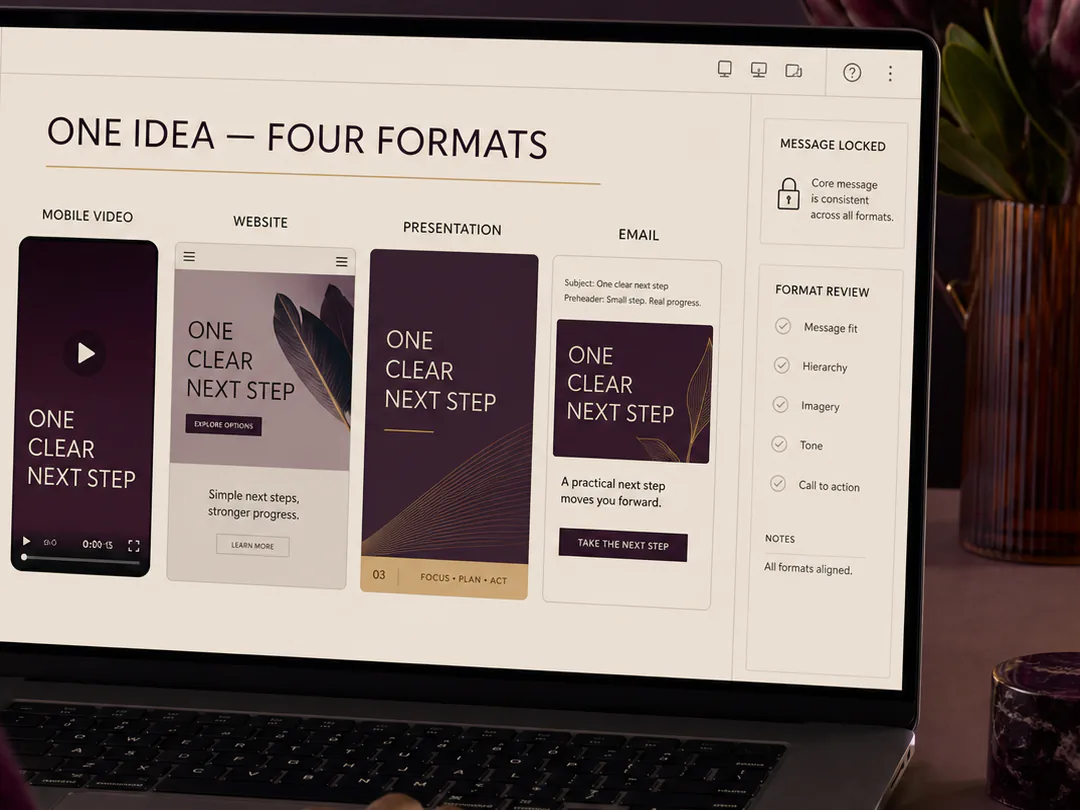
I adapt the expression without changing the meaning
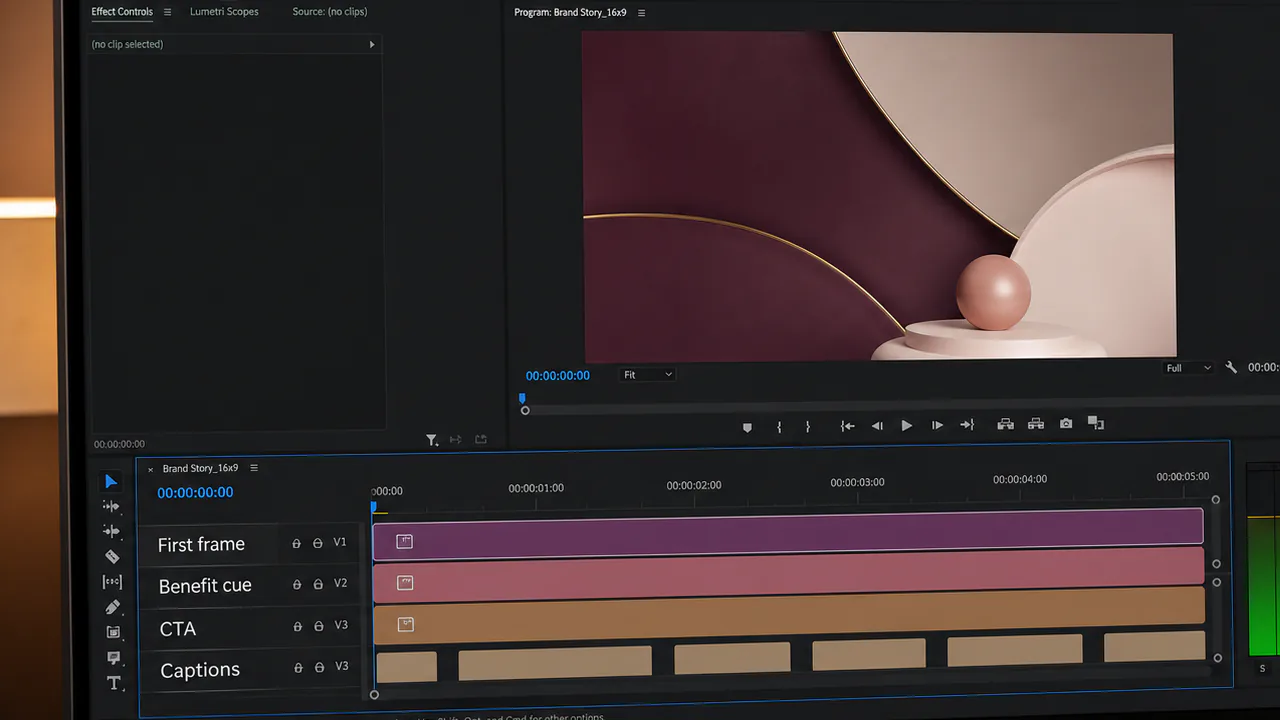
A short video, website section, presentation slide and email should not be identical. I adjust length, sequence, pacing and visual emphasis while preserving the approved message, conditions and next step.
Adaptation also considers how people encounter the content: quickly on mobile, in a formal decision meeting, with sound off, through assistive technology or after already seeing another asset.
Section 05
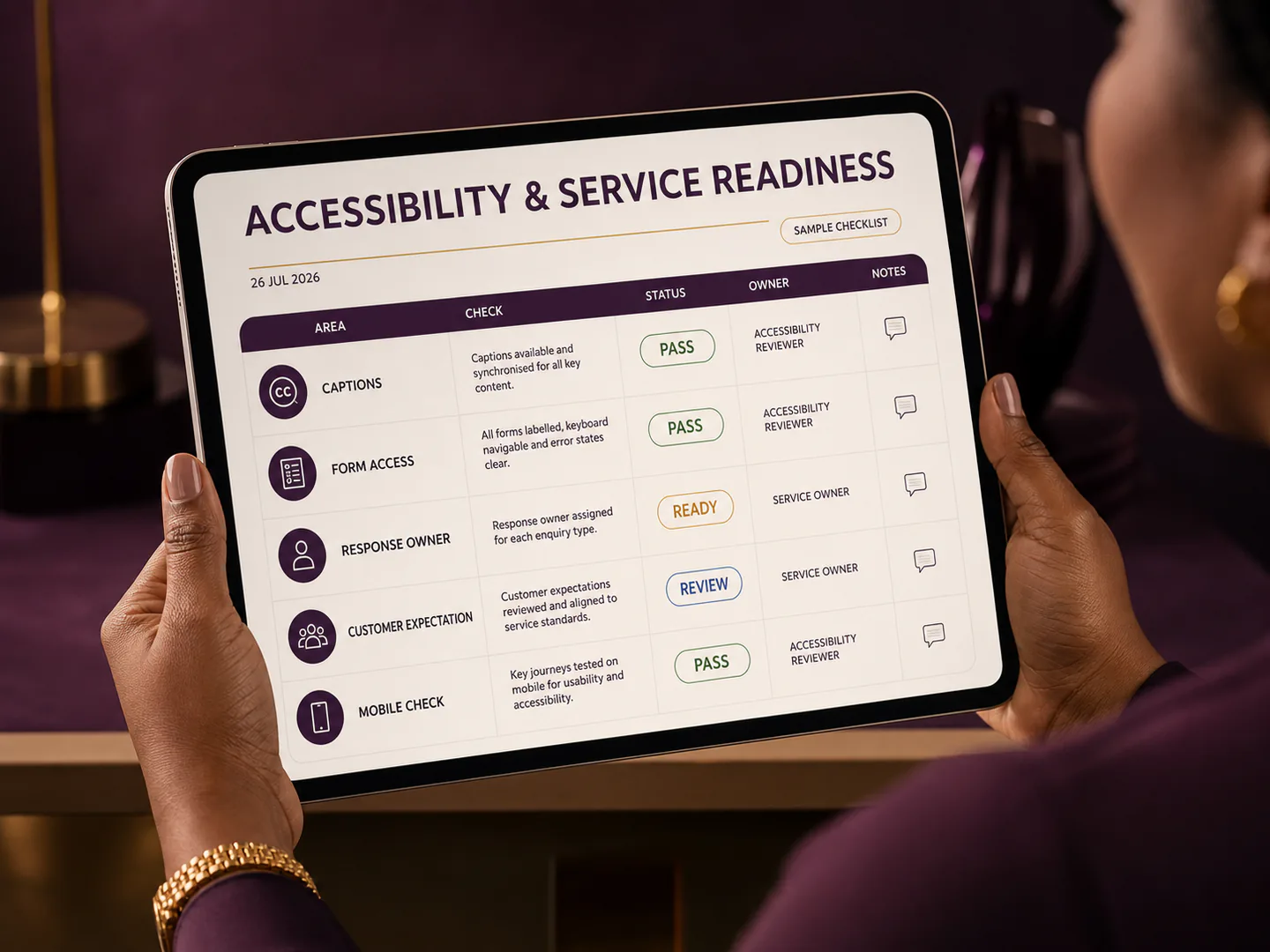
I include accessibility in the promise
The organisation has not communicated consistently when some people receive captions, alternatives, readable structure or clear controls and others do not. Accessibility is part of whether the promised information is genuinely available.
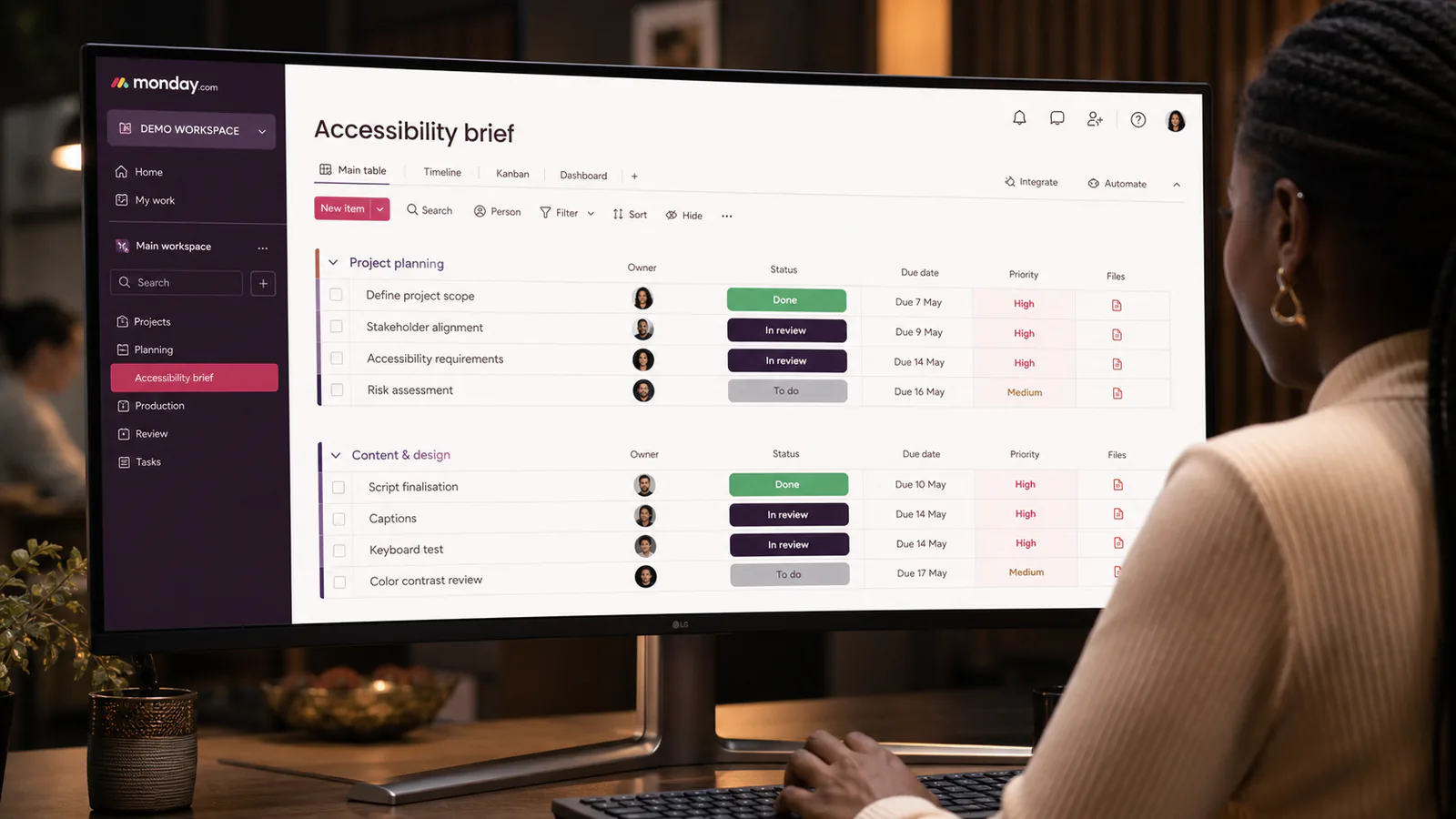
I coordinate captions, transcripts, alt text, contrast, headings, keyboard access and understandable language as planned deliverables where relevant.
Section 06
I prepare the people behind the content
Customer-facing content creates expectations for sales, recruitment, service, delivery or leadership teams. I confirm who receives the next action, what context they will see, how quickly they can respond and which information they may need.
This connects the creative project to the operating reality the customer will encounter after the click or enquiry.
Section 07
I test and hand over the connected experience
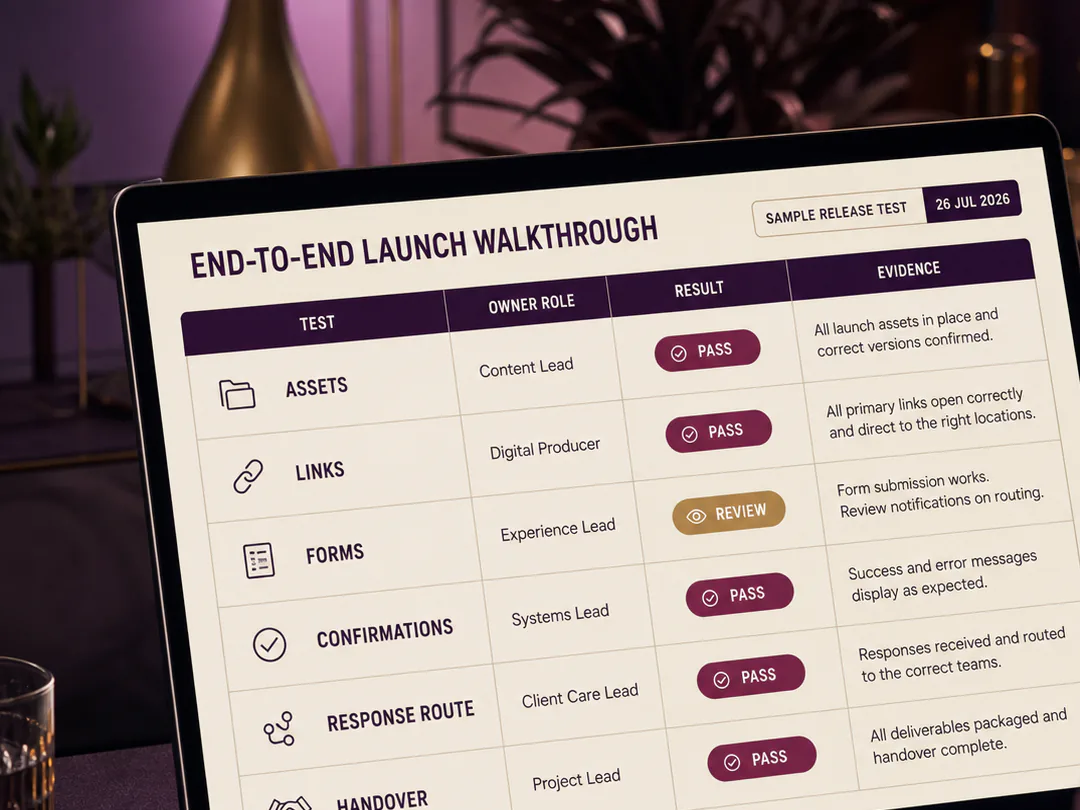
Before release, I walk through the live links, formats, messages, forms, confirmations, accessibility, response route, version status and final asset locations. I record corrections and the approved release set.
The handover includes the source of truth, final assets, usage notes, owners and future update route so that the promise does not fragment again after launch.
Turn this insight into an organised next step.
Consistency is not making every asset look or sound the same. It is ensuring every customer touchpoint tells the truth about the same organisation and leads towards a next step the organisation can honour.
When customer-facing content is being produced across several teams or channels, I can help connect the message, workflow and final service experience before inconsistency reaches the audience.
Start with the short version: the outcome, intended audience, deadline, available assets, stakeholders and the delivery problem that is currently blocking progress.
Sources and related reading
- Adobe — 2026 AI and Digital Trends Report — Customers give promotional content only seconds to earn attention and still expect AI-assisted experiences to feel human and brand-aligned.
- Adobe — 2026 AI and Digital Trends Consumer Report — Customers value relevance and convenience, but prefer human involvement for sensitive information and important decisions.
- Google Search Central — Creating Helpful, Reliable, People-First Content — Useful content should be created primarily for people; meaningful disclosure can explain substantial automation or AI assistance.
- W3C — Web Content Accessibility Guidelines (WCAG) 2.2 Overview — WCAG organises accessible content around perceptible, operable, understandable and robust experiences.