Multimedia Measurement · 2026-06-15 · 6 min read
Views can show that content appeared in front of people. They cannot tell me whether the right audience understood it, trusted it, acted or received a coherent experience.
Multimedia teams can now produce and adapt more content across more channels. That makes volume an increasingly weak measure of success. A busy publishing calendar may still create confusion, repeat the same message badly or attract attention that never becomes a useful customer action.
Adobe’s 2026 digital-trends work emphasises the small window brands have to earn attention and the expectation that AI-assisted experiences still feel human and aligned with the brand. Google’s people-first guidance points towards the same practical test: content should exist primarily to help the intended audience.
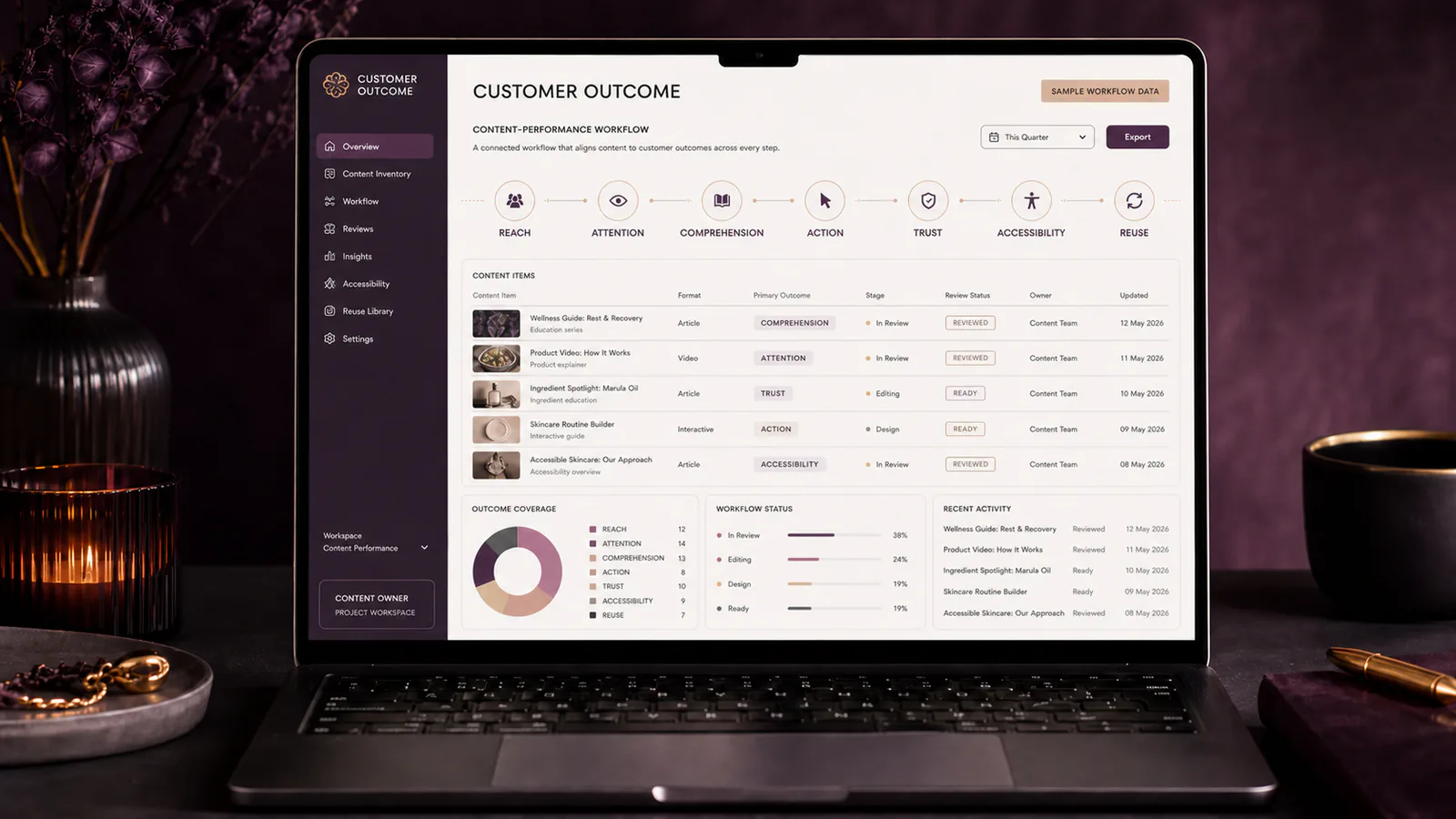
I build measurement from the customer outcome backwards. The exact measures change by project, but the framework below keeps attention, understanding, action, trust and delivery quality connected.
Key takeaways
- Begin with the customer question the content is meant to resolve.
- Measure qualified attention and comprehension, not exposure alone.
- Connect content to a meaningful next action or service outcome.
- Track trust, accessibility, consistency and correction alongside performance.
- Include operational measures such as rework, approval time and asset reuse.
Section 01
Measure one: did the right audience reach the content?
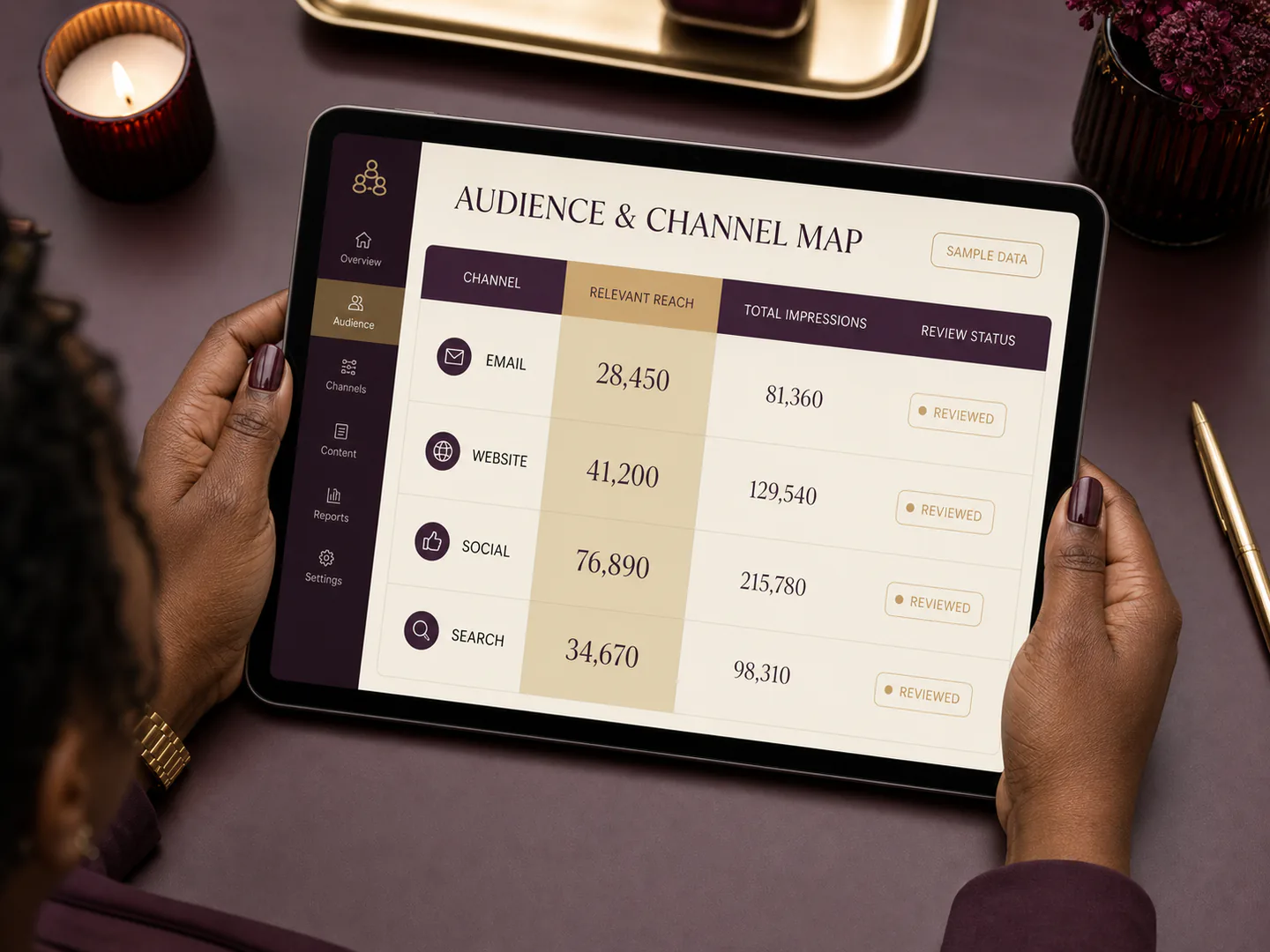
I distinguish total exposure from relevant reach. The project should identify the intended audience, channel, context and entry point so the team can assess whether the content appeared where that audience was likely to need it.
A high number of accidental impressions may be less useful than a smaller number of visits from people with the problem the content addresses.
Section 02
Measure two: did the content earn useful attention?
Attention measures may include meaningful watch time, completion of an important sequence, scroll depth, interaction with a key visual or return to a reference section. I interpret them in relation to the format rather than applying one universal benchmark.
The objective is not to force every person to consume everything. It is to see whether the structure helped the audience find and stay with the part that mattered.
Section 03
Measure three: did people understand the message?
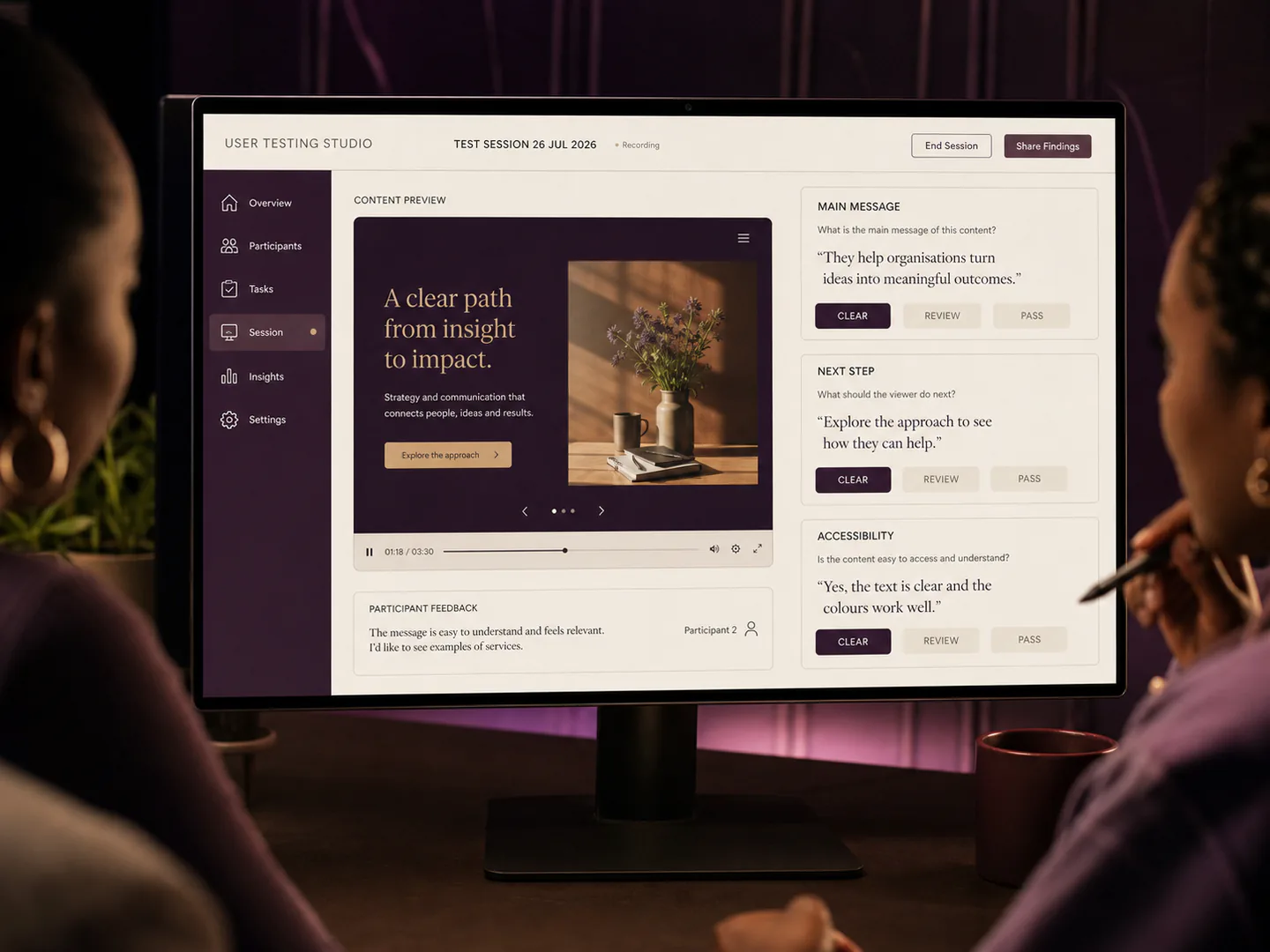
I look for comprehension through questions received, search behaviour, short surveys, user testing, sales or service feedback and the quality of the next conversation. Repeated confusion is a content signal, not only a customer-service problem.
For important information, I test whether the audience can explain the main point and next step in their own words.
Bring the moving parts into one delivery process.
I can help define a practical measurement plan for a campaign, website, presentation or multimedia project, connecting customer outcomes with content, quality and workflow indicators your team can actually collect and use.
Section 04
Measure four: did the content support a meaningful action?
The intended action may be an enquiry, application, booking, download, informed decision, internal approval or completion of a service step. I connect the asset to that outcome without assuming that the last click deserves all the credit.
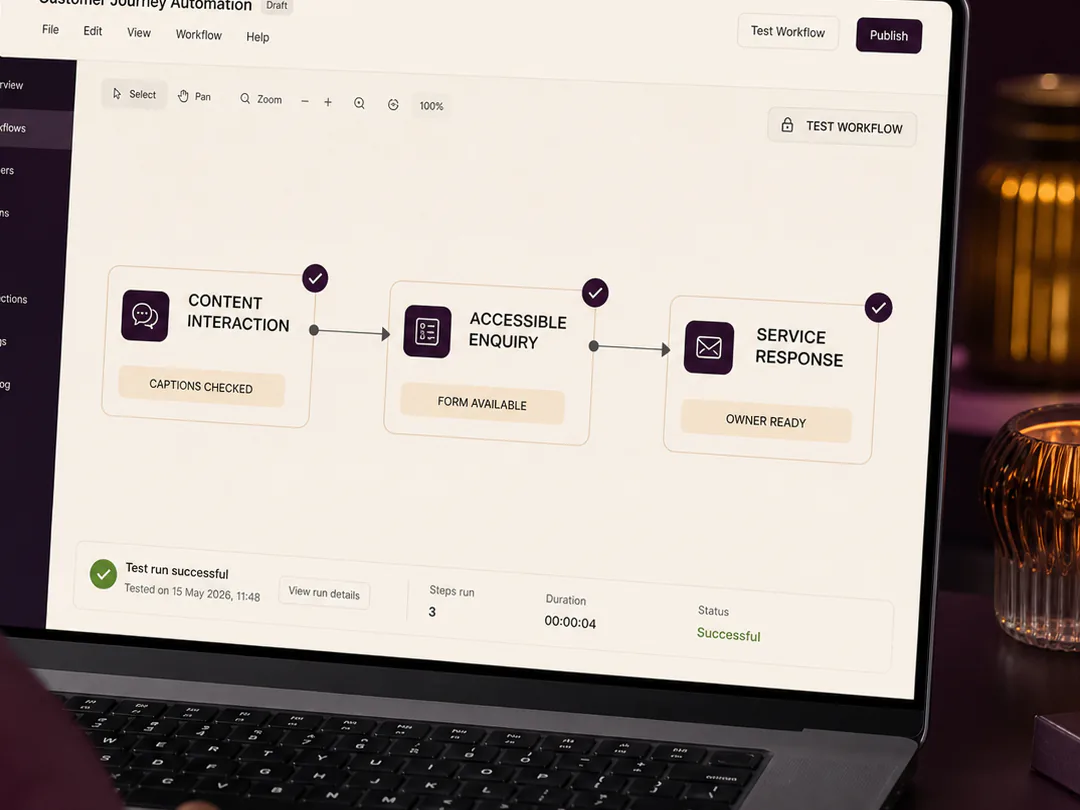
I also check whether the action route works: correct link, accessible form, clear response expectation and a team prepared to receive the customer.
Section 05
Measure five: did the experience preserve trust and access?
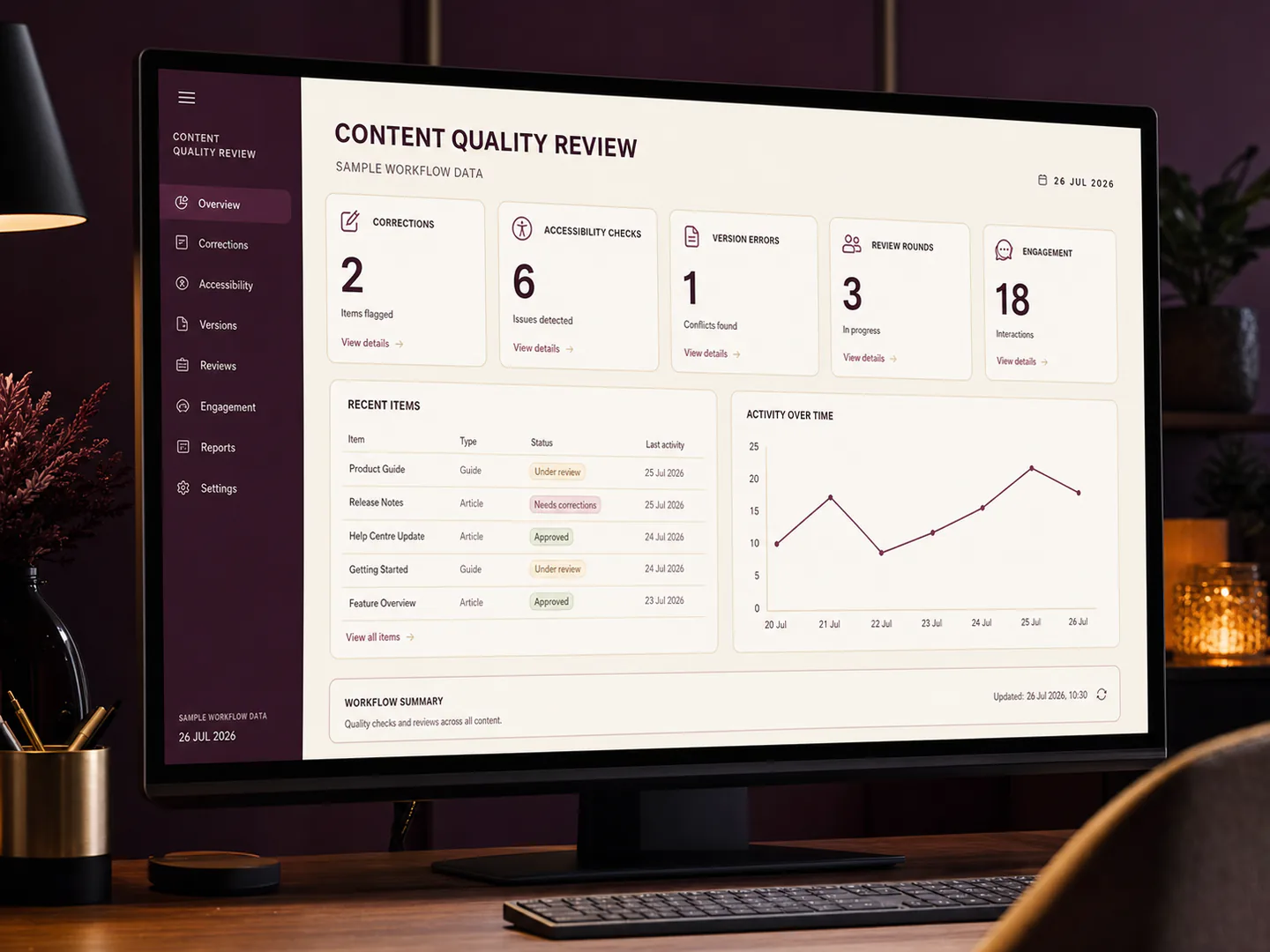
Corrections, complaints, abandonment, disclosure questions, accessibility barriers and inconsistent claims are quality measures. They can explain why content with strong reach still weakens the customer relationship.
I include captions, alt text, contrast, readable structure, mobile behaviour and language clarity in the delivery standard rather than treating them as optional extras.
Section 06
Measure six: how efficiently did the team deliver quality?
I track review rounds, approval time, missing assets, rework, late changes, version errors and the time spent locating source material. These measures show where the content operation is creating avoidable cost or risk.
Efficiency is valuable when quality and customer outcomes remain stable or improve. Producing faster but correcting more later is not a genuine gain.
Section 07
Measure seven: what reusable value did the project create?
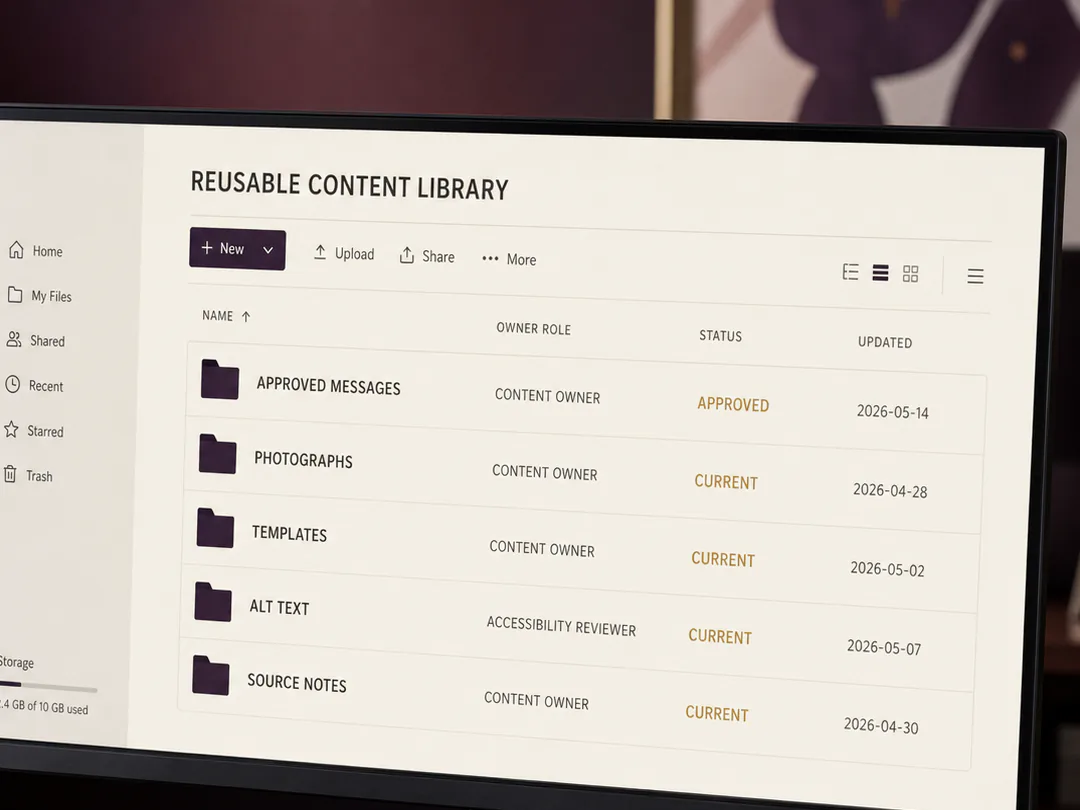
A well-organised campaign can create approved messages, photographs, templates, source notes, alt text, audience insights and modular assets for future work. I record reuse, update effort and the condition of the final library.
This reveals value beyond a single publication date and gives the customer a stronger return on the original project investment.
Turn this insight into an organised next step.
Views and output counts are not useless. They are incomplete. Good measurement explains whether the content reached the intended person, helped them understand, supported a useful action and remained professionally deliverable for the organisation.
When reporting is full of platform numbers but still cannot answer whether the project worked for the customer, I can help rebuild the measurement around the purpose of the content.
Start with the short version: the outcome, intended audience, deadline, available assets, stakeholders and the delivery problem that is currently blocking progress.
Sources and related reading
- Adobe — 2026 AI and Digital Trends Report — Customers give promotional content only seconds to earn attention and still expect AI-assisted experiences to feel human and brand-aligned.
- Google Search Central — Creating Helpful, Reliable, People-First Content — Useful content should be created primarily for people; meaningful disclosure can explain substantial automation or AI assistance.
- W3C — Web Content Accessibility Guidelines (WCAG) 2.2 Overview — WCAG organises accessible content around perceptible, operable, understandable and robust experiences.