Knowledge Work and Project Records · 2026-06-08 · 6 min read
When AI can research, analyse, draft reports and move work through review, the organisation needs stronger records—not fewer—to preserve what is true, decided and reusable.
OpenAI’s 2 June 2026 knowledge-work report described Codex use extending into reports, spreadsheets, presentations, contracts, research, data analysis, workflow automation and lightweight tools. It also reported more parallel work and greater movement of deliverables through review and approval.
This development can reduce the time spent searching across systems and preparing first versions. It can also create a larger volume of polished material whose sources, assumptions and decision status are difficult to reconstruct later.
I respond by strengthening the project record. The objective is not to document every keystroke. It is to preserve the information a customer, reviewer or future owner needs to understand what was asked, what evidence was used, what changed and what was finally approved.
Key takeaways
- Start AI-assisted research with a bounded question and an approved source scope.
- Maintain a source register that distinguishes evidence, interpretation and unresolved gaps.
- Record decisions and material changes separately from draft generation.
- Require review evidence proportionate to the customer impact of the deliverable.
- Hand over the reusable process, approved output and known limitations together.
Section 01
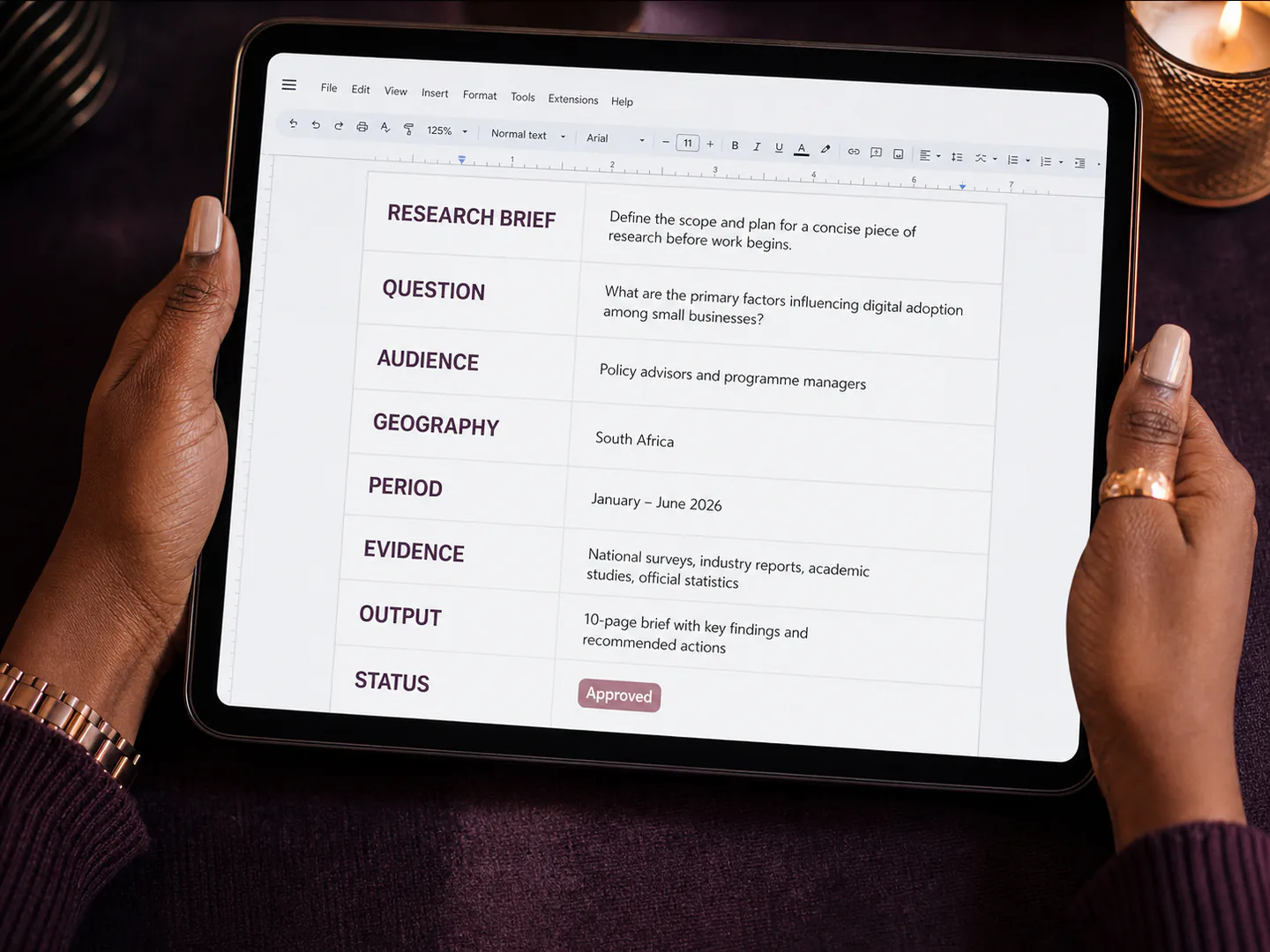
I write the research or work question first
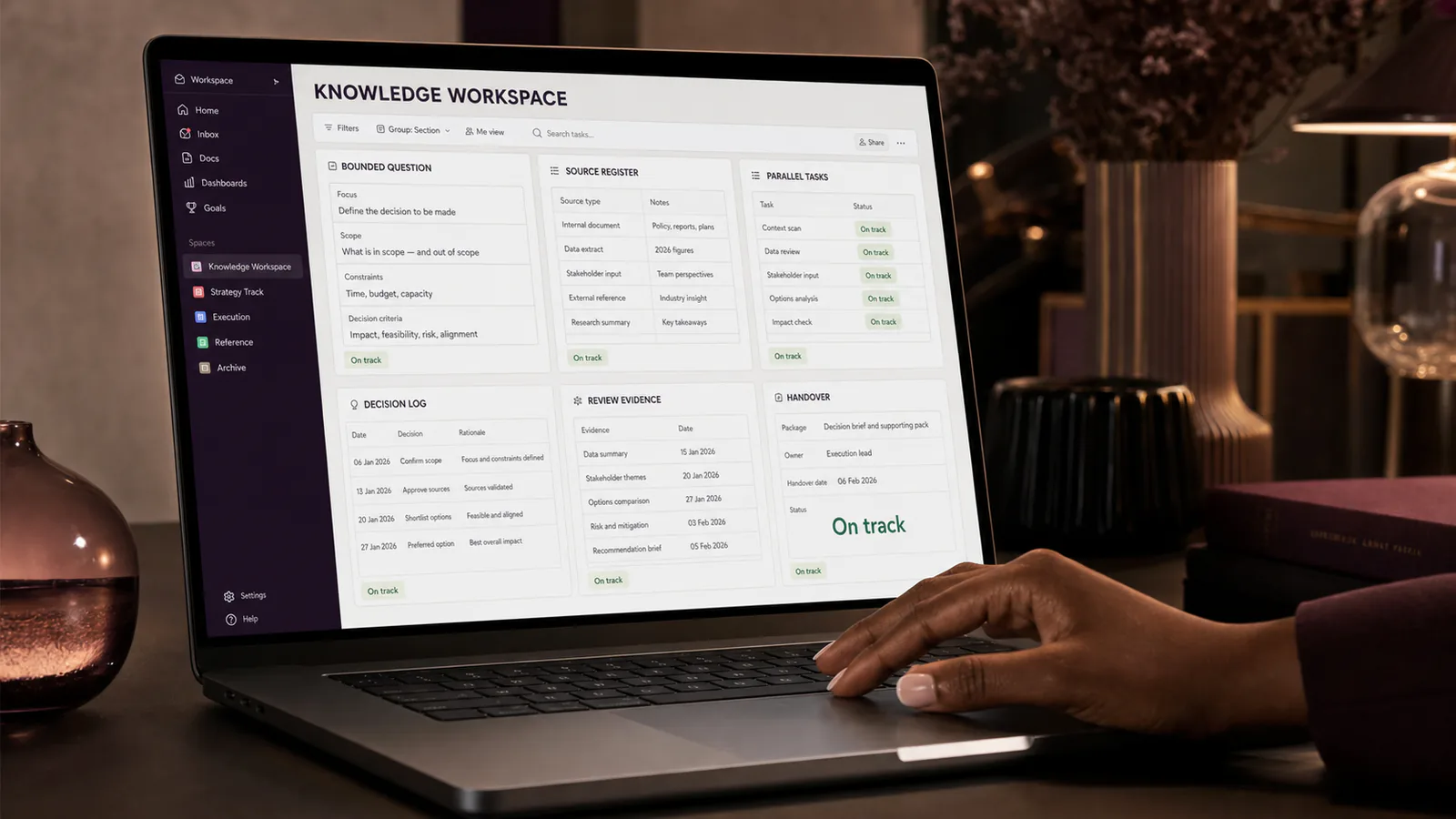
A broad instruction to “research the market” can produce a large response without resolving the decision the project faces. I define the audience, question, period, geography, required evidence, output format and use of the result.
The assignment also states what is outside scope and when the tool should return an unanswered question rather than infer a fact.
Section 02
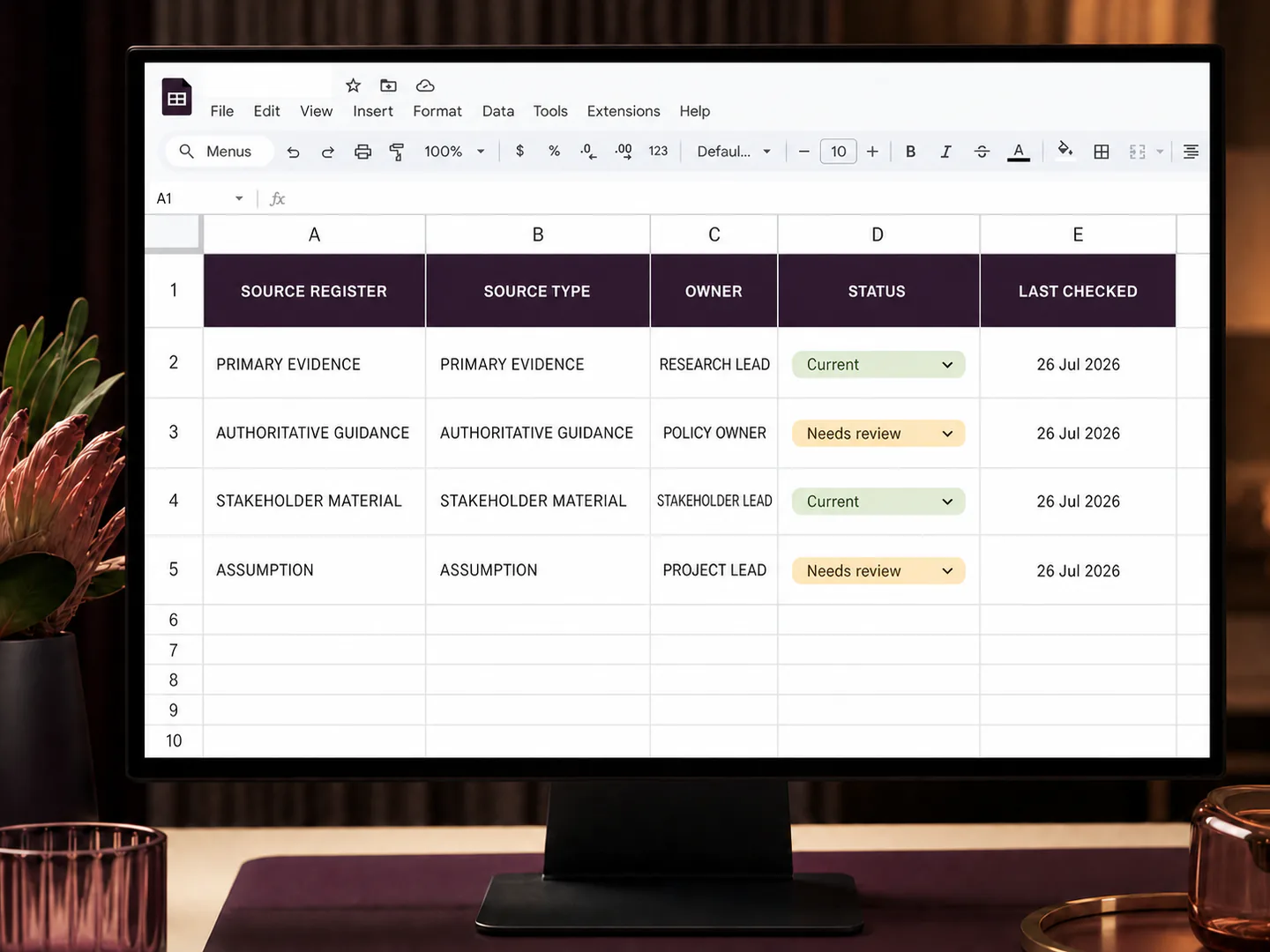
I establish a source register
Every material claim should connect to an identifiable source, date and relevance note. I separate primary evidence, authoritative guidance, stakeholder-provided material, working assumptions and contextual reading.
The register helps reviewers assess freshness and reliability. It also prevents a later presentation from treating an early assumption as an established fact.
Section 03
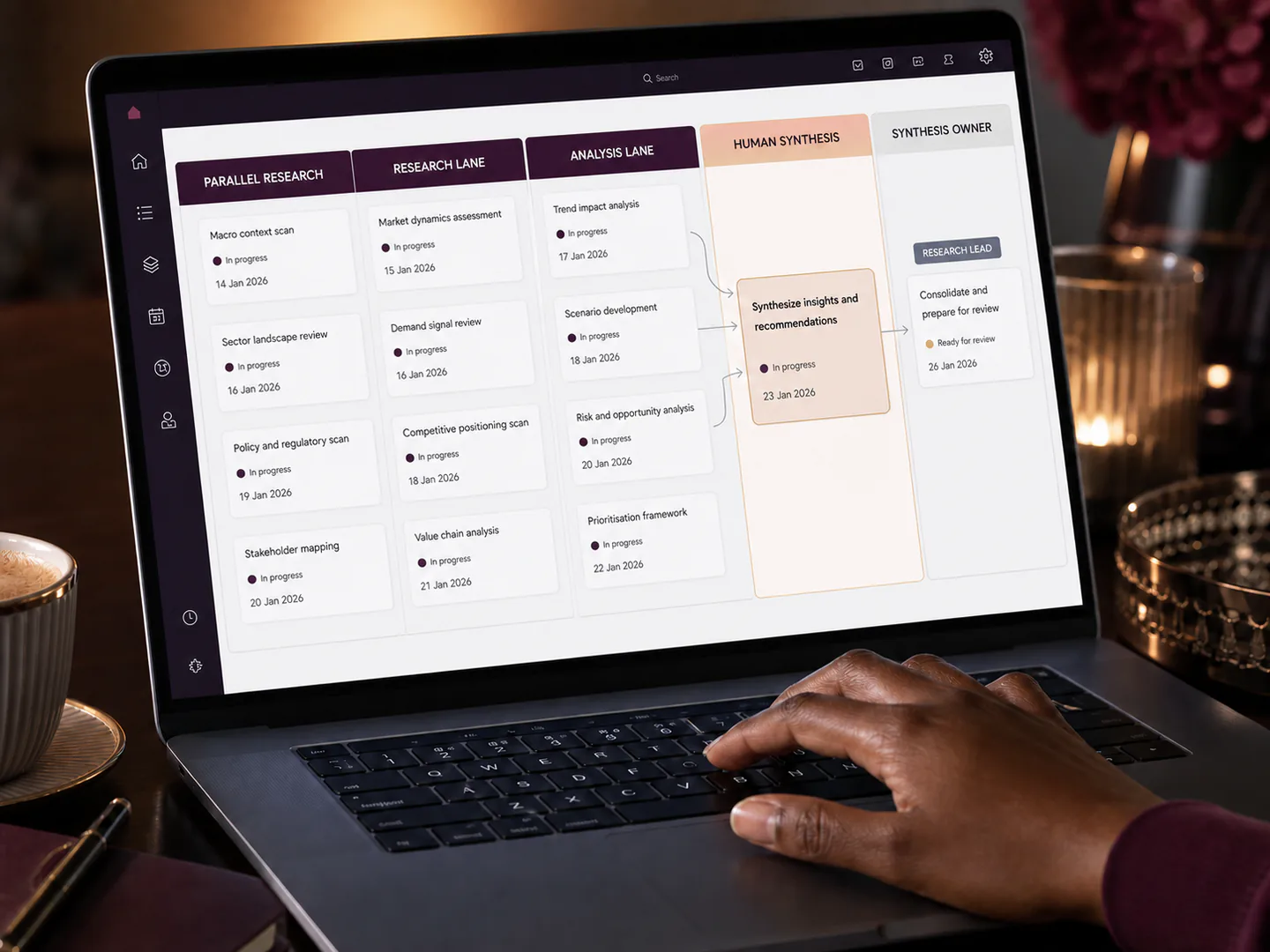
I organise parallel tasks around one synthesis owner
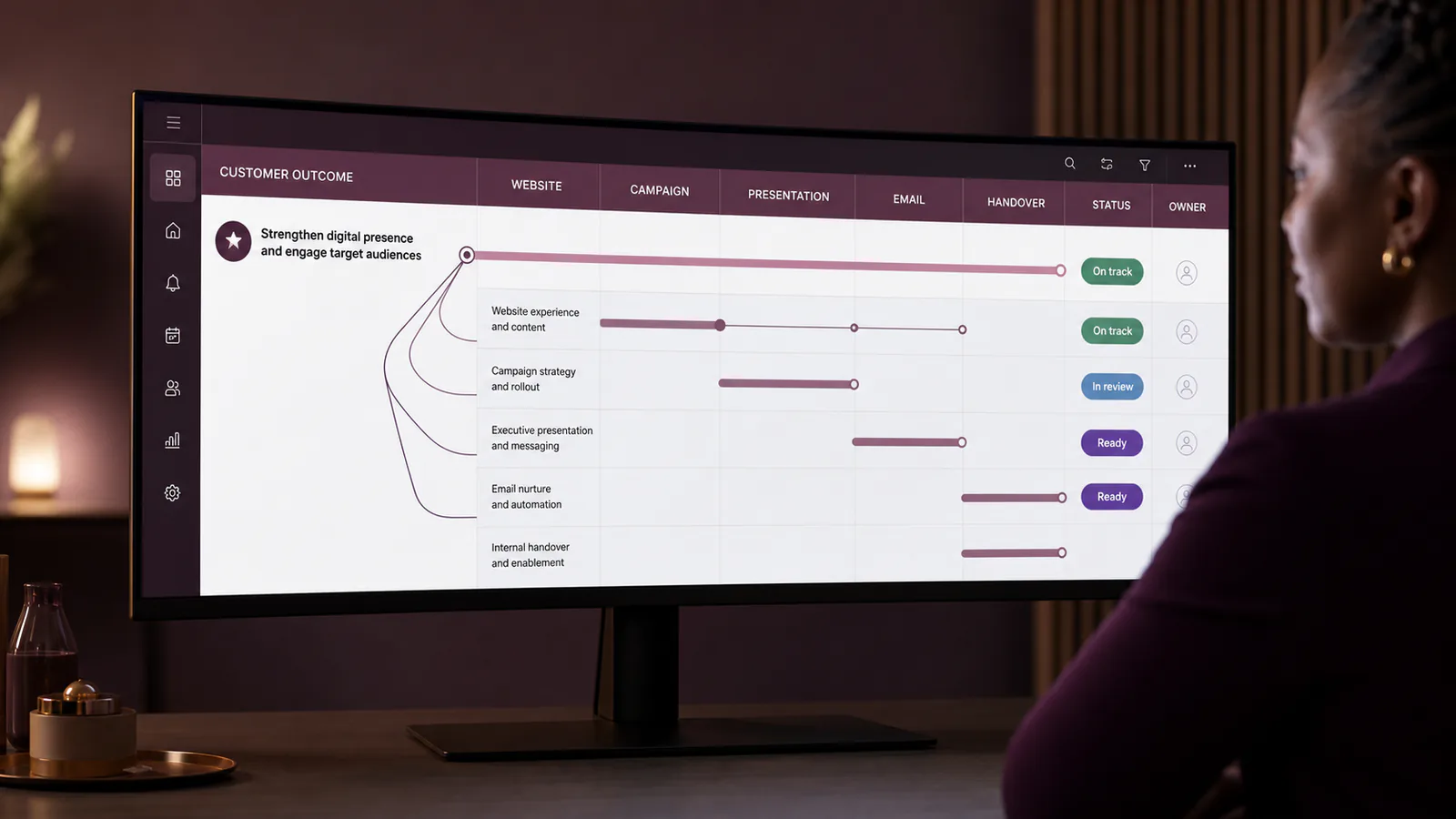
Research, analysis, drafting and checking may run at the same time. I give each stream a clear output structure and name the person responsible for integrating the results.
Parallel work becomes useful when it reduces waiting without creating conflicting definitions, duplicated evidence or several “final” versions.
Bring the moving parts into one delivery process.
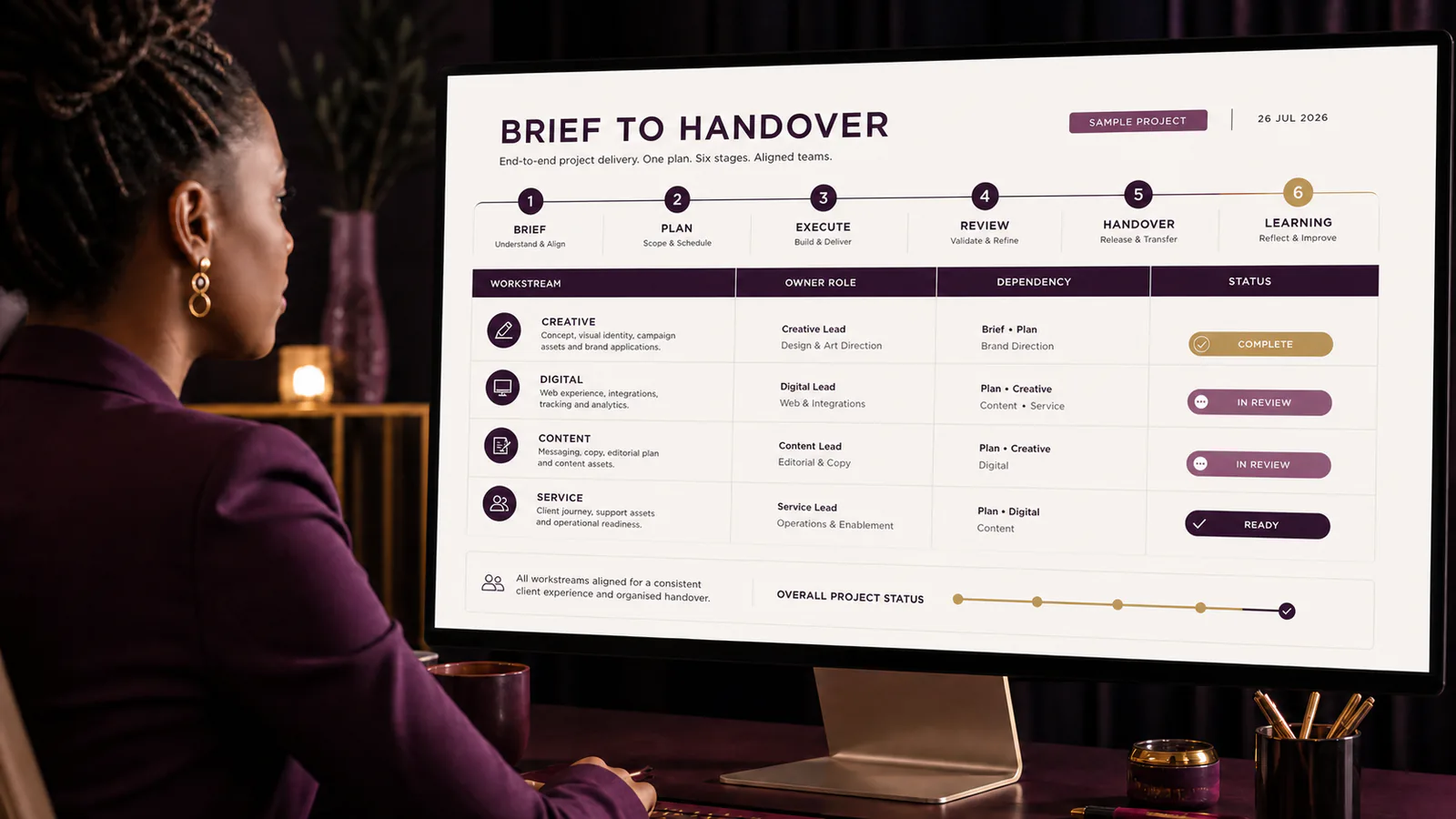
I can coordinate an AI-assisted research, report or presentation project by defining the question, organising sources and workstreams, maintaining decision and review records, and preparing a handover that remains useful after the first delivery.
Section 04
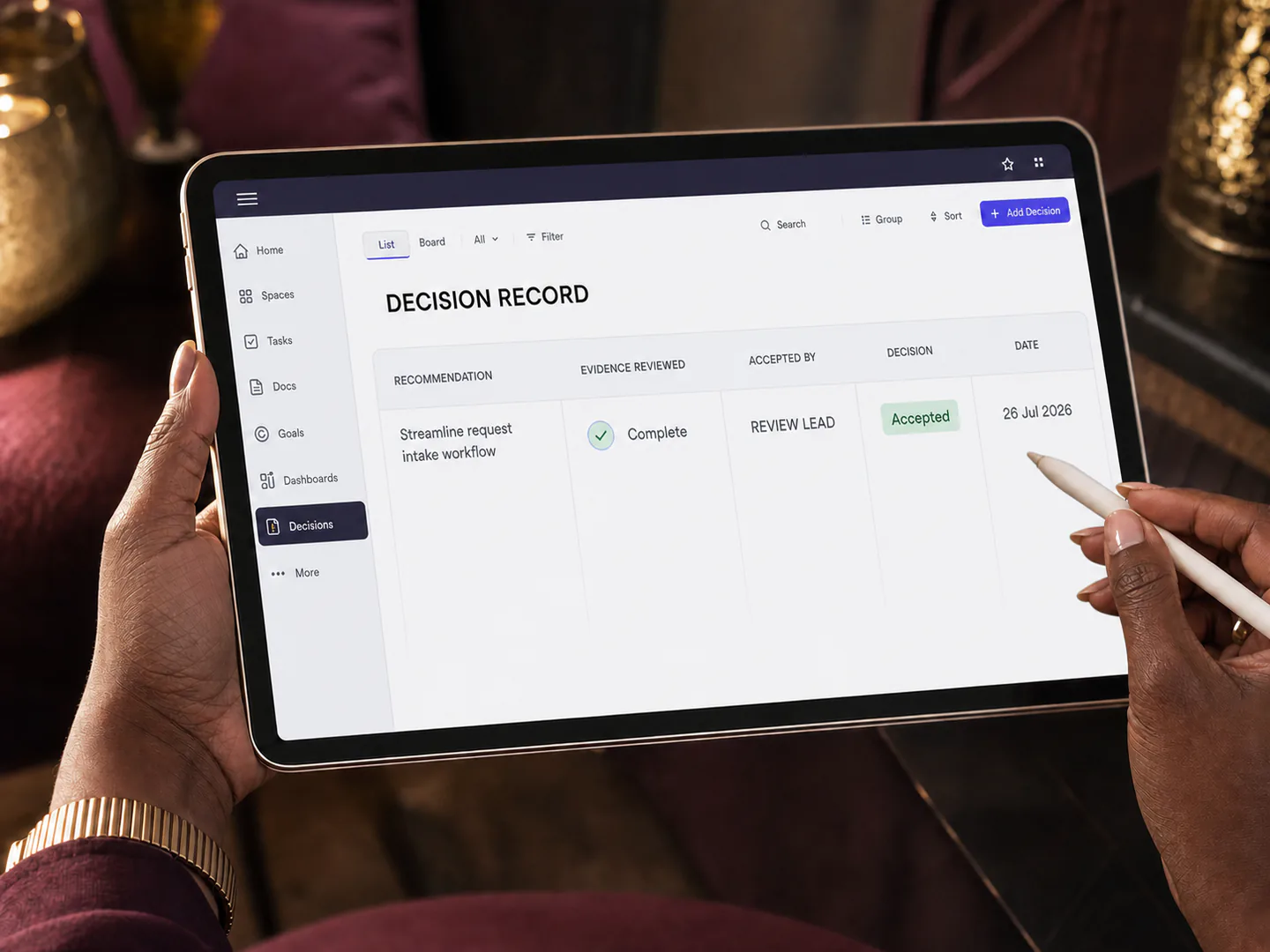
I keep the decision record human-owned
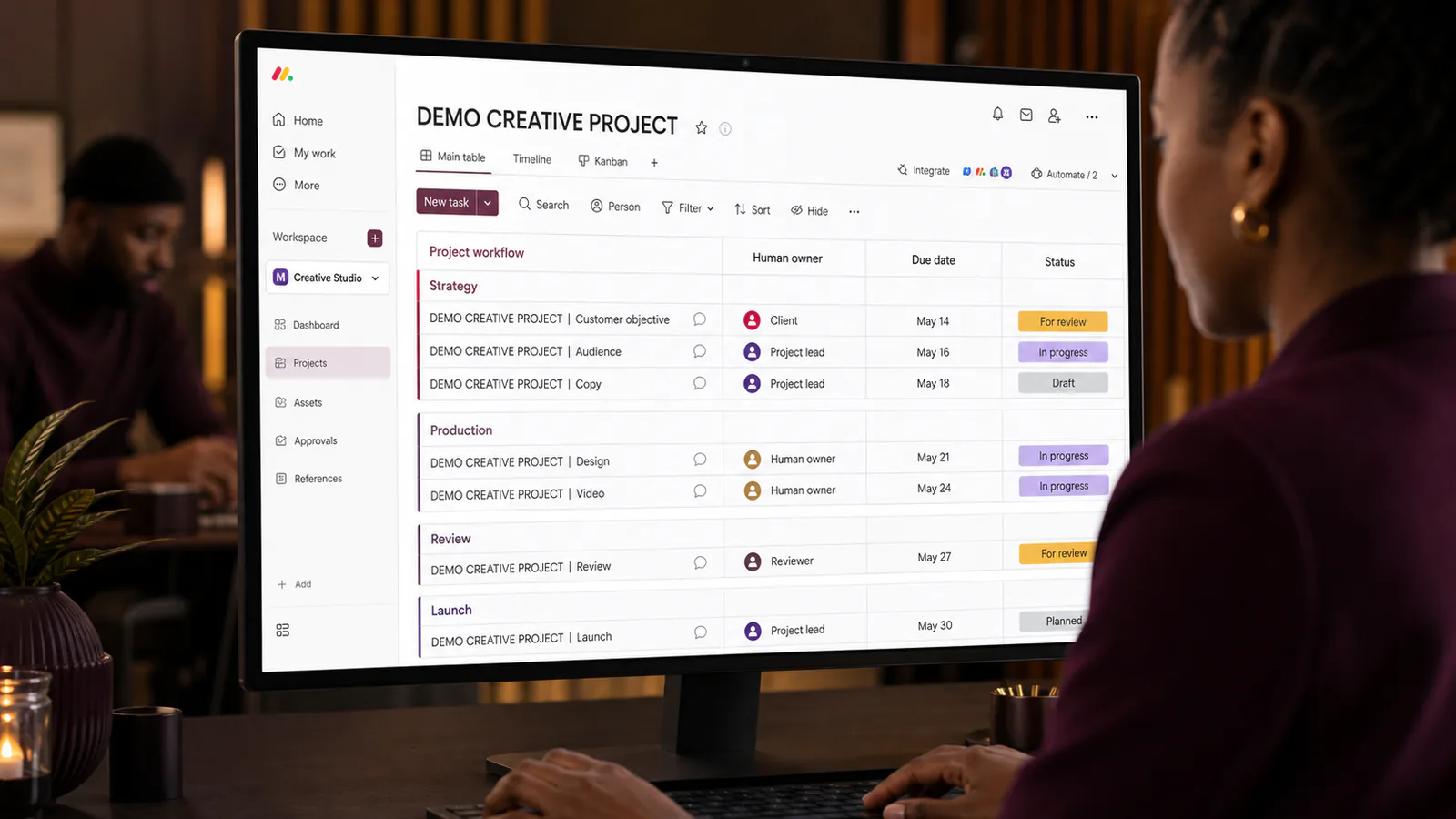
An AI tool may compare options or identify patterns. The project record should show which stakeholder accepted the interpretation, chose the recommendation or changed the direction and why.
This distinction matters because a generated report can inform a decision without becoming the decision-maker.
Section 05
I preserve review evidence and corrections
I record material factual corrections, changed calculations, disputed interpretations, missing evidence and the reviewer responsible for acceptance. Minor editing does not need excessive bureaucracy, but consequential changes should not disappear inside a final file.
The customer should be able to trust that the output was tested against the agreed question and source base.
Section 06
I connect the work product to the wider project
A report or presentation is often an input to another decision, campaign, website update or operational change. I identify the downstream owner, required format, deadline and actions that follow approval.
This prevents knowledge work from ending as a document that is complete but unused.
Section 07
I hand over the method as well as the answer
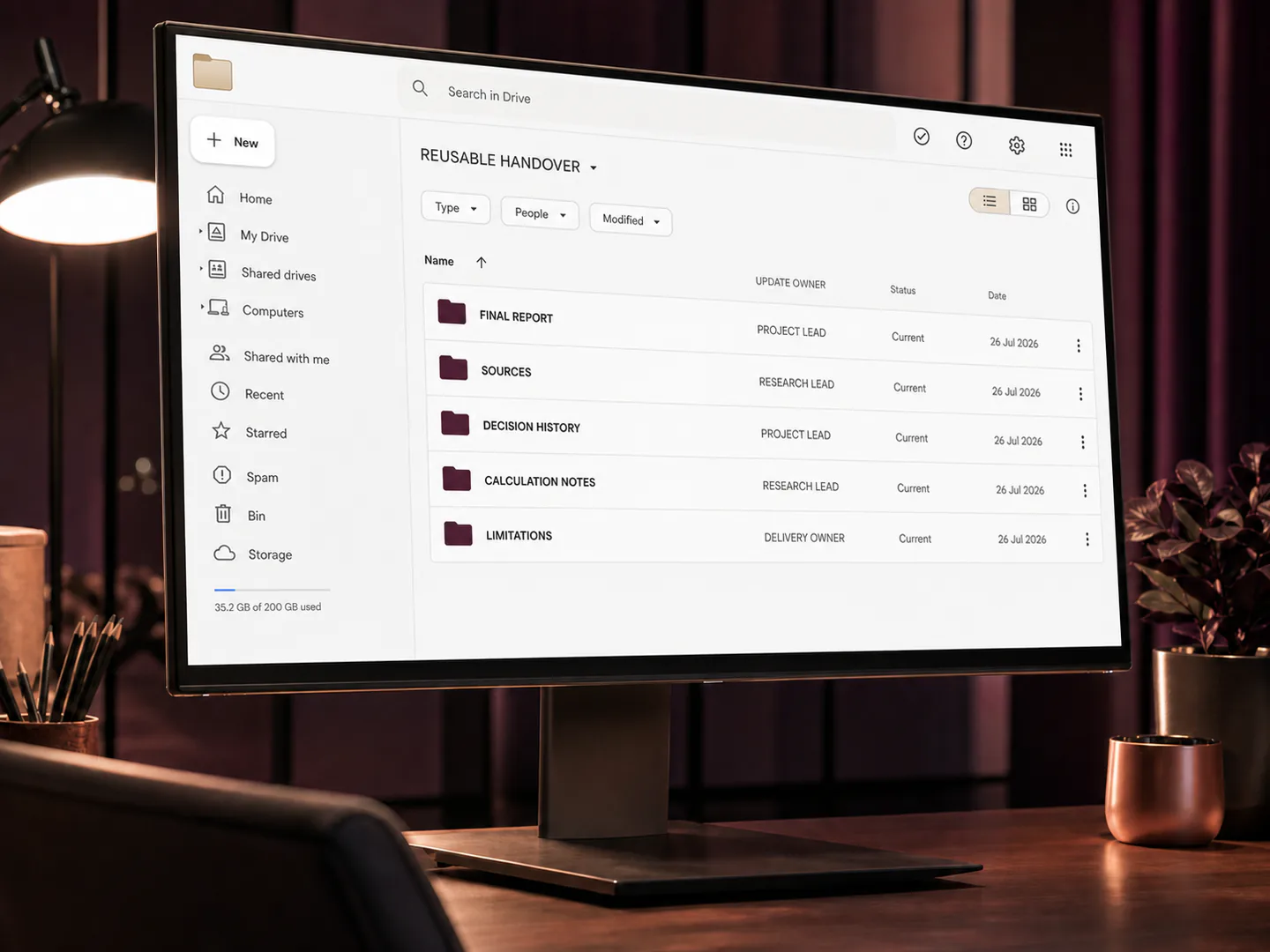
The handover includes the final approved work, brief, source register, data or calculation notes, decision trail, reusable instructions, open questions and future update owner. The next person can repeat or refresh the work without starting from zero.
Known limitations are part of professional delivery. Recording them gives the organisation a fair basis for future decisions.
Turn this insight into an organised next step.
Knowledge-work AI makes it easier to create more complete-looking work products. Strong project records make it possible to know which of those products are evidence-led, reviewed and ready for a real decision.
When research and documentation are spread across tools, people and versions, I can help bring the question, evidence, decisions and final use into one organised delivery trail.
Start with the short version: the outcome, intended audience, deadline, available assets, stakeholders and the delivery problem that is currently blocking progress.
Sources and related reading
- OpenAI — Codex Is Becoming a Productivity Tool for Everyone (2 June 2026) — Knowledge workers use Codex for research, analysis, reports, presentations, workflow automation and moving work through review.
- PMI — Step Up: Redefining the Path to Project Success with M.O.R.E. (December 2025) — Project success increasingly depends on ownership, perception management, reassessment and a wider view of value.
- Google Search Central — Creating Helpful, Reliable, People-First Content — Useful content should be created primarily for people; meaningful disclosure can explain substantial automation or AI assistance.