Complex Project Delivery · 2026-05-25 · 6 min read
A complex project rarely collapses because every individual task was impossible. It fails when dependencies, decisions, information and stakeholder expectations stop connecting.
PMI’s 2026 Pulse research reflects how common complexity has become: almost every surveyed project professional had managed a complex project in the preceding year, yet roughly one third of complex projects fail. Projects with stronger complexity management were reported as substantially more likely to achieve their business goals.
Creative and digital delivery contains its own forms of complexity. Several platforms may share one message. Assets arrive from different contributors. Reviewers focus on different risks. AI-assisted tools increase output volume. A launch date may depend on approvals, rights, technical readiness and a customer decision happening elsewhere.
I do not try to remove every source of complexity. I make the important connections visible and establish controls that help the team respond before one weak link damages the final outcome.
Key takeaways
- Complexity is managed by connecting the work to one customer and business outcome.
- Dependencies need owners, dates, evidence and escalation—not only arrows on a plan.
- Decision rights should be visible before stakeholders disagree.
- Exceptions and changes are sources of learning, not interruptions to hide.
- The final test is whether the complete customer experience works across all deliverables.
Section 01
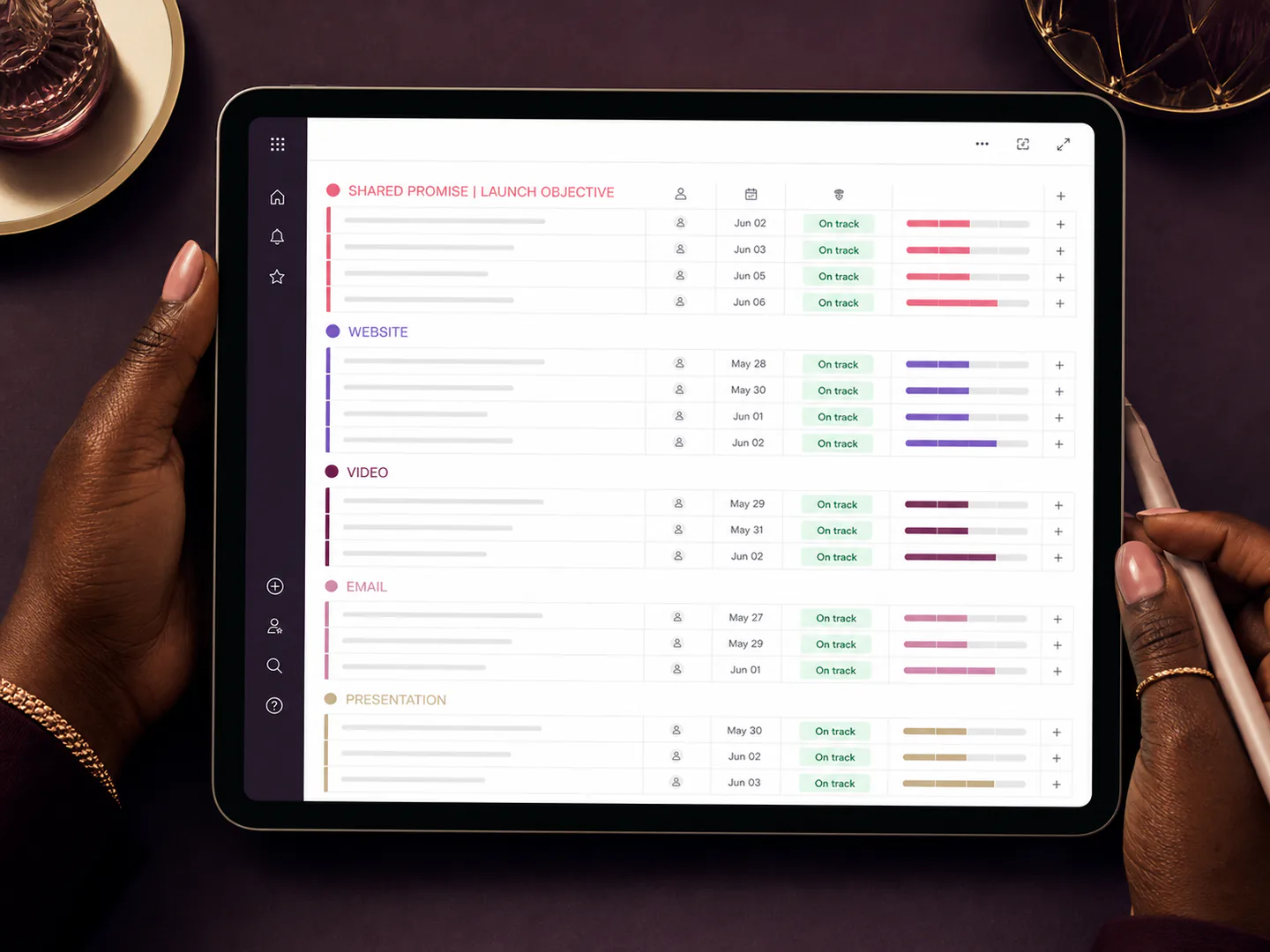
Control one: one outcome across many workstreams
I create a concise outcome statement that every workstream can use to test its decisions. The website, presentation, campaign content and internal process may have different outputs, but they should support the same customer promise and business purpose.
When local optimisation conflicts with the wider outcome, the project has a basis for choosing rather than allowing the loudest workstream to win.
Section 02
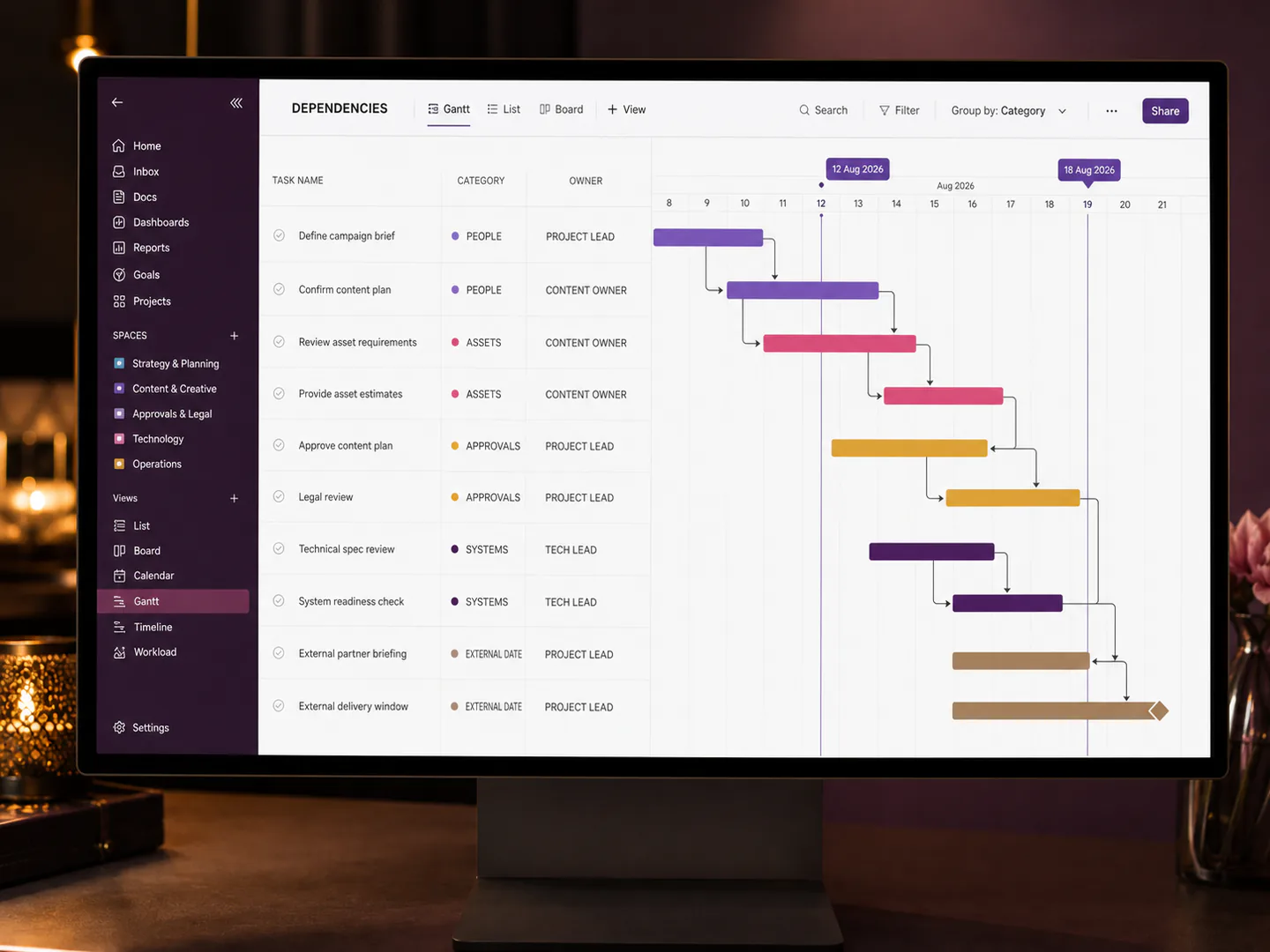
Control two: a live dependency and assumption view
I record the information, asset, person, system, decision or external event required for each important milestone. I also make assumptions explicit: what the plan currently believes will be true and by when it must be confirmed.
The view stays useful because owners update evidence and raise changes. A dependency is not managed simply because it appeared in the original schedule.
Section 03
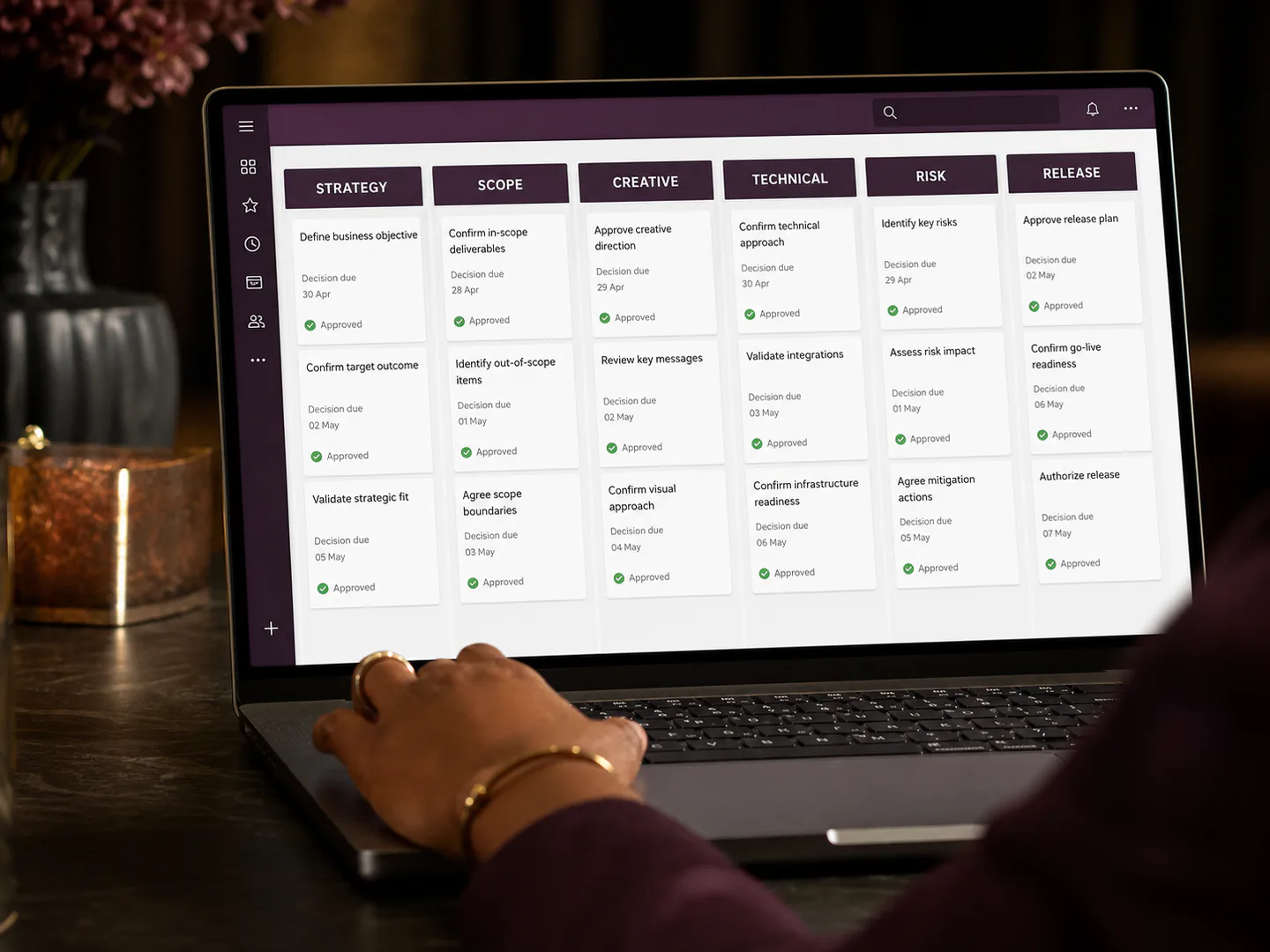
Control three: a decision architecture
Complex projects contain decisions at different levels: strategic direction, scope, creative choice, technical method, risk acceptance and final release. I identify the owner, required advisers, evidence and escalation route for each material decision.
This prevents the team from waiting for universal agreement where one accountable decision is required.
Bring the moving parts into one delivery process.
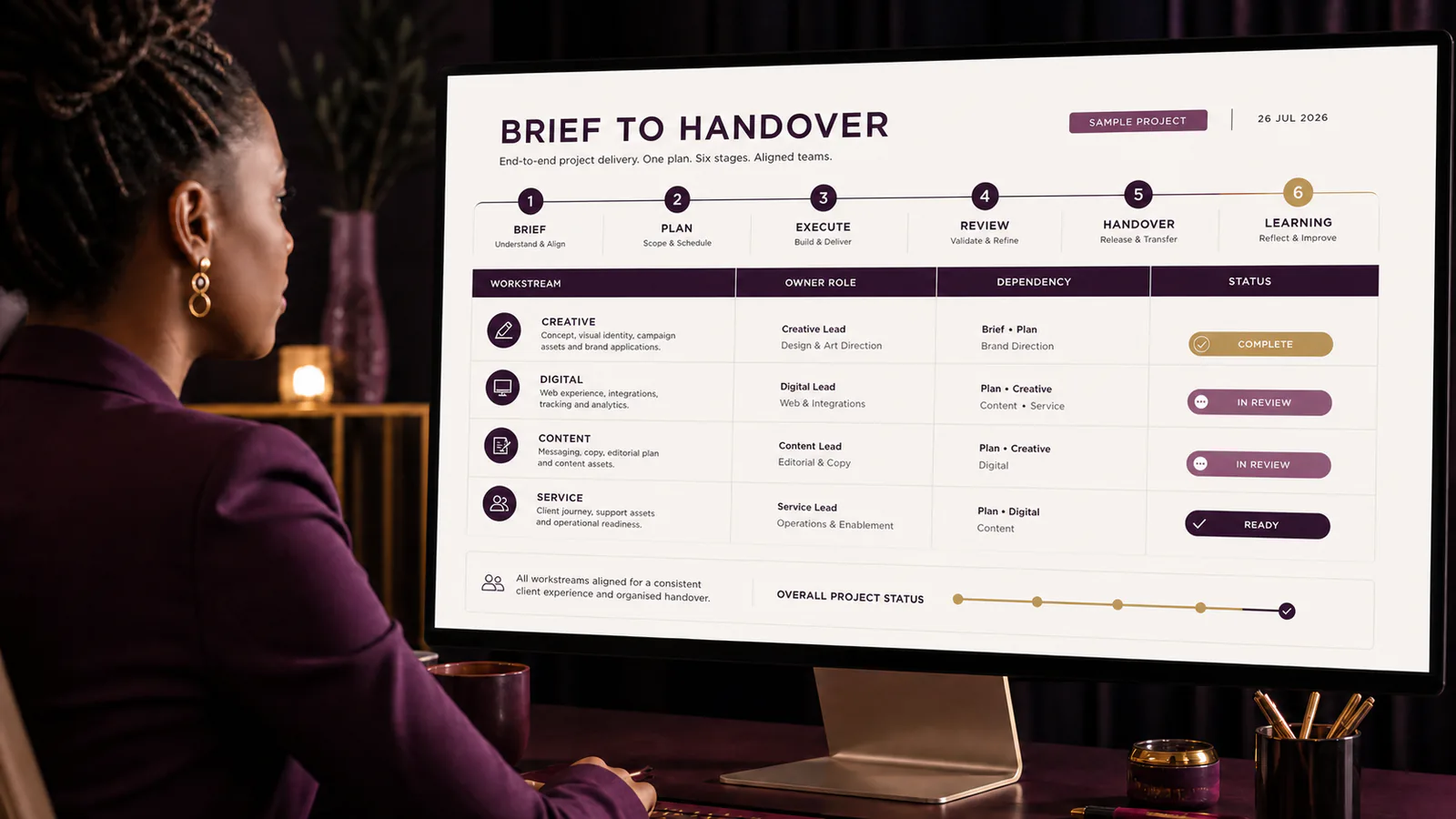
I can stabilise a complex creative or digital project by aligning workstreams around one outcome, mapping dependencies and decisions, establishing an exception rhythm and coordinating an integrated readiness review before handover.
Section 04
Control four: an exception and learning rhythm
I create a regular point for reviewing blockers, contradictions, failed assumptions, quality concerns and emerging customer information. The purpose is not to produce a longer status report. It is to decide what the project must change.
Learning needs an owner and an update to the plan, brief, standard or workflow. Otherwise the same problem returns under a different task name.

Section 05
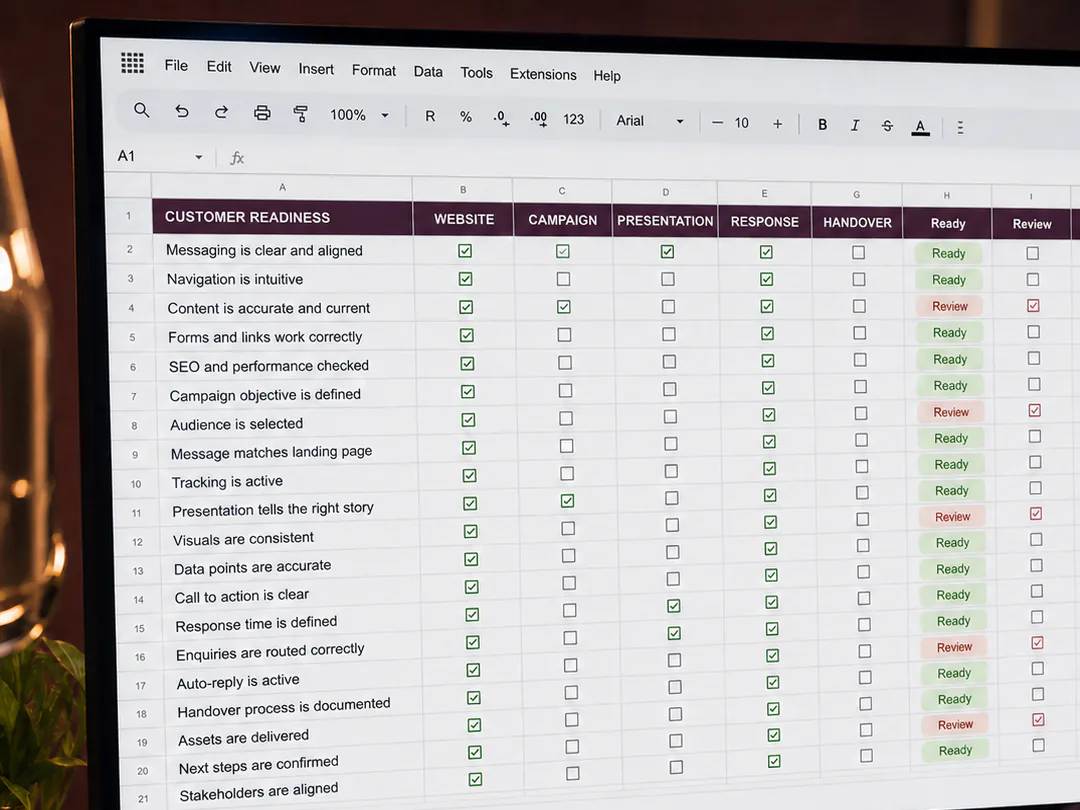
Control five: an integrated customer-readiness check
Before release, I review the complete path as the customer will experience it. The message, links, formats, accessibility, response route, stakeholder preparation, data handling and final files must work together.
A collection of approved components can still create a broken experience when their connections have not been tested.
Section 06
I make progress visible without creating reporting theatre
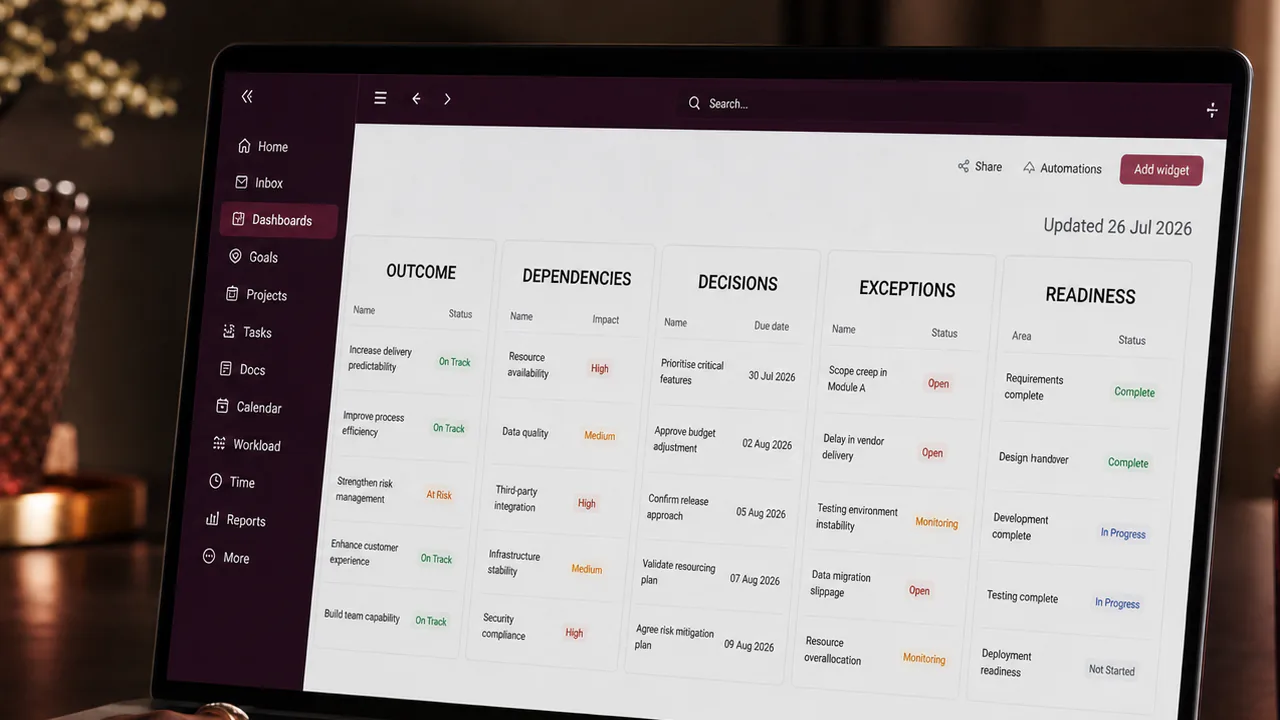
Stakeholders need a clear view of outcomes, decisions, dependencies, exceptions and next milestones. I keep reporting focused on what changed, what needs attention and what the effect will be.
This helps sponsors respond to the real delivery system rather than receiving a reassuring percentage that hides unresolved connections.
Section 07
I hand over the operating knowledge, not only the outputs
Complex work creates knowledge about why decisions were made, which risks remain, how assets connect and who owns future changes. I include that information in the handover.
The customer can then operate and update the result without depending on the original team to reconstruct every relationship.
Turn this insight into an organised next step.
Complexity becomes dangerous when the project loses sight of the connections that create value. A project manager helps the team see and govern those connections while conditions continue to change.
When a project has capable contributors but still feels fragmented, I can help organise the outcome, decision system, dependencies, reviews and final customer journey into one delivery view.
Start with the short version: the outcome, intended audience, deadline, available assets, stakeholders and the delivery problem that is currently blocking progress.
Sources and related reading
- PMI — Pulse of the Profession 2026: Driving Success in Complex Projects (May 2026) — Complexity is now common; outcome focus, alignment and learning distinguish stronger delivery.
- PMI — Step Up: Redefining the Path to Project Success with M.O.R.E. (December 2025) — Project success increasingly depends on ownership, perception management, reassessment and a wider view of value.
- Microsoft — 2025 Work Trend Index: The Frontier Firm Is Born — Human-agent teams increase the need for direction, supervision, workflow design and judgement.