AI Content Operations · 2026-06-01 · 6 min read
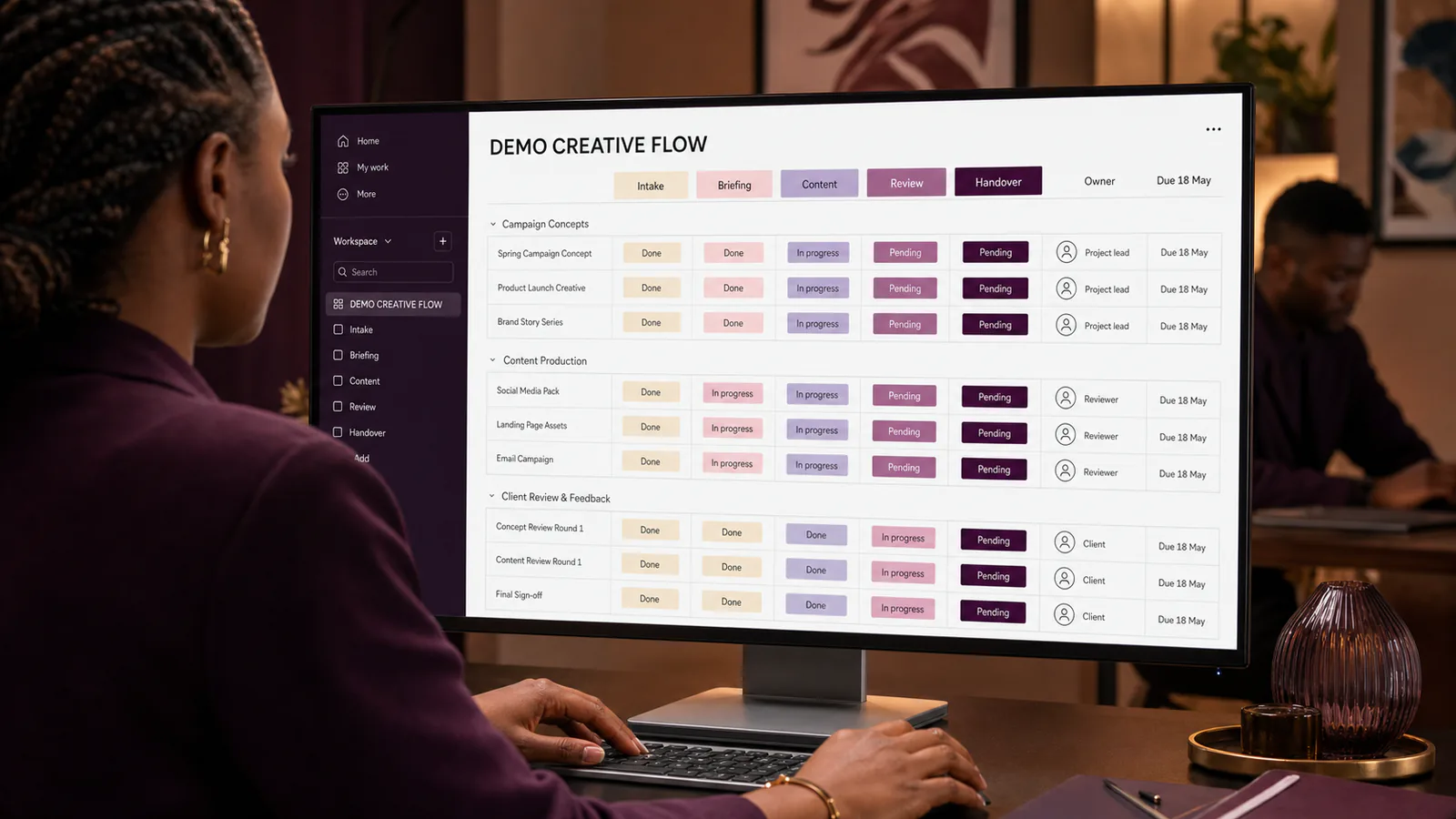
A prompt may start the work. Only a named owner can keep the customer outcome, source material, quality standard and final release connected from beginning to end.
AI-assisted content workflows often begin with a prompt template and a demonstration of how quickly a draft can appear. The demonstration rarely shows who will maintain the approved information, resolve exceptions, control access, judge the result or take responsibility when the content reaches a customer.
That missing role is not a small administrative detail. It determines whether the workflow becomes a dependable operating process or a collection of individual experiments. Human-agent work increases the need for direction, supervision and clear handoffs rather than removing it.
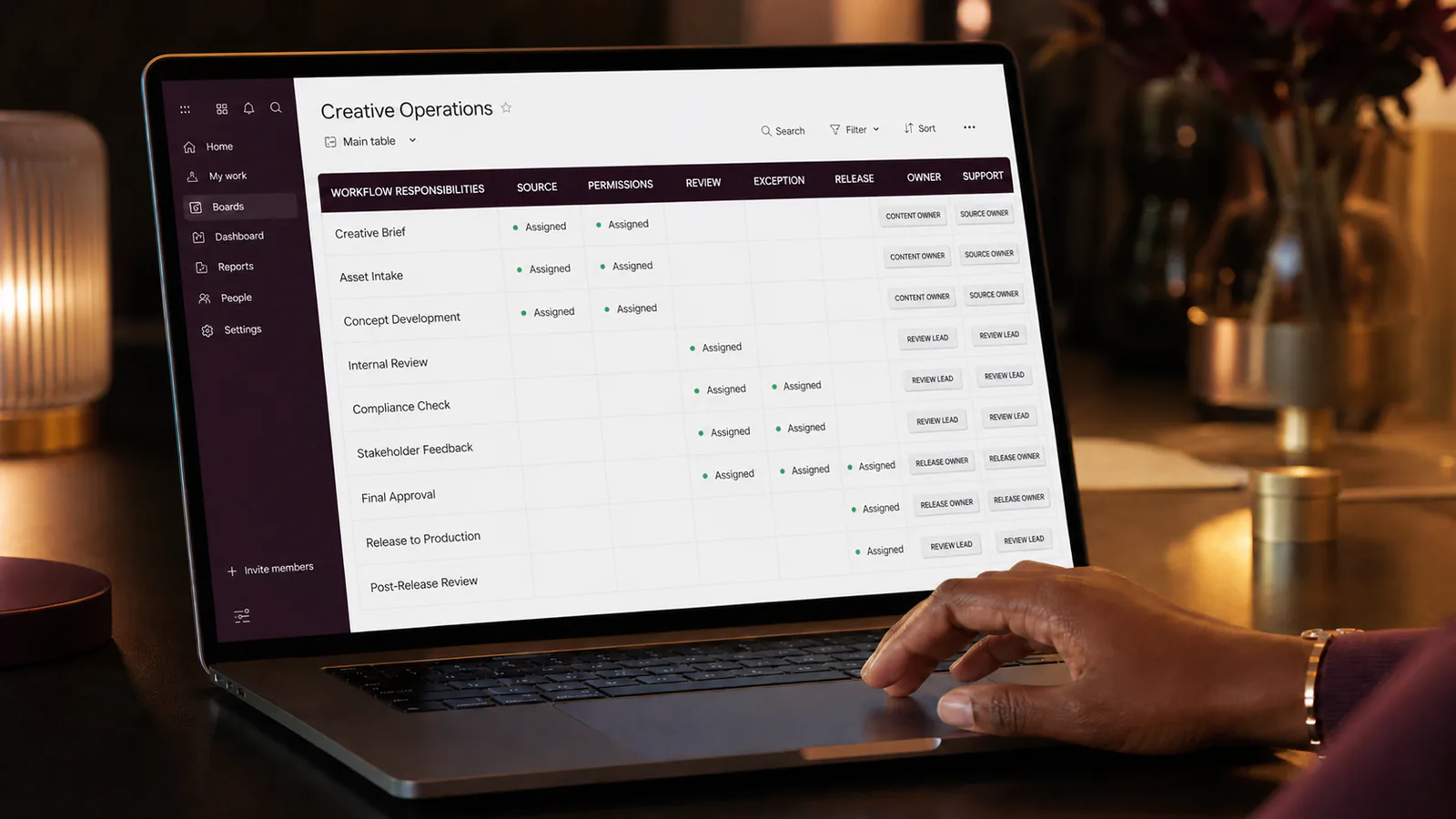
I require one named workflow owner. Specialists may own particular checks, but one person must remain accountable for the complete path from customer need to approved content and organised handover.
Key takeaways
- Name one accountable owner for the full AI-assisted content workflow.
- Assign supporting ownership for sources, permissions, review, exceptions and release.
- Keep the audience outcome and acceptance criteria visible in every stage.
- Do not let a prompt become an undocumented policy decision.
- Review performance through customer value, quality, rework and trust—not output volume alone.
Section 01
The workflow owner protects the customer outcome
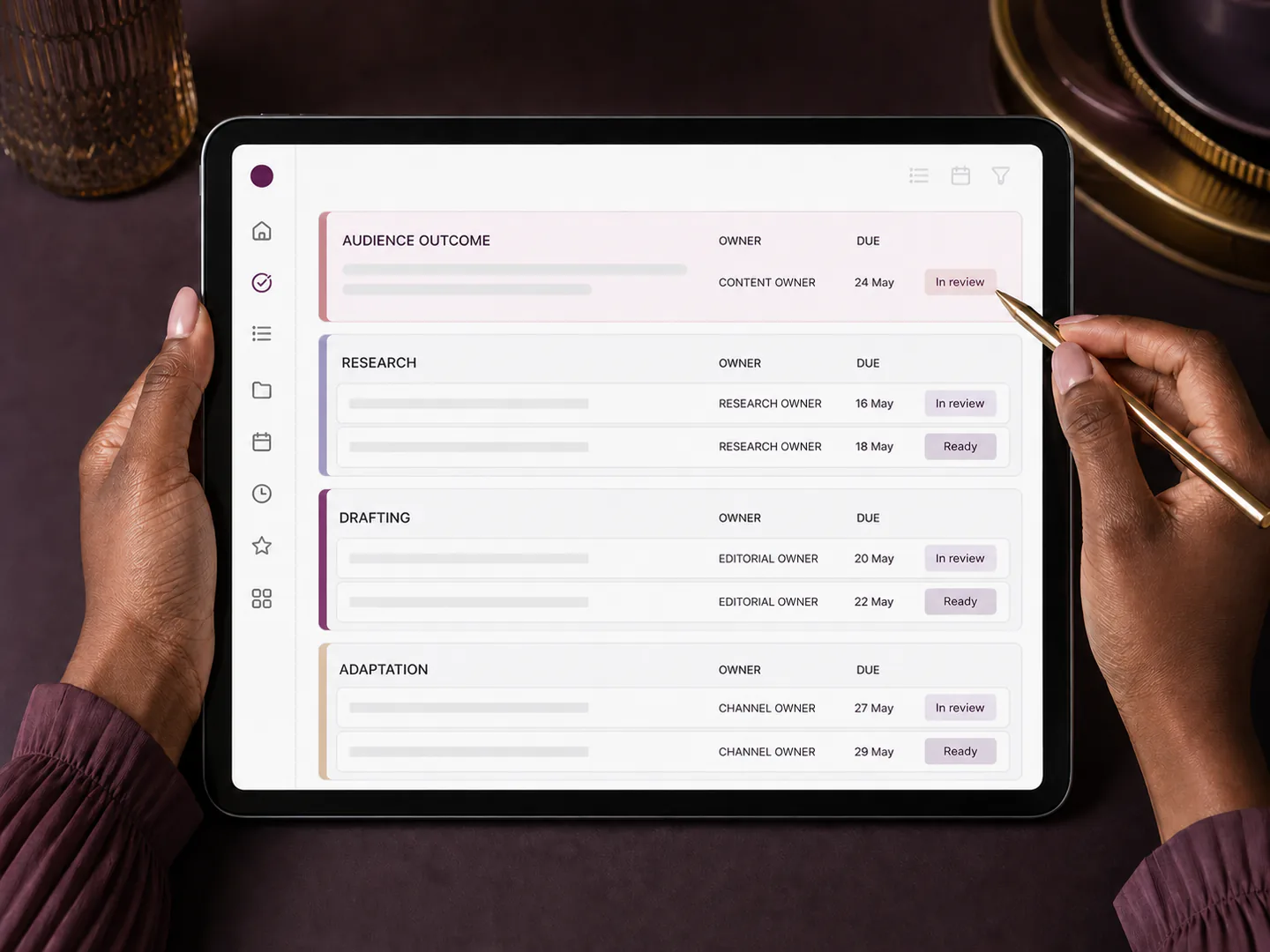
I begin by naming the audience, communication need, intended action and final formats. The workflow owner ensures that research, drafting, adaptation and review continue to serve that purpose as the work moves through tools and contributors.
Without one accountable view, each stage may optimise its own output while the complete content experience becomes inconsistent.
Section 02
A source owner protects the information base
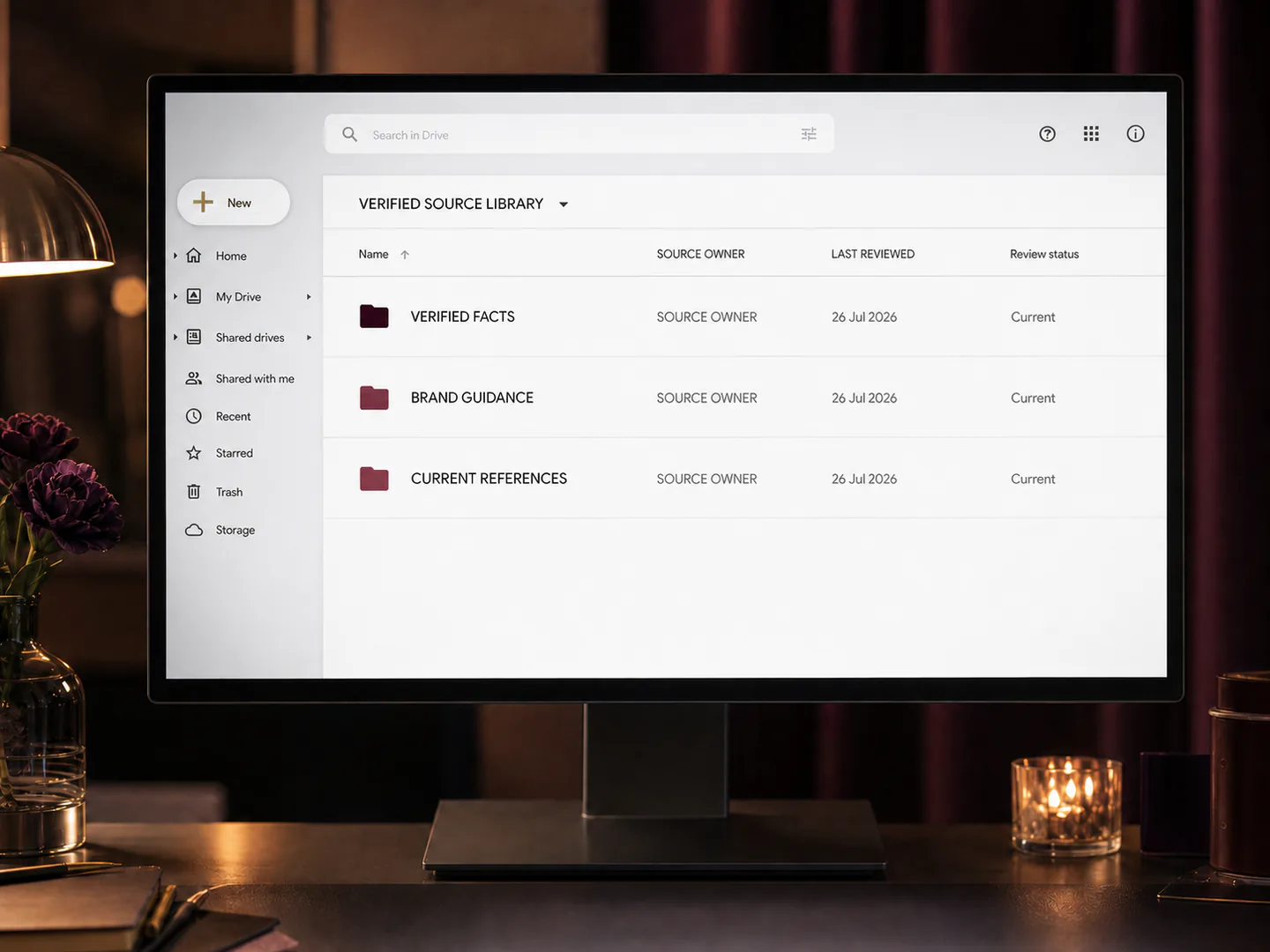
Someone must maintain the approved facts, brand guidance, product information, previous decisions and current reference material. The source owner identifies outdated or conflicting information and records which material is authoritative.
A strong prompt cannot compensate for an unreliable source library. The workflow should stop or escalate when required evidence is missing.
Section 03
A permissions owner controls what the workflow may use
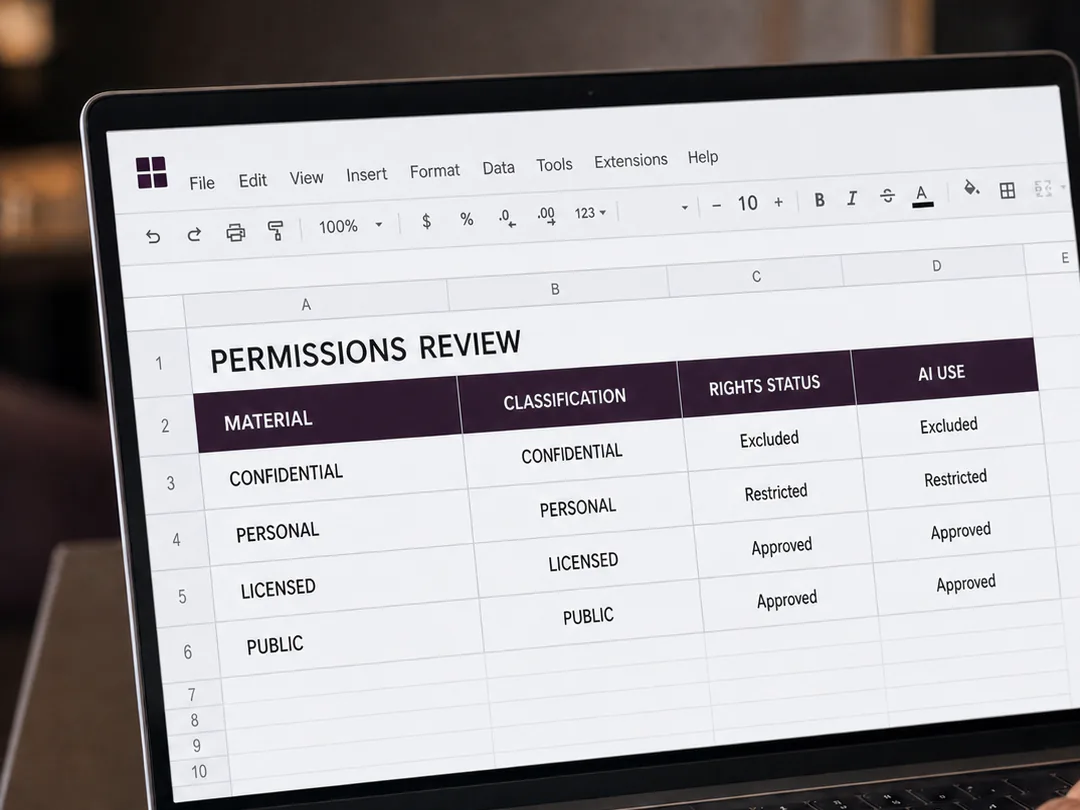
The project needs clear rules for personal information, confidential material, client assets, licensed media, external tools and publication access. I document the minimum permissions needed for the task and who may approve an exception.
This prevents convenience from turning every connected folder or platform into acceptable input.
Bring the moving parts into one delivery process.
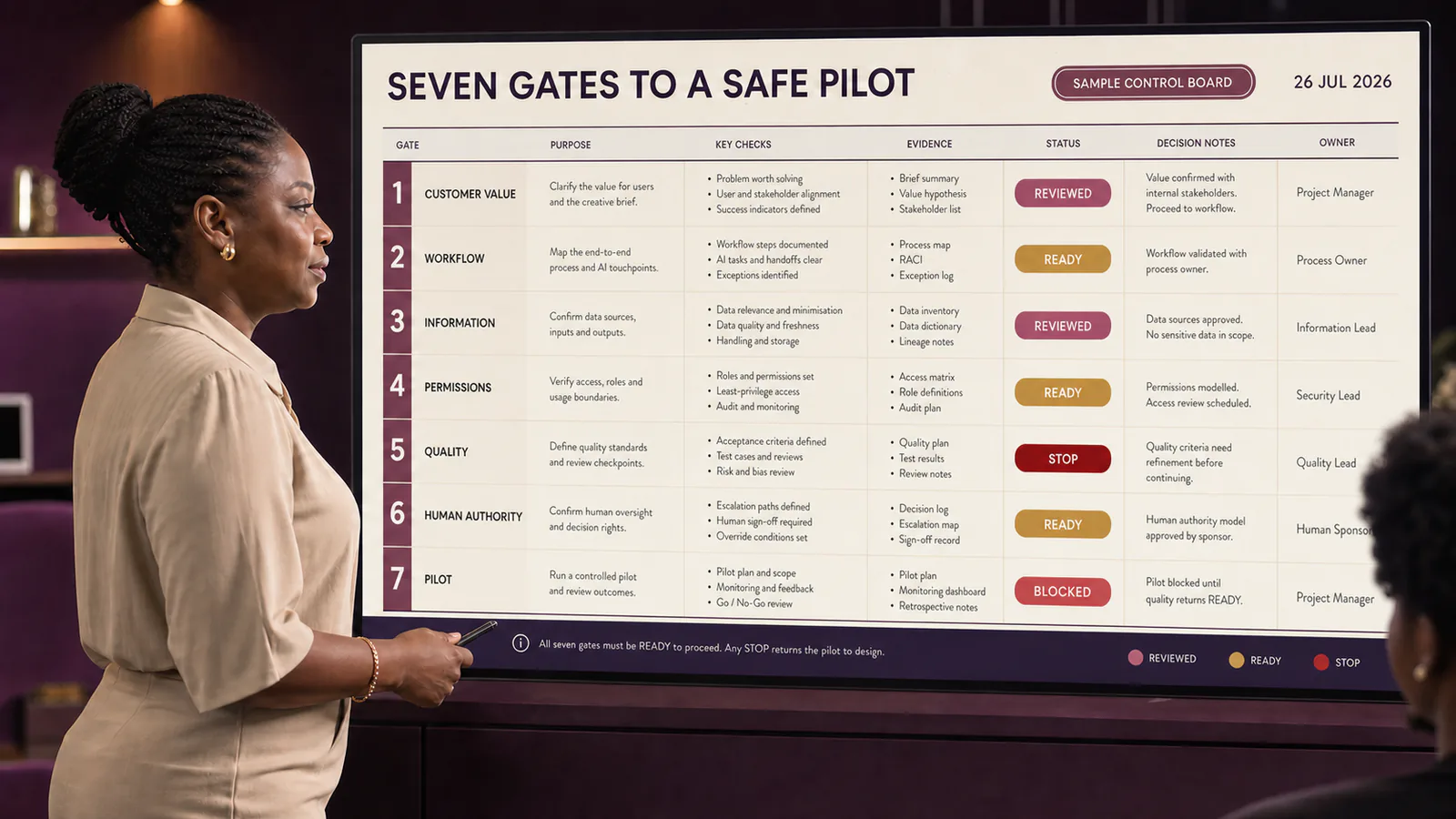
I can turn an informal AI content experiment into an owned workflow by defining roles, trusted sources, permission boundaries, review criteria, exception routes, release evidence and a practical improvement rhythm.
Section 04
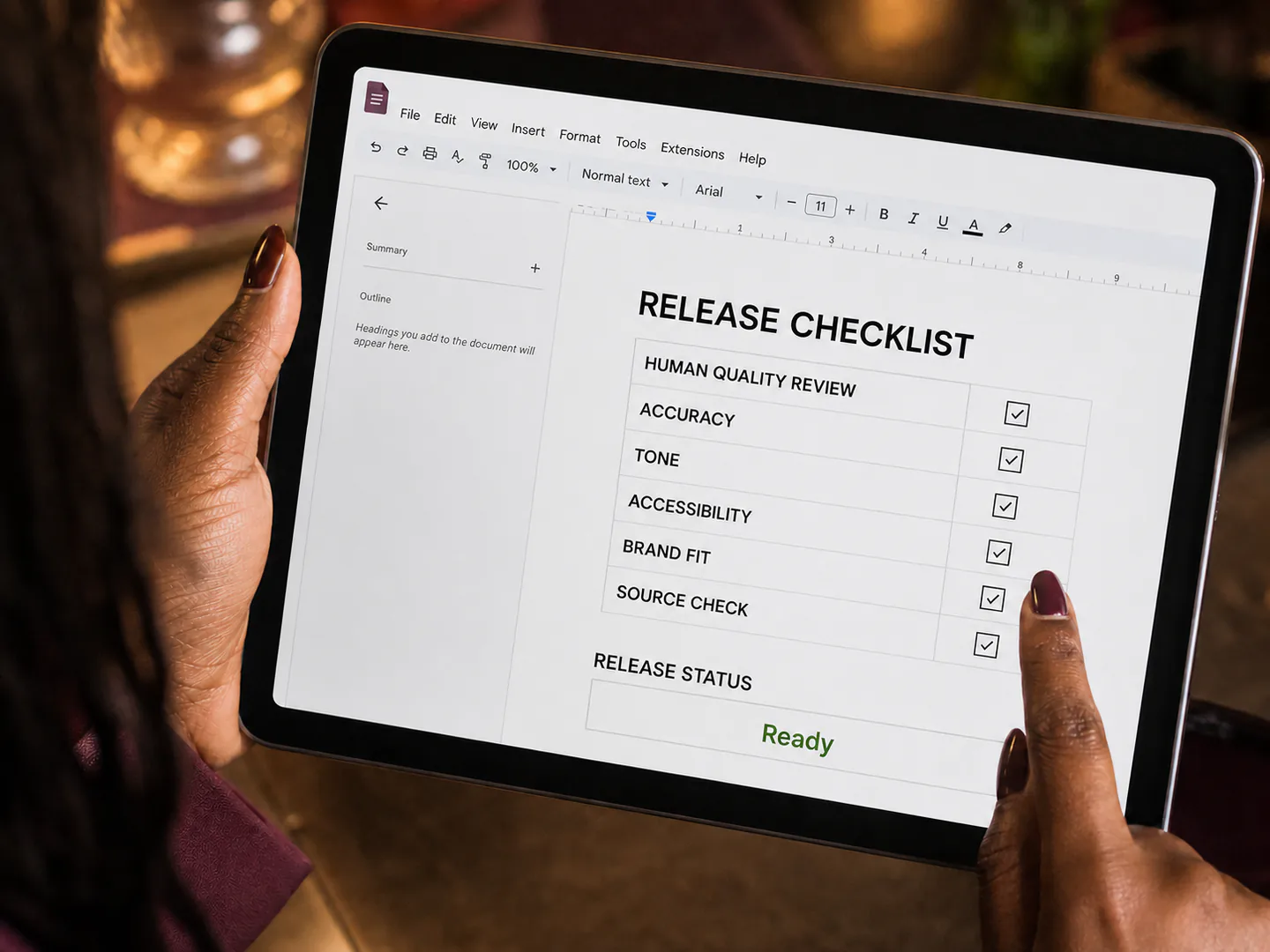
A review owner applies the release standard
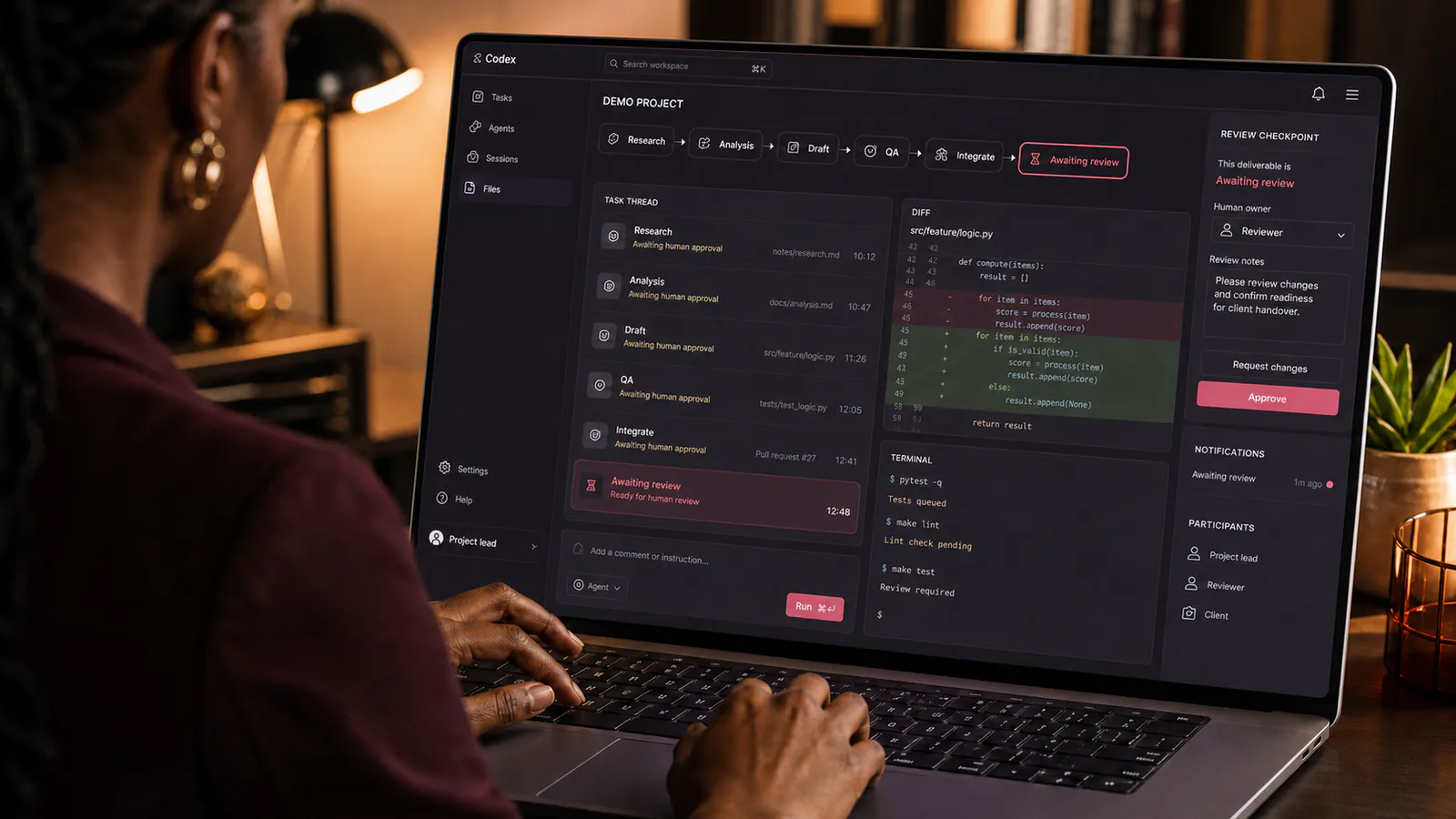
A reviewer checks factual accuracy, audience relevance, tone, brand alignment, cultural credibility, accessibility and technical readiness against defined criteria. The role needs enough authority to return or reject the work.
The reviewer should see the current sources and material changes, not only a polished final draft without context.
Section 05
An exception owner keeps uncertainty from disappearing
The workflow should identify low-confidence output, missing information, conflicting instructions, sensitive topics, unusual customer requests and failed automation. Each exception type needs a named human route and response expectation.
A tool that quietly guesses may appear efficient until the error reaches the customer. Visible uncertainty is more useful than false completion.
Section 06
A release owner confirms what actually goes live
The approved version, channel, schedule, destination, rights and final call to action should be confirmed before publication. Release authority is separate from the ability to generate or edit content.
I preserve the decision so the organisation can show which version was approved and who accepted responsibility for the customer-facing result.
Section 07
The workflow owner leads learning and maintenance
After launch, I review corrections, rework, customer response, accessibility issues, escalations, source changes and time saved. The owner updates the brief, source set, prompt, rules or review standard when evidence shows a weakness.
This keeps the workflow alive as the audience, tools and organisation change. Ownership is not finished when the first content item is published.

Turn this insight into an organised next step.
A useful AI content workflow is not ownerless automation. It is coordinated work in which technology handles suitable tasks while people remain visible at the points where information, judgement and customer responsibility matter.
When a team has prompt libraries and tools but no dependable route from request to approved publication, I can help organise the complete operating process.
Start with the short version: the outcome, intended audience, deadline, available assets, stakeholders and the delivery problem that is currently blocking progress.
Sources and related reading
- Microsoft — 2025 Work Trend Index: The Frontier Firm Is Born — Human-agent teams increase the need for direction, supervision, workflow design and judgement.
- PMI — Step Up: Redefining the Path to Project Success with M.O.R.E. (December 2025) — Project success increasingly depends on ownership, perception management, reassessment and a wider view of value.
- Google Search Central — Creating Helpful, Reliable, People-First Content — Useful content should be created primarily for people; meaningful disclosure can explain substantial automation or AI assistance.