AI Automation Governance · 2026-07-13 · 6 min read
The correct question is not whether an AI automation can touch the project. It is whether the organisation has defined the customer value, boundaries, evidence and human authority required for it to do so responsibly.
Agentic tools can now research, prepare content, move files, connect systems and execute multi-step work. Microsoft’s 2026 Work Trend Index argues that the most important organisational challenge is redesigning the system around this capability: clear intent, human judgement, documented handoffs and repeatable quality standards.
Creative projects need that discipline because their outputs shape public promises, representation, brand trust and customer decisions. A small workflow error can spread across many assets when automation operates at scale.
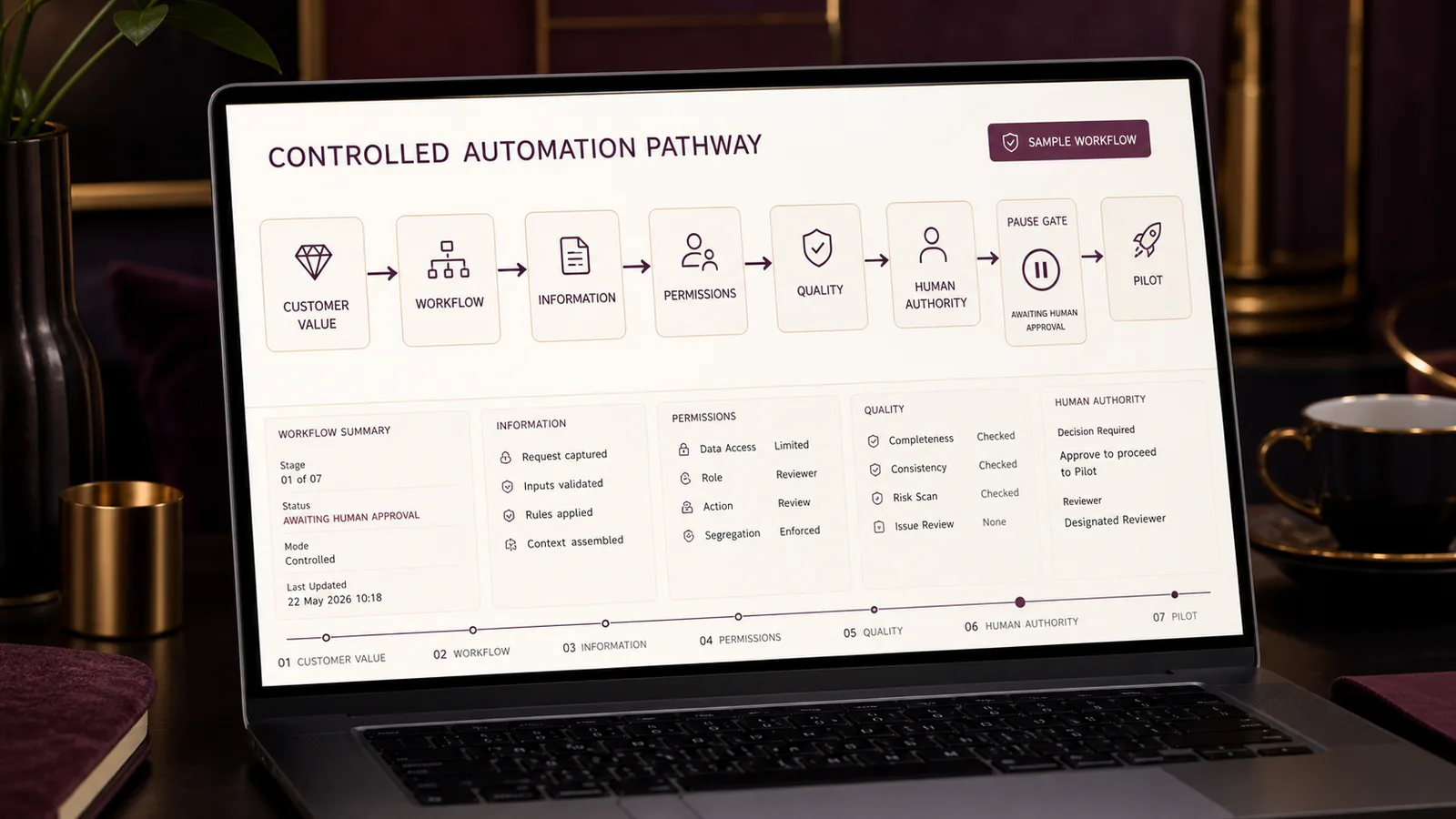
I use seven gates before an automation participates in live creative delivery. A gate is not a ceremonial approval. It is a question with evidence, an owner and the authority to stop the workflow.
Key takeaways
- Gate the customer value before discussing technical possibility.
- Map the current workflow, including exceptions and handoffs.
- Control source quality, personal information, permissions and rights.
- Define measurable quality and a named human decision owner.
- Pilot in a bounded environment with monitoring, correction and rollback.
Section 01
Gate one: does the automation solve a real customer or delivery problem?
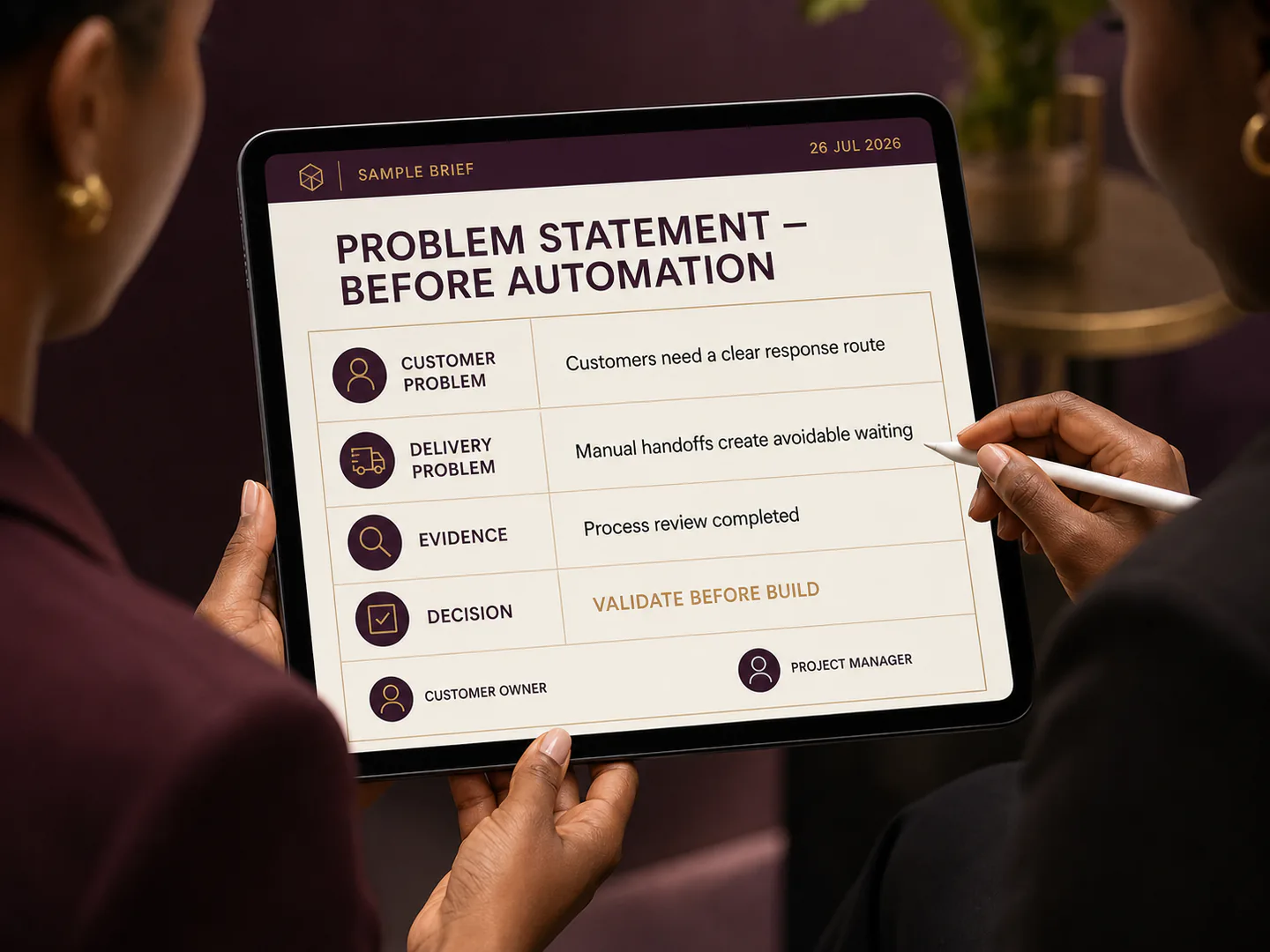
I require a specific problem, baseline and intended benefit: reduced waiting, fewer repeated requests, more consistent adaptation, better access to approved information or faster preparation for human review.
“Use AI” is not a project outcome. The gate stays closed when the workflow creates novelty without a clear improvement for the audience or team.
Section 02
Gate two: has the real workflow been mapped?
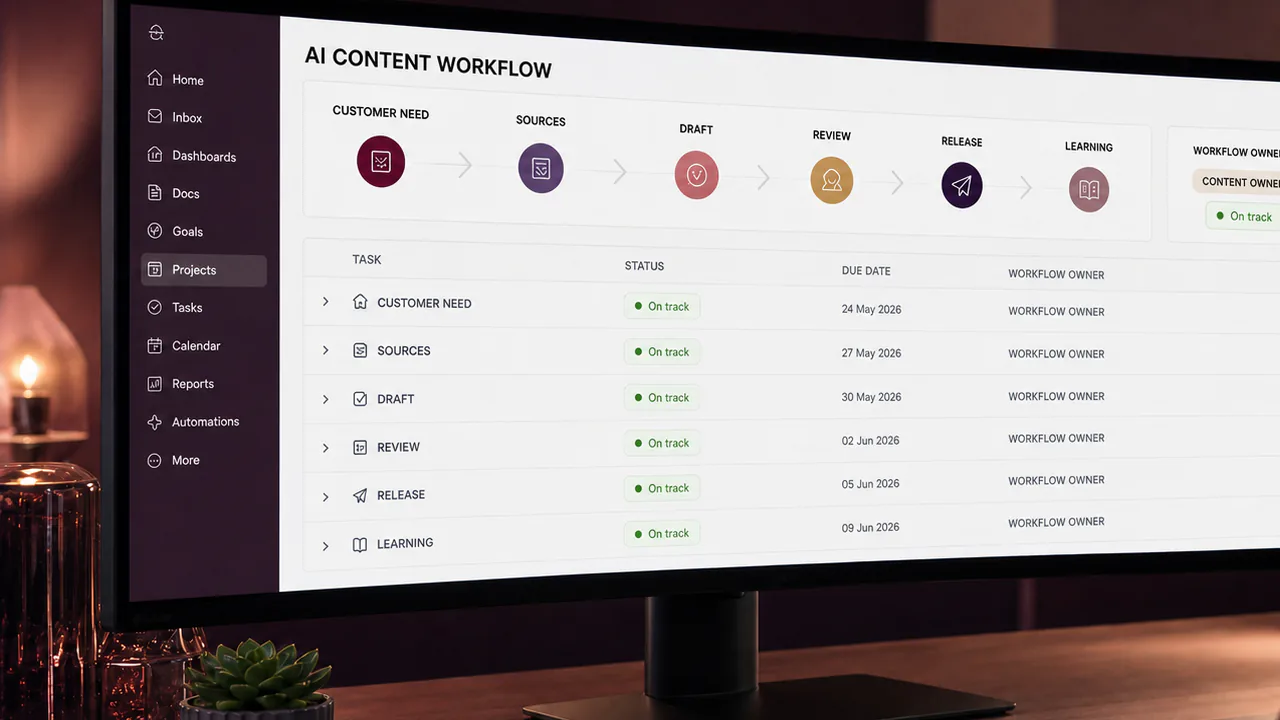
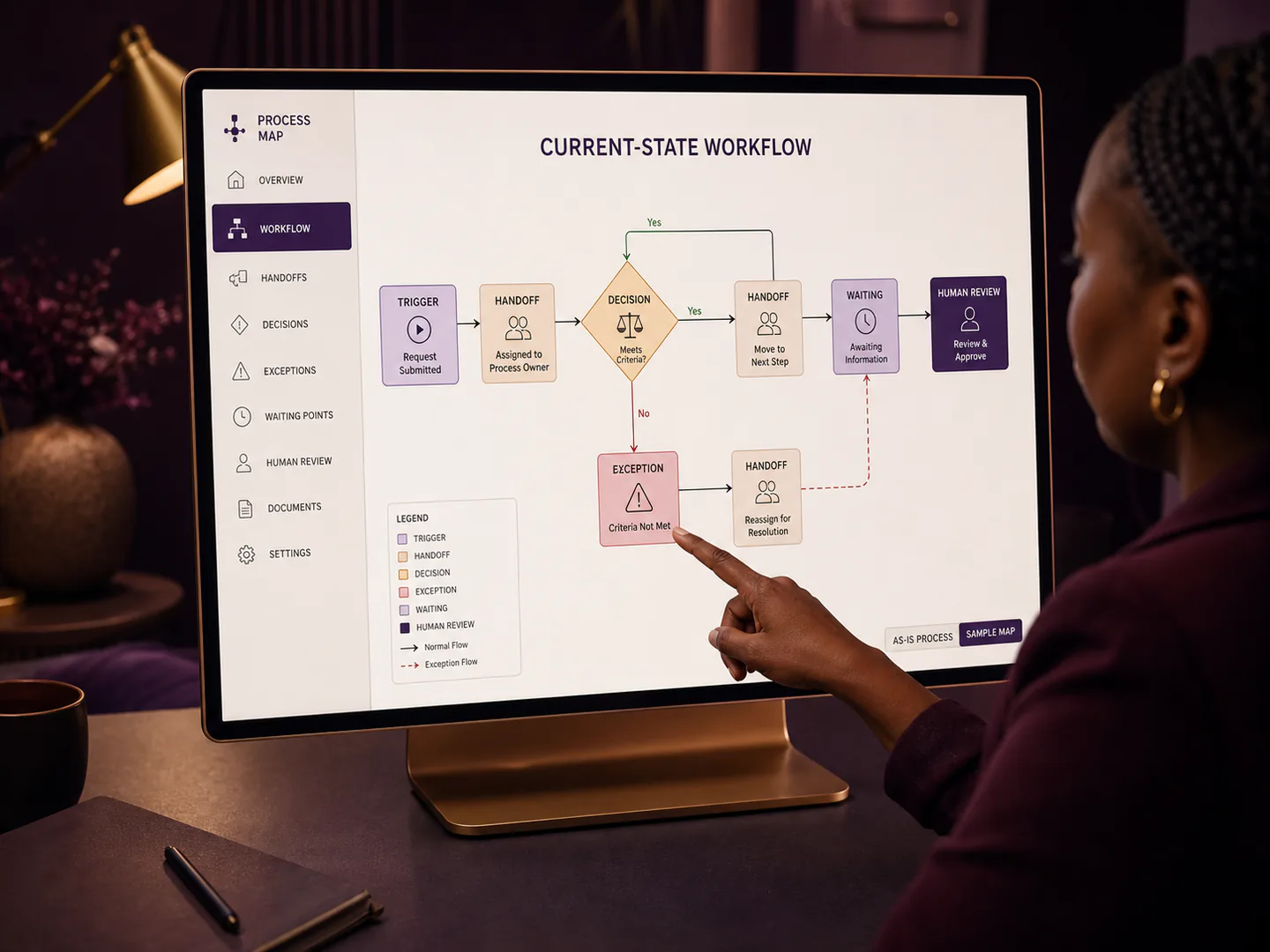
The map includes triggers, people, information, systems, handoffs, waiting points, decisions and exceptions. I compare the written procedure with what people actually do.
Automation should not encode a workaround or accelerate a broken handoff simply because that step is easy to demonstrate.
Section 03
Gate three: is the information fit for use?
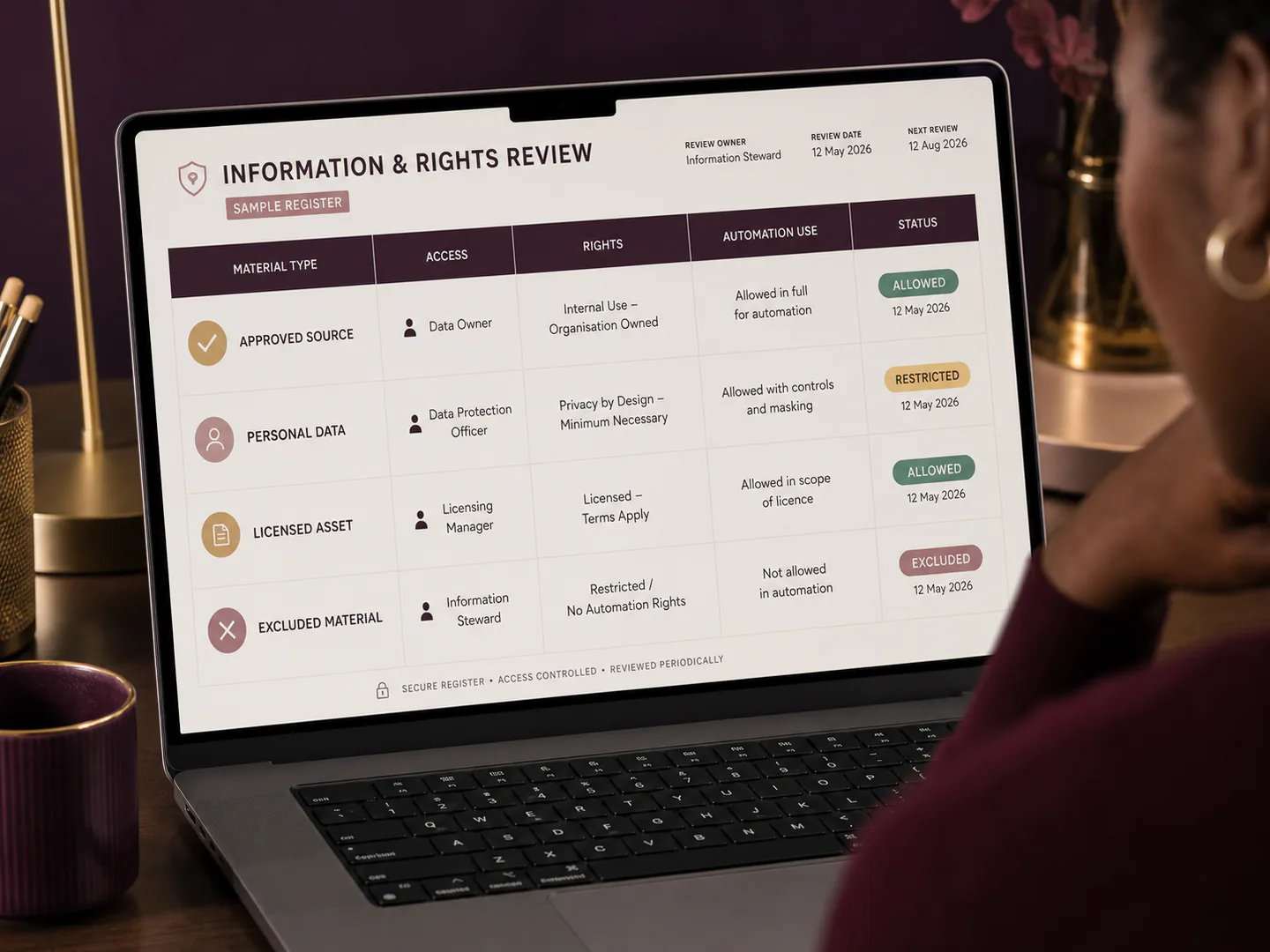
I identify approved sources, current versions, data quality, missing evidence and the owner who maintains the context. The workflow needs a route for uncertainty rather than permission to invent a confident answer.
For personal information, the organisation must also confirm purpose, necessity, lawful handling, security, retention and correction rights under its applicable responsibilities, including POPIA in South Africa.
Bring the moving parts into one delivery process.
I can facilitate a seven-gate readiness review, document the evidence and unresolved risks, coordinate a bounded pilot and prepare the governance, quality and handover requirements for the technical team implementing the automation.
Section 04
Gate four: are access, rights and action limits explicit?
I document what the automation may read, create, change, send or publish; which external tools it can call; and which assets or credentials are excluded. Licensed media, client material and confidential work require clear rights and access control.
The minimum useful permission is usually safer than broad access granted for convenience.
Section 05
Gate five: is quality defined in testable terms?
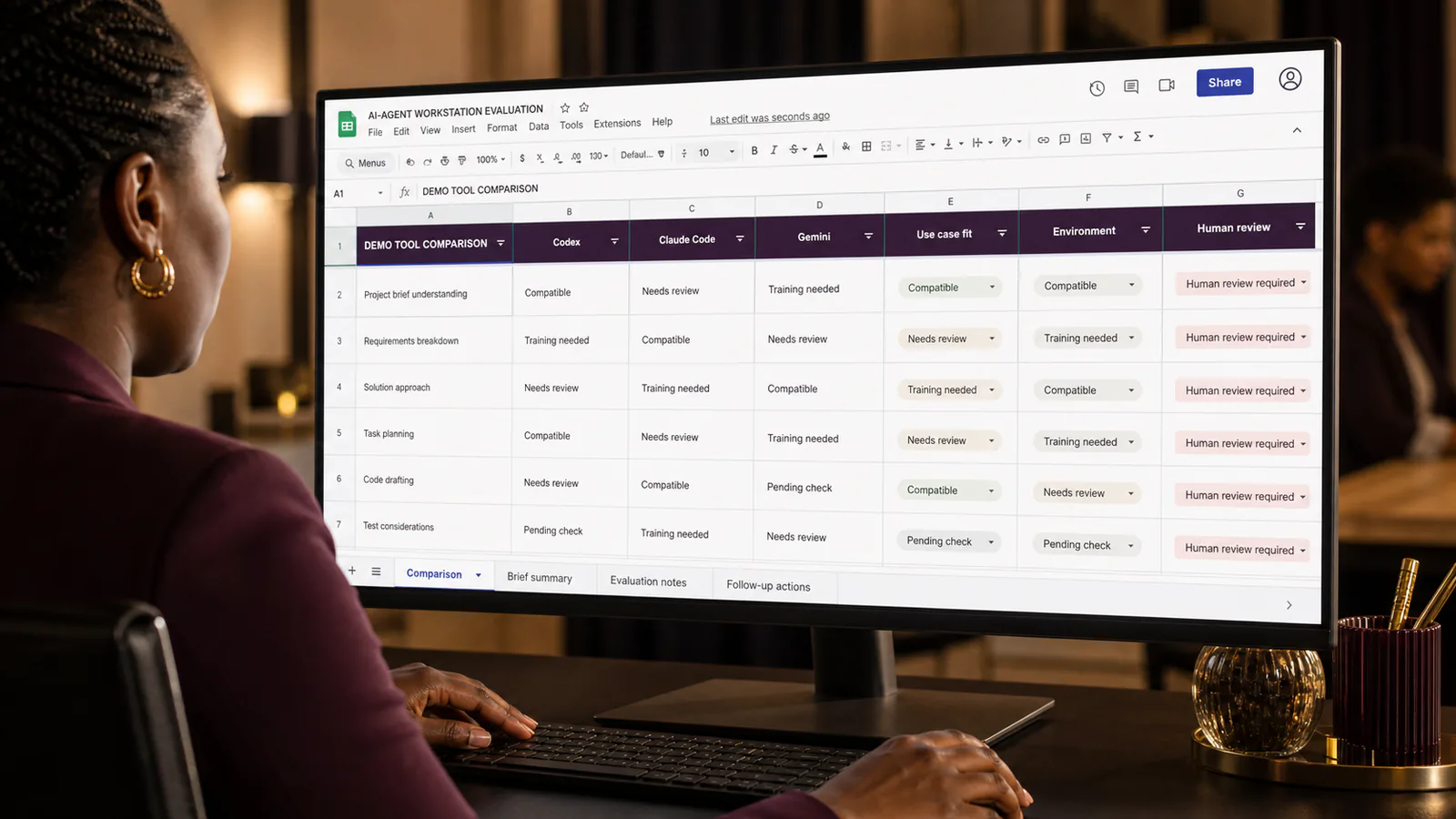
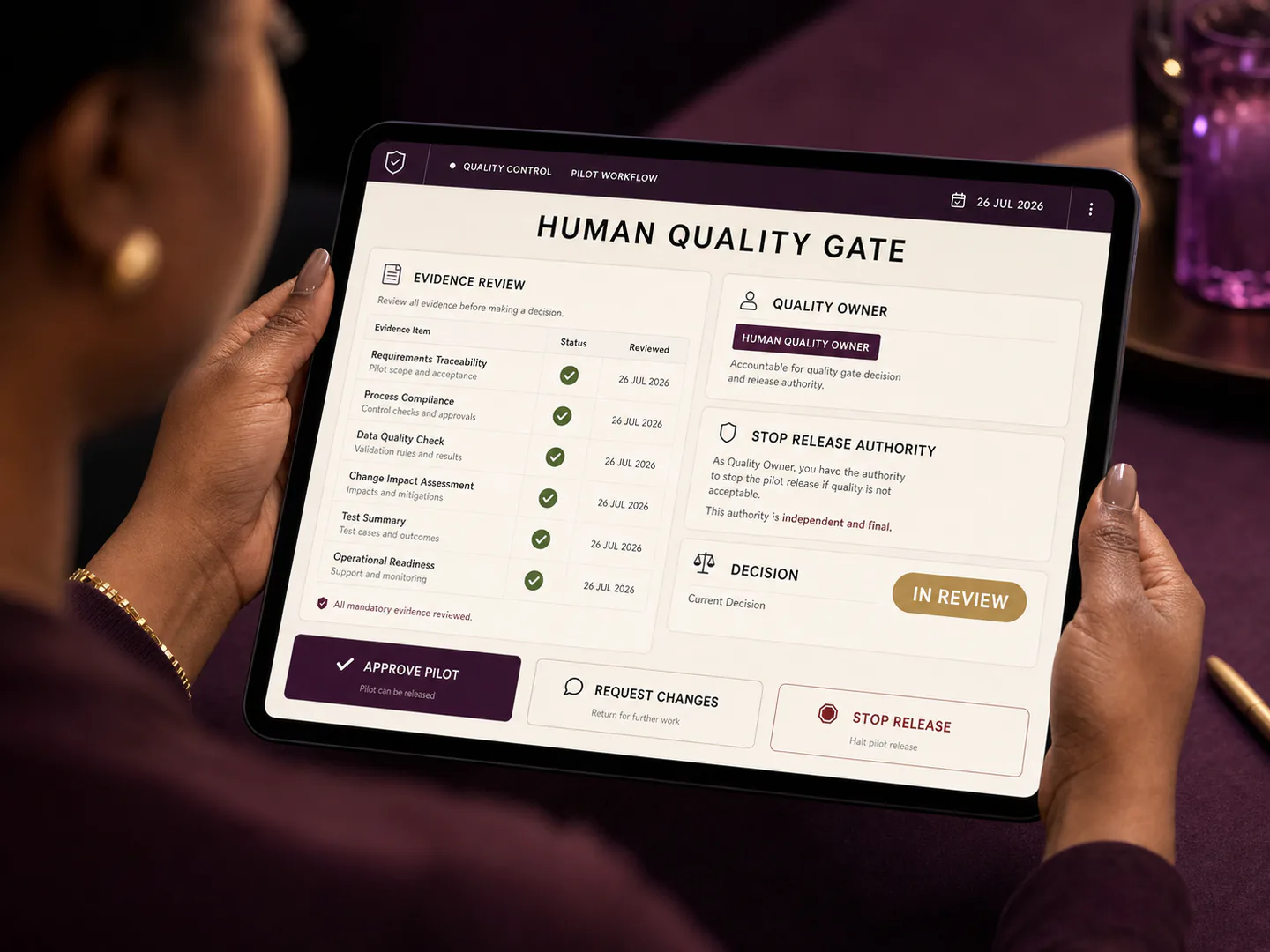
The team agrees checks for accuracy, source support, brand, tone, representation, accessibility, technical readiness, version status and customer action. I also define unacceptable failure and the evidence a reviewer will inspect.
A model reporting that it completed the task is not the same as the project proving that the result meets the release standard.
Section 06
Gate six: does a named human retain real authority?
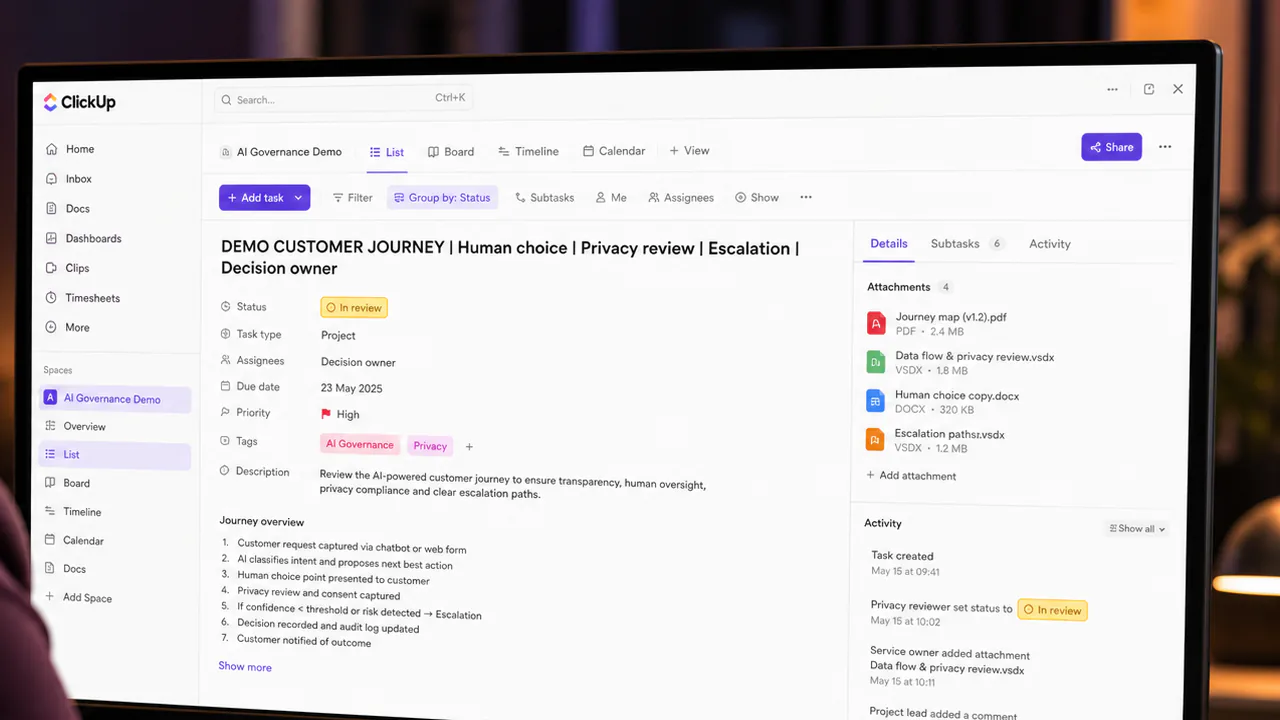
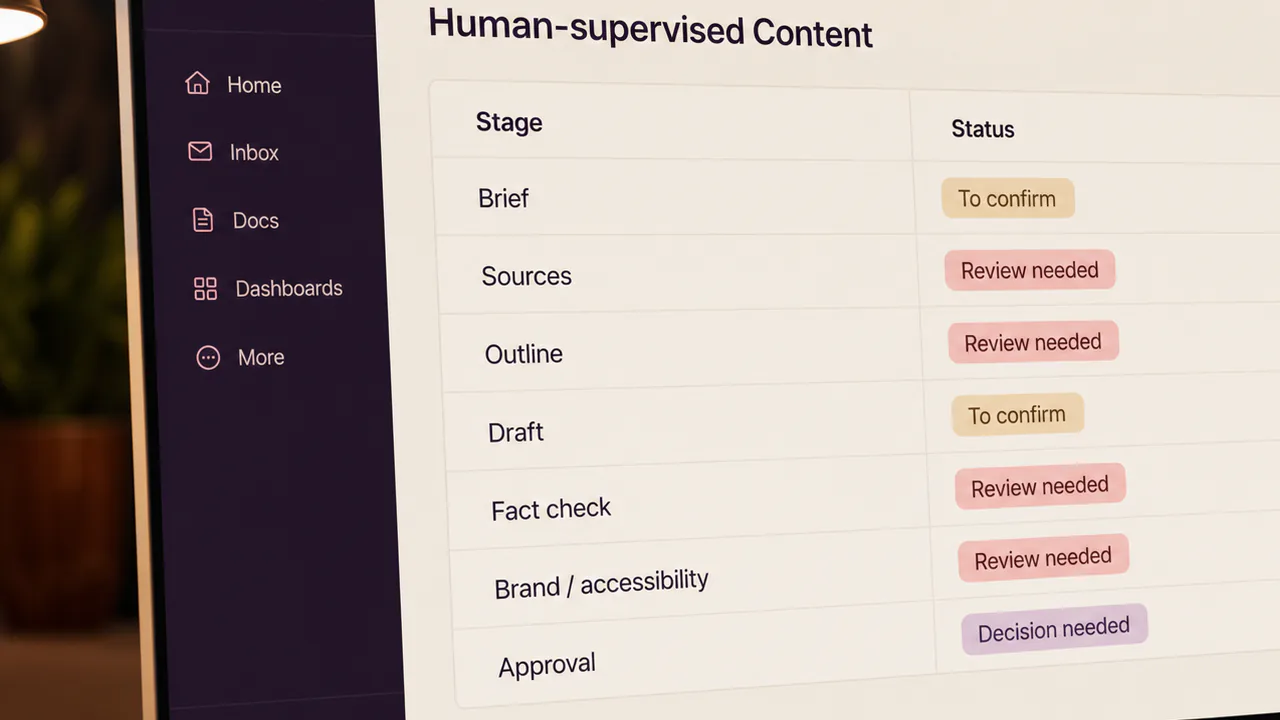
The workflow identifies who may change the brief, resolve exceptions, approve sensitive use, accept quality and release customer-facing work. That person receives enough context and time to make a genuine decision.
Microsoft’s 2026 research reported that most surveyed AI users treated output as a starting point and stayed responsible for the thinking. The operating design should make that responsibility possible in practice.
Section 07
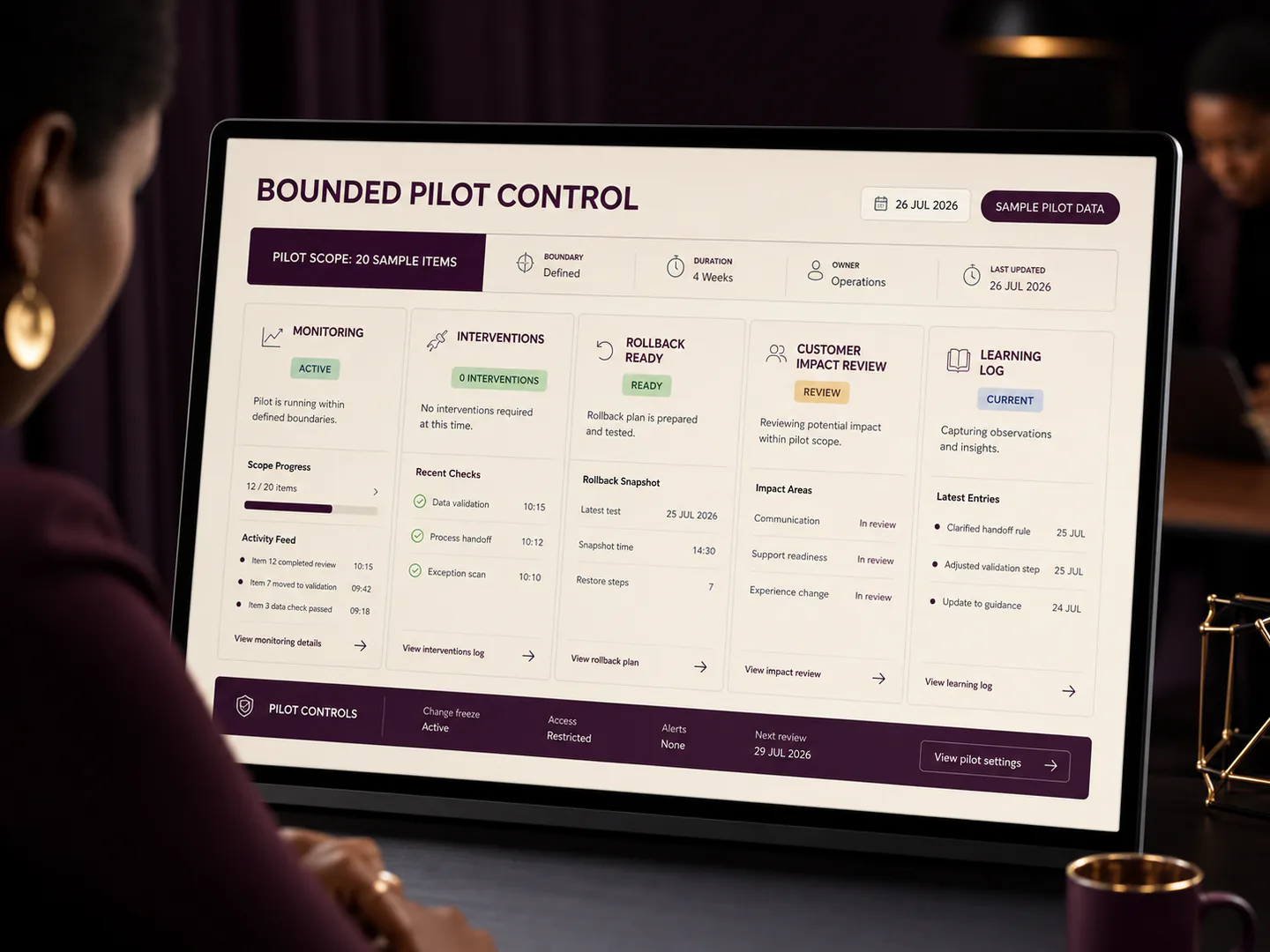
Gate seven: can the pilot be observed, corrected and stopped?
I begin with limited scope, test material, a clear owner, monitoring, customer-protection measures and a rollback route. The pilot records errors, interventions, rework, time saved and effects on the complete journey.
The gate opens to broader use only when evidence supports the workflow and the organisation is prepared to maintain it.
Turn this insight into an organised next step.
Controls do not oppose useful automation. They make it possible to use automation repeatedly without hiding responsibility or passing avoidable risk to the customer.
When an AI workflow is moving towards live creative or customer-facing work, I can help ensure the project has more than a prompt: it has an outcome, boundaries, evidence, owners and a safe route to learn.
Start with the short version: the outcome, intended audience, deadline, available assets, stakeholders and the delivery problem that is currently blocking progress.
Sources and related reading
- Microsoft — 2026 Work Trend Index: Agents, Human Agency and Opportunity — Repeatable handoffs and documented quality standards distinguish more mature human-agent work.
- Adobe — 2026 AI and Digital Trends in Content Creation and Management — Organisations expect agentic AI to support research and internal workflows, while governance, data quality and measurement remain constraints.
- Information Regulator South Africa — POPIA Guidance and FAQs — South African organisations processing personal information remain responsible for lawful, secure and purpose-aligned processing.
- C2PA — Content Credentials Specifications — Content Credentials provide a technical standard for communicating media provenance and history.