Responsible AI and Customer Experience · 2026-03-23 · 6 min read
Customers may accept AI when it saves time or makes an interaction more relevant. Trust weakens when AI hides its role, handles sensitive information carelessly or becomes the only route to a meaningful human decision.
Adobe’s 2026 consumer research describes cautious optimism. Customers value convenience and relevant recommendations, but they draw stronger boundaries around sensitive information and important decisions. Many also want the ability to move from an automated interaction to a person.
That pattern matters for creative and digital project delivery. An organisation can build an efficient AI-assisted experience and still weaken trust if the customer cannot understand what is happening, correct an error or reach someone with authority.
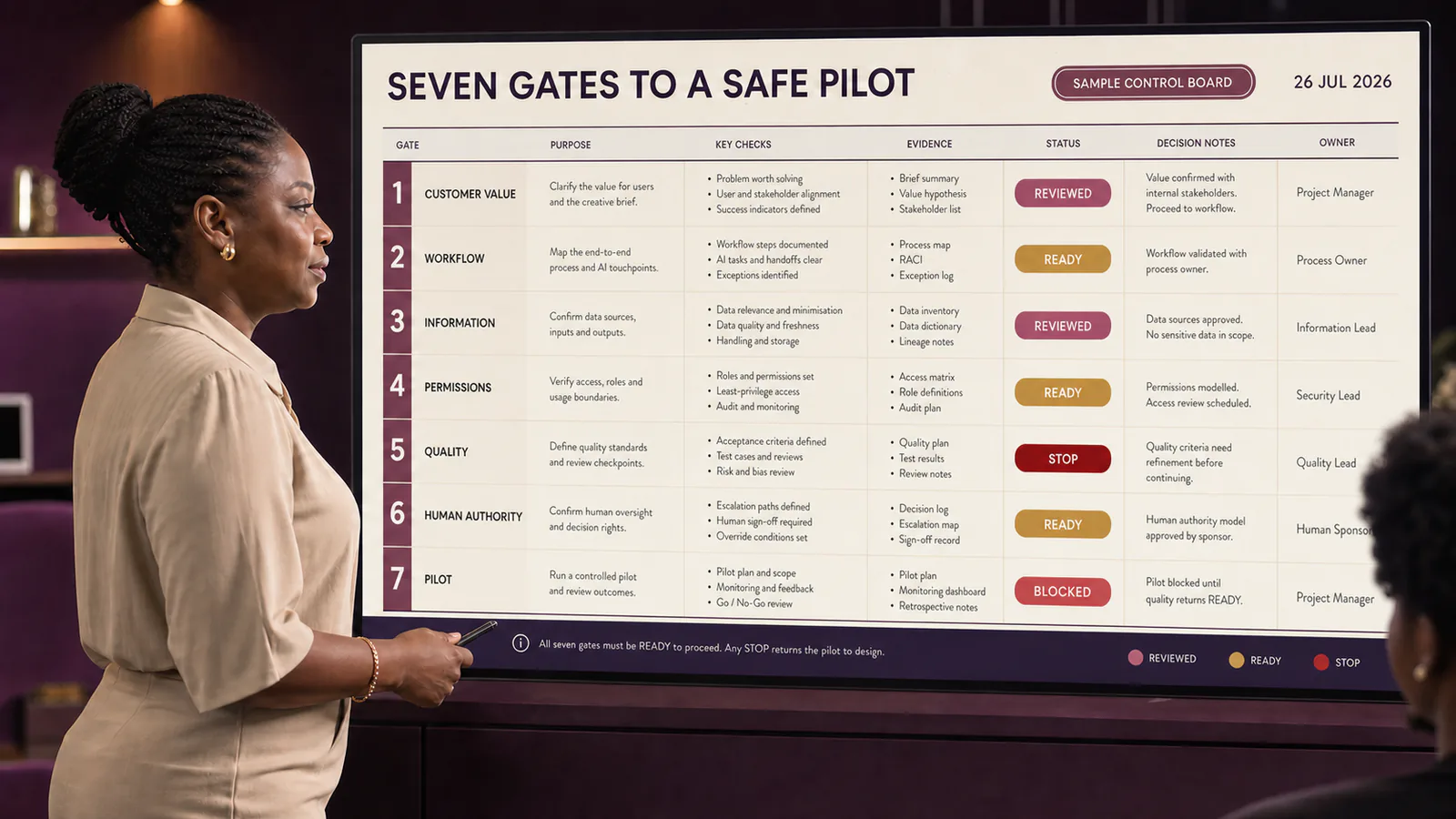
My checklist keeps usefulness and human control together. It also recognises that South African organisations remain responsible under POPIA for the personal information they process, regardless of which tool participates in the workflow.
Key takeaways
- AI should solve a recognisable customer problem rather than appear for novelty.
- Customers need clear ways to correct, refuse or escalate an automated interaction.
- Sensitive information should be minimised and handled for a defined purpose.
- High-impact decisions require meaningful human responsibility.
- The project should record evidence, limitations and the owner of the customer outcome.
Section 01
Check one: the value is clear to the customer
I ask what the customer gains: faster access to information, easier scheduling, a more relevant recommendation or reduced repetition. If the value cannot be explained without technical language, the feature may be serving the organisation more than the audience.
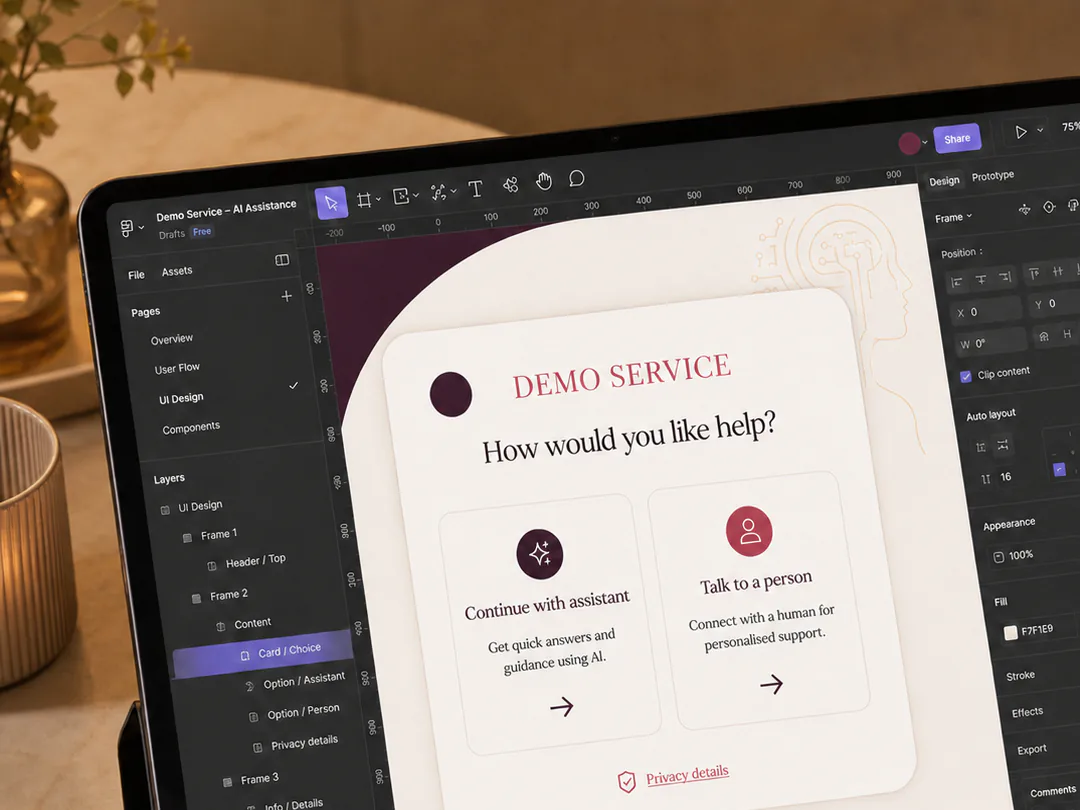
A useful interaction should also provide an alternative for people who do not want or cannot use the automated route.
Section 02
Check two: the AI role is not misleading
The experience should not pretend to be a person or imply a level of authority it does not have. Where the method materially affects expectations, the customer should receive a clear and proportionate explanation.
Transparency can be concise. The objective is to help the customer make an informed choice, not to surround a simple task with technical disclosure.

Section 03
Check three: personal information has a defined purpose
I map what information is collected, why it is needed, where it moves, who may access it and how long it is retained. The project should avoid collecting additional data merely because the tool can use it.
Consent, lawful processing, security and customer rights are governance matters for the responsible organisation, not settings to be delegated to a model.
Bring the moving parts into one delivery process.
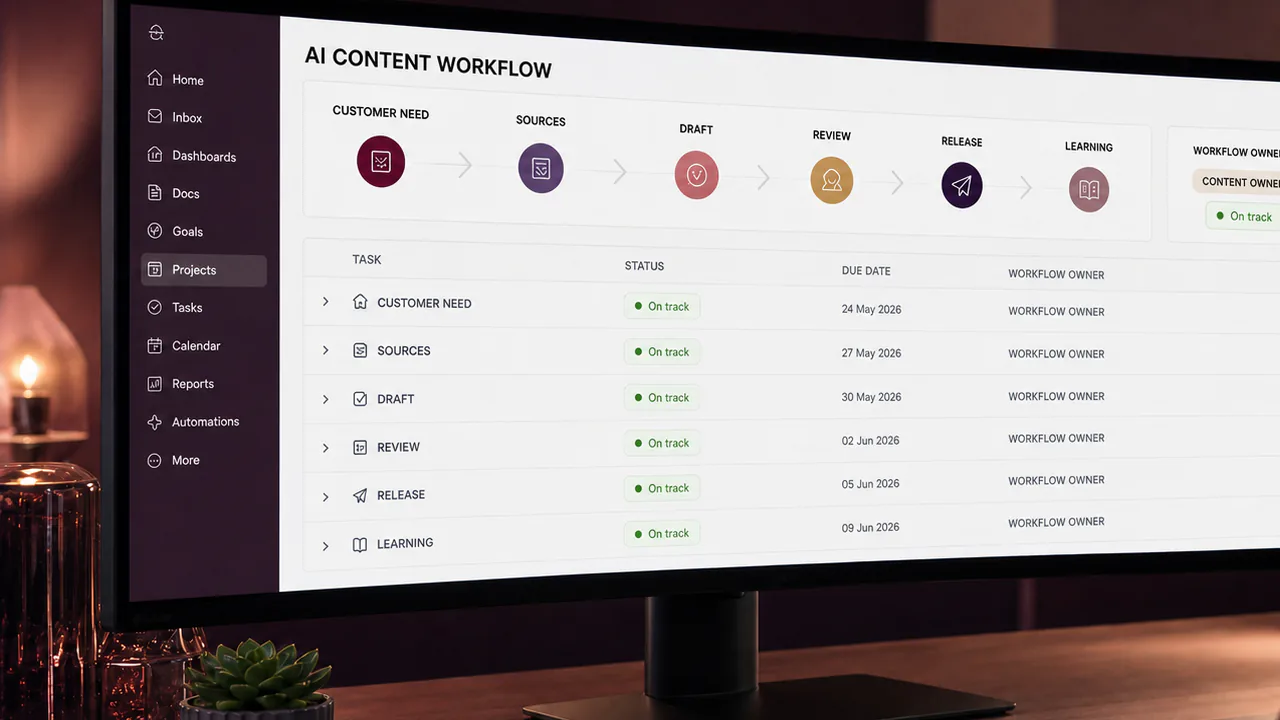
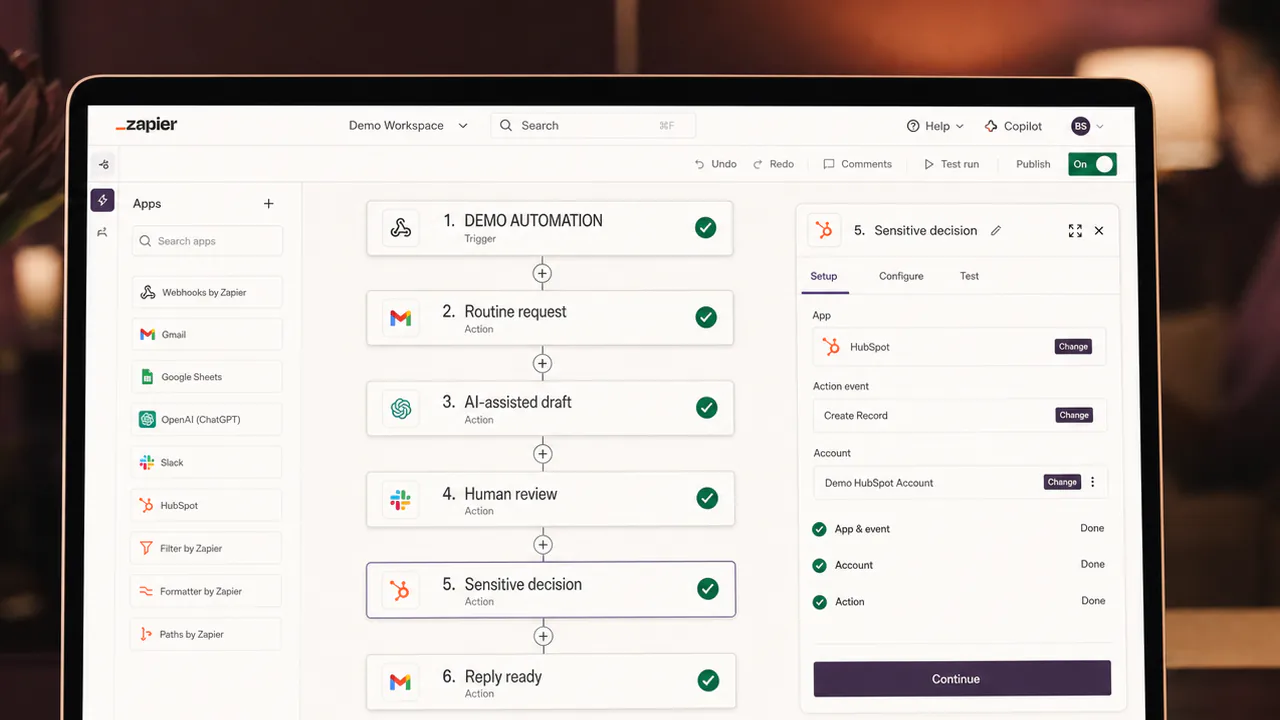
I can map a customer-facing AI or automation journey, identify where human choice and responsibility must remain visible, organise the content and escalation requirements, and coordinate a controlled review before launch.
Section 04
Check four: important decisions remain human-owned
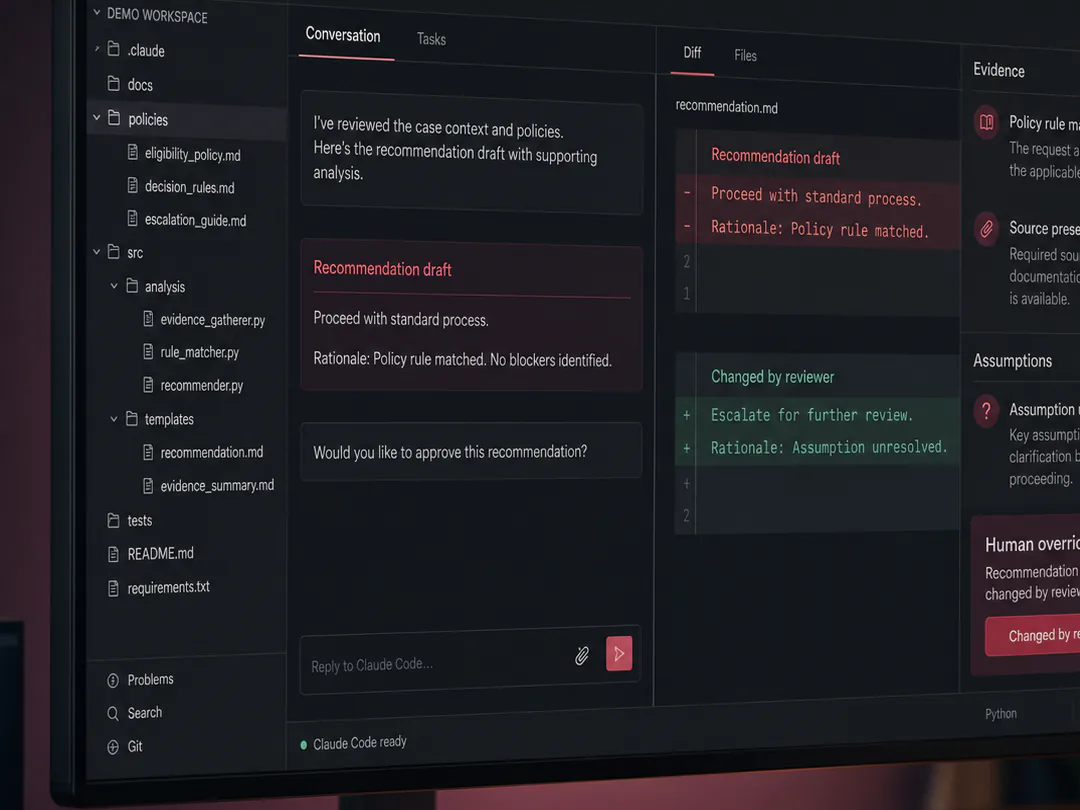
AI may help organise information or make a recommendation, but decisions affecting employment, finance, health, rights or a significant customer outcome need a clearly accountable person and an appropriate review route.
The human role must be real: enough context, authority and time to change the outcome.
Section 05
Check five: the customer can correct the record
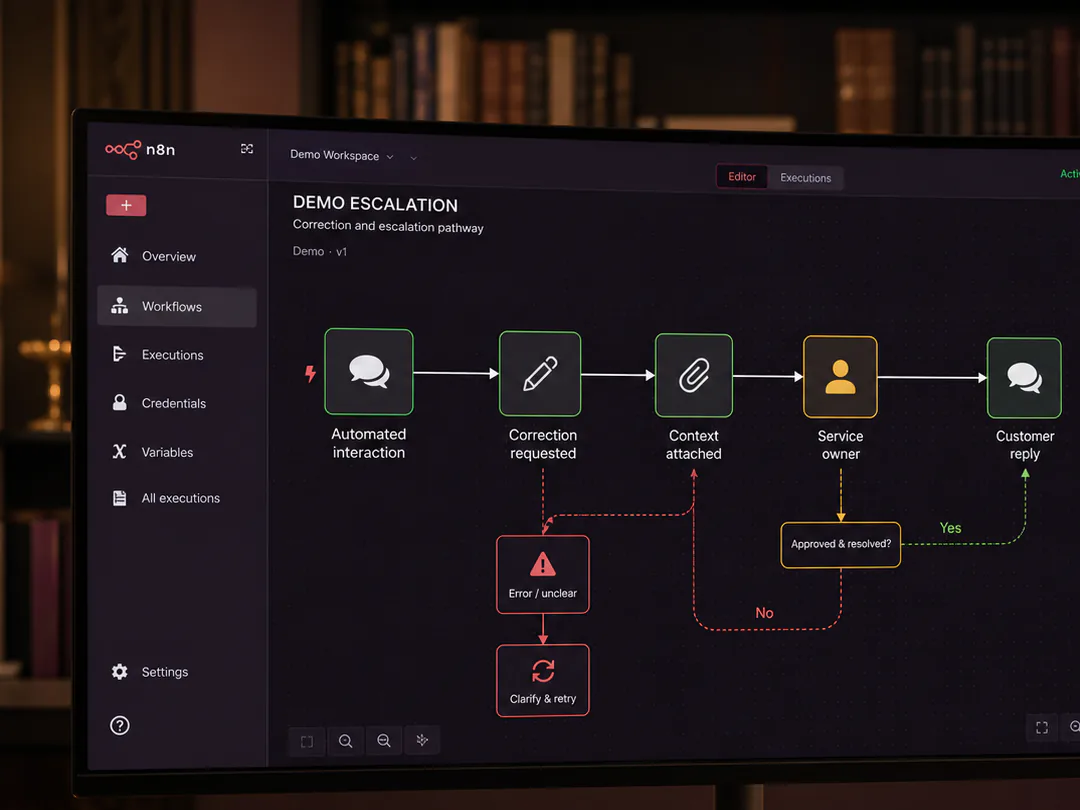
Automated systems can misunderstand intent or rely on incomplete information. The interface should let the customer identify an error, provide missing context and see how the correction will be handled.
A correction route is part of service design and should be tested before launch.
Section 06
Check six: escalation reaches someone who can act
A “contact us” link is not meaningful escalation if the next person cannot view the interaction or change the decision. I define the trigger, handoff information, response expectation and owner for unresolved cases.
The customer should not have to repeat the complete story because the automated and human channels are disconnected.
Section 07
Check seven: the project can explain and improve
I expect a record of source information, key prompts or rules, tool actions, human decisions, errors, corrections and final outcomes at a level appropriate to the risk. This allows the team to investigate complaints and improve the process.
Measurement should include customer completion, escalation quality, correction rates and trust signals—not only automation volume.

Turn this insight into an organised next step.
Customers do not need every AI experience to be human-only. They need it to be useful, honest and accountable. The organisation must remain reachable when the situation becomes sensitive, ambiguous or consequential.
When an automated journey feels efficient internally but uncertain from the customer’s side, I can help bring the brief, information flow, content, decision boundaries and escalation path into one project view.
Start with the short version: the outcome, intended audience, deadline, available assets, stakeholders and the delivery problem that is currently blocking progress.
Sources and related reading
- Adobe — 2026 AI and Digital Trends Consumer Report — Customers value relevance and convenience, but prefer human involvement for sensitive information and important decisions.
- Information Regulator South Africa — POPIA Guidance and FAQs — South African organisations processing personal information remain responsible for lawful, secure and purpose-aligned processing.
- Google Search Central — Creating Helpful, Reliable, People-First Content — Useful content should be created primarily for people; meaningful disclosure can explain substantial automation or AI assistance.