
Creative AI and Human Judgement · 2026-06-22 · 6 min read
Creative AI can accelerate the start and widen the range of options. The work becomes ready for an audience only when a person applies voice, taste, evidence and responsibility to the final decision.
Adobe’s 16 June 2026 Creators’ Toolkit report describes creative AI as part of the working infrastructure for many creators. Among surveyed creators who use or have tried it, 87% said it had accelerated business or audience growth and 75% described it as integrated or essential to how they work.
The same research makes the human boundary equally clear. Eighty-five percent said the final creative decision should always remain with the creator, and 57% said AI outputs usually need moderate or extensive editing before they are ready to share.
That combination reflects how I approach multimedia content. AI can support research, ideation, variation and preparation. The release gate remains human because the customer experiences the final message, not the speed of the draft.
Key takeaways
- Creative AI is becoming routine infrastructure rather than a substitute for creative responsibility.
- More options increase the value of a clear point of view and selection standard.
- Human refinement turns generated material into audience-ready communication.
- Disclosure, rights and provenance should be planned rather than improvised after publication.
- The final creative decision needs a named person who can approve, revise or stop release.
Section 01
I begin with the point of view, not the generation method
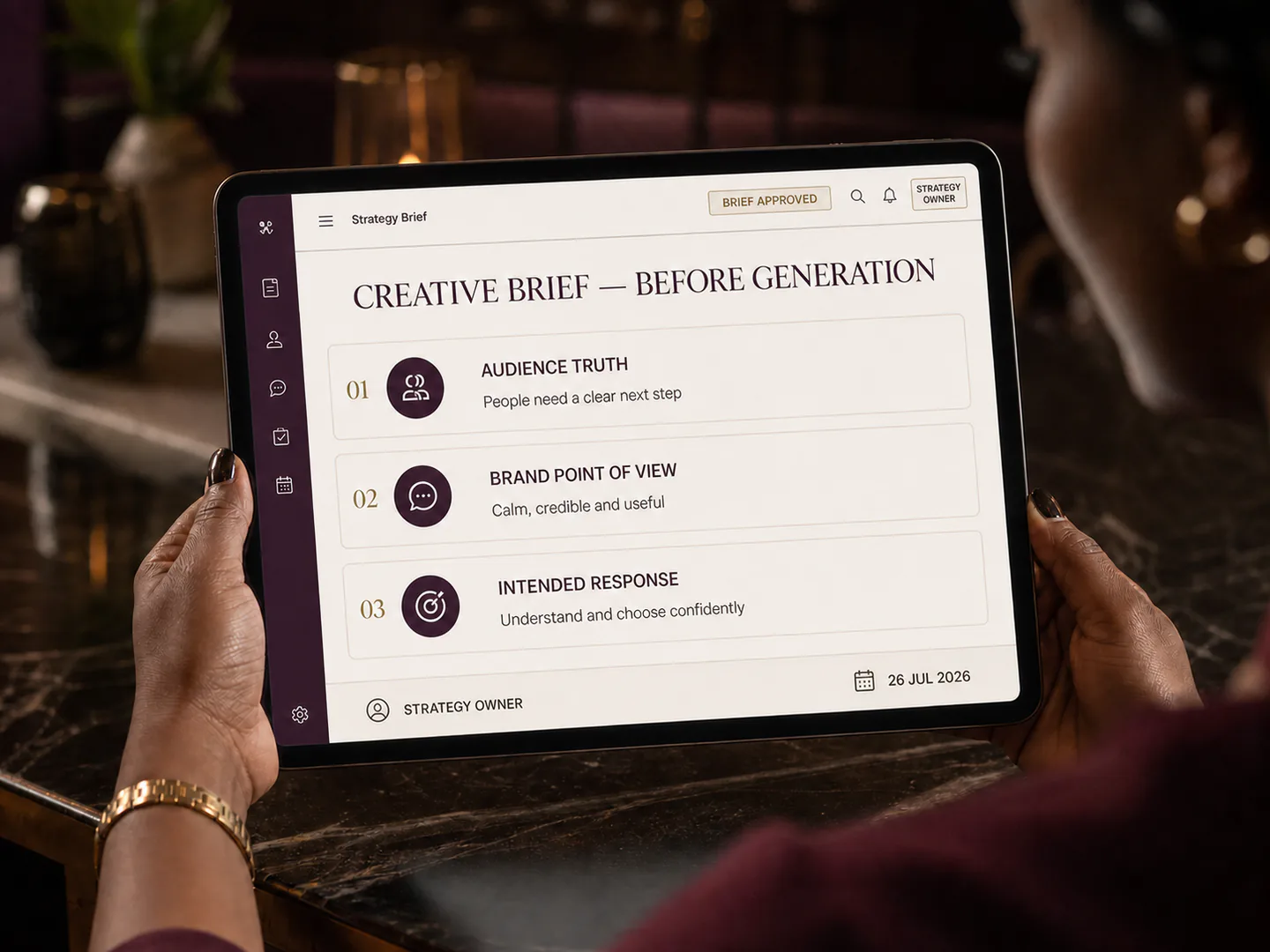
The project needs something worth communicating: an audience truth, customer problem, brand promise, useful explanation or distinctive story. I define the perspective and intended response before asking a tool for options.
Without that direction, generation produces volume without a reason for one result to matter more than another.
Section 02
I use AI to expand the exploration space
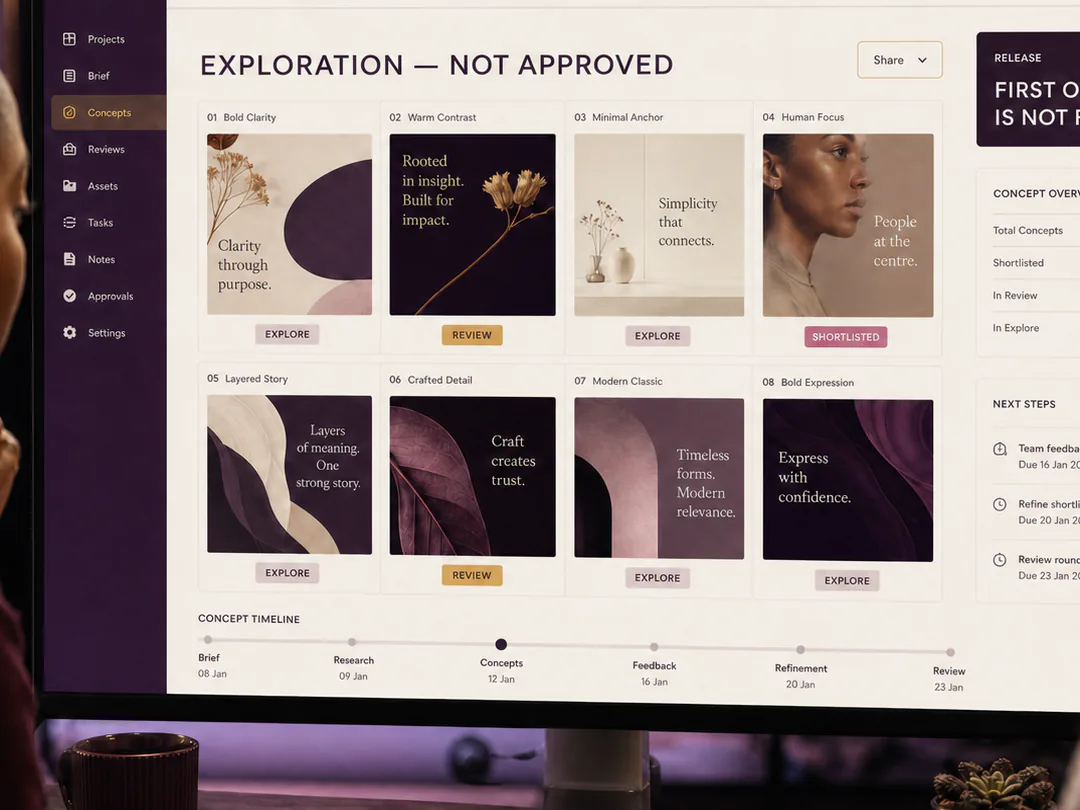
AI can help organise references, test message structures, explore visual directions, adapt formats or expose a team to alternatives it may not have produced in the first round. This can make early exploration more inclusive and ambitious.
I keep the exploration separate from approval. An option becomes a project direction only after it is checked against the brief, audience, brand and practical delivery conditions.
Section 03
I select with audience, culture and brand in mind
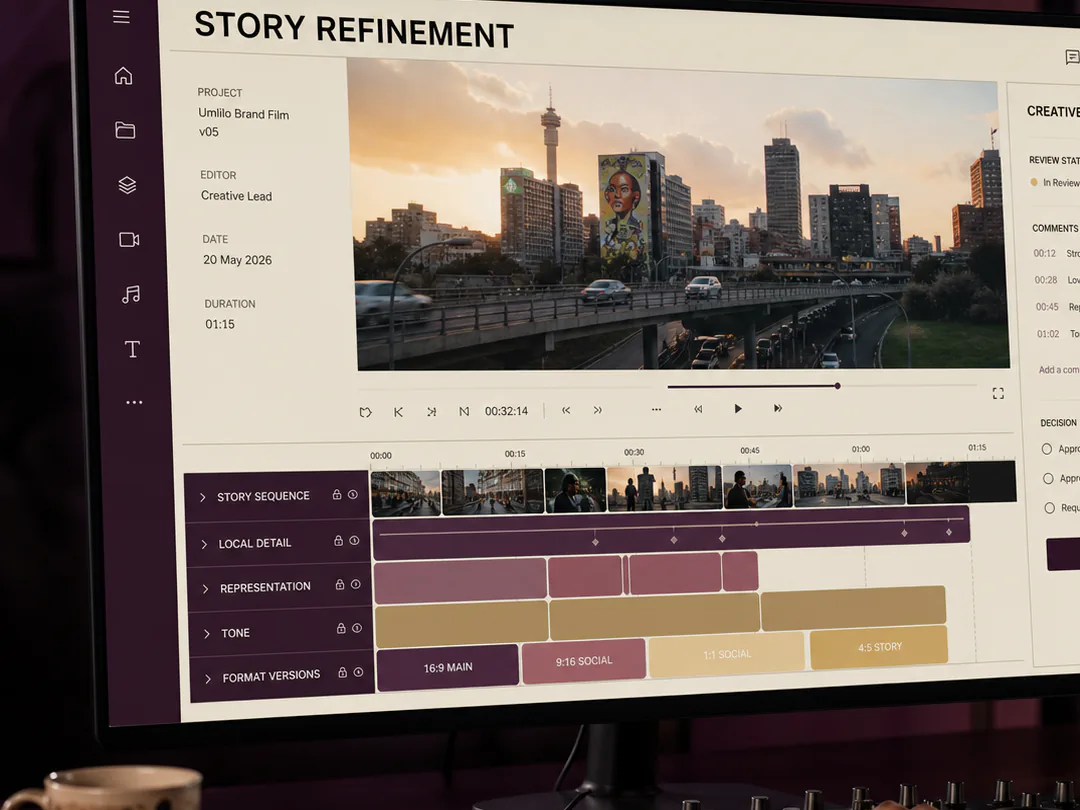
Taste is not simply choosing the most attractive image. It involves recognising tone, pacing, credibility, representation, local detail, emotional effect and whether the content feels true to the organisation and people it depicts.
I explain those choices in review language so stakeholders can assess the work beyond personal preference.
Bring the moving parts into one delivery process.
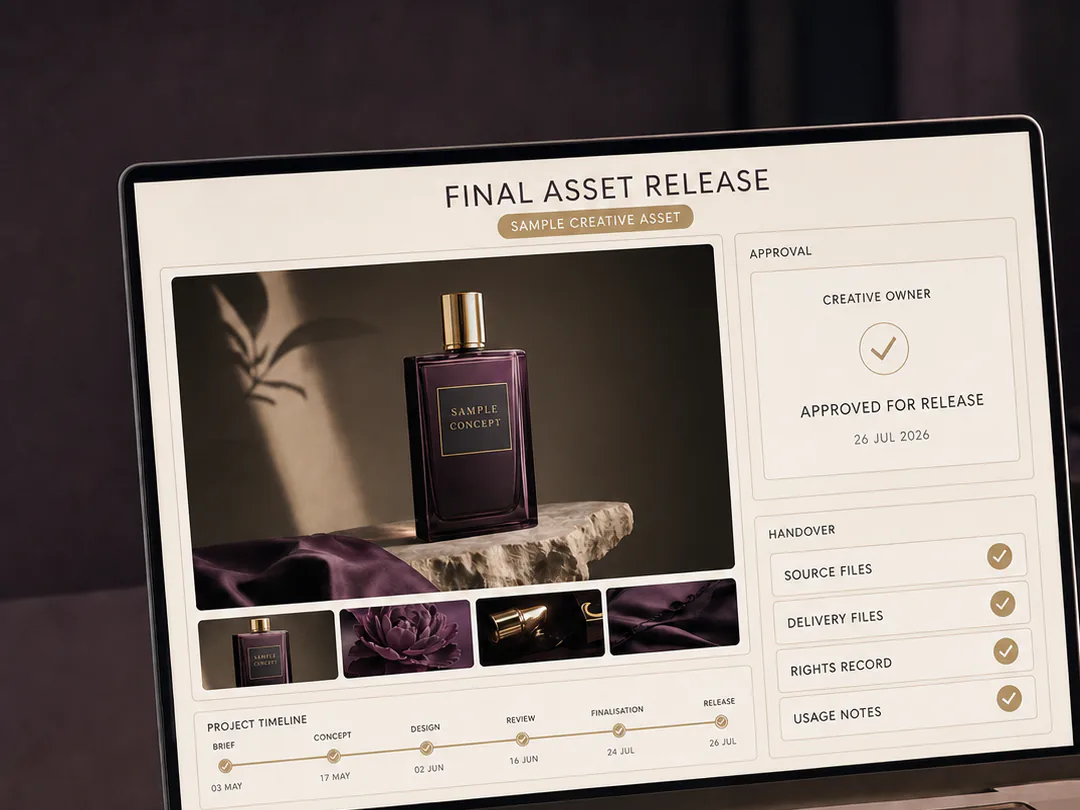
I can coordinate a human-led creative AI workflow from brief and exploration through review, refinement, rights and disclosure checks, final approval and organised multimedia handover.
Section 04
I refine until the work becomes coherent
AI-assisted material may contain inconsistent detail, generic language, weak sequencing, visual artefacts or a mismatch between channels. I edit, restructure, combine, replace and sometimes discard outputs until the complete communication works.
Faster-to-draft is useful because it creates more time for judgement. It is not evidence that the draft is ready to publish.
Section 05
I plan disclosure, rights and provenance
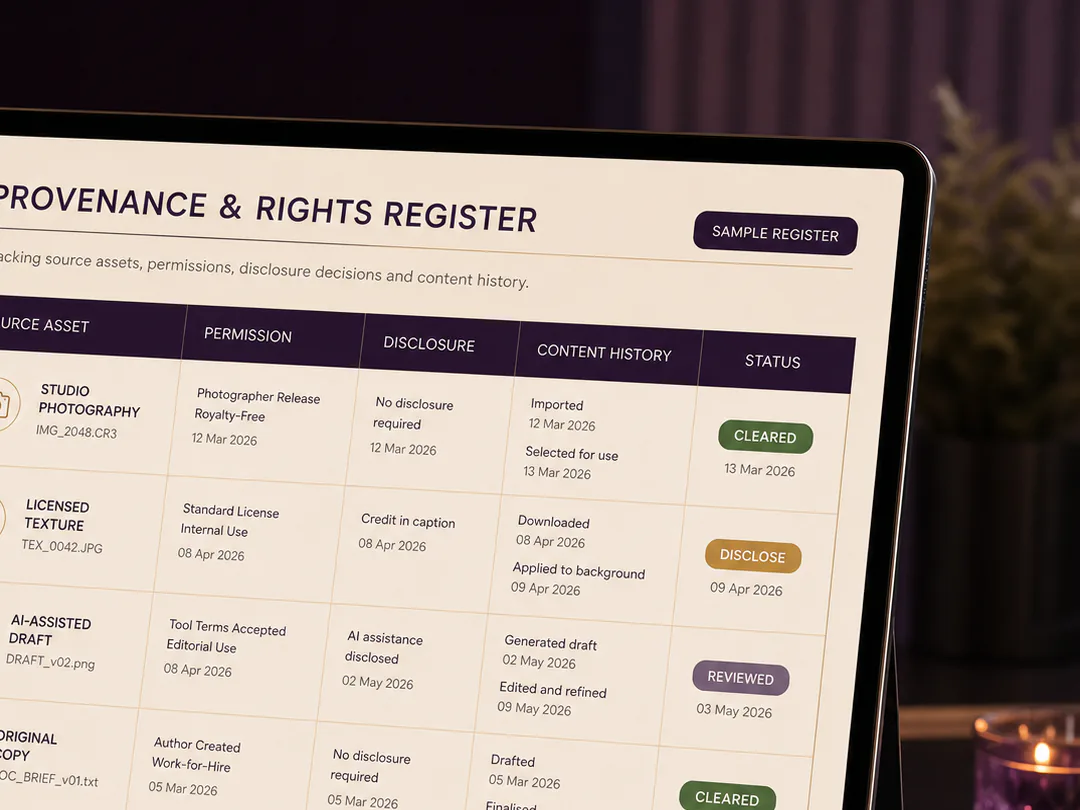
The team should know which sources, people, assets and tools contributed, what rights apply and whether meaningful AI assistance should be disclosed for the audience or platform. The decision should be consistent with the nature and impact of the content.
Content Credentials and other provenance approaches can support transparency, but the project still needs human records and honest communication about what was created and approved.
Section 06
I keep a named human at the release gate
The final reviewer checks accuracy, permissions, tone, audience fit, cultural credibility, accessibility, technical quality and the correct version. The role includes the authority to stop release when the work is not ready.
This is the point where creative responsibility becomes visible. The tool does not carry the relationship with the customer; the organisation and creator do.
Section 07
I hand over the reusable creative intelligence
I preserve the approved direction, source assets, prompts or instructions worth reusing, rejected risks, rights notes, disclosure decision, final files and future adaptation guidance. The customer receives more than a finished image or post.
A structured handover helps future content retain the voice and quality that made the final selection successful.
Turn this insight into an organised next step.
Creative AI can give a small team greater range and speed. Human taste determines whether that range becomes a distinctive, credible and useful experience for the audience.
When a team can generate many options but struggles to choose, refine and release them consistently, I can help organise the creative decision process around the customer and the final quality standard.
Start with the short version: the outcome, intended audience, deadline, available assets, stakeholders and the delivery problem that is currently blocking progress.
Sources and related reading
- Adobe — 2026 Creators' Toolkit Report (16 June 2026) — Creative AI is becoming infrastructure, but creators still place final decisions, voice, taste and judgement with people.
- C2PA — Content Credentials Specifications — Content Credentials provide a technical standard for communicating media provenance and history.
- Google Search Central — Creating Helpful, Reliable, People-First Content — Useful content should be created primarily for people; meaningful disclosure can explain substantial automation or AI assistance.