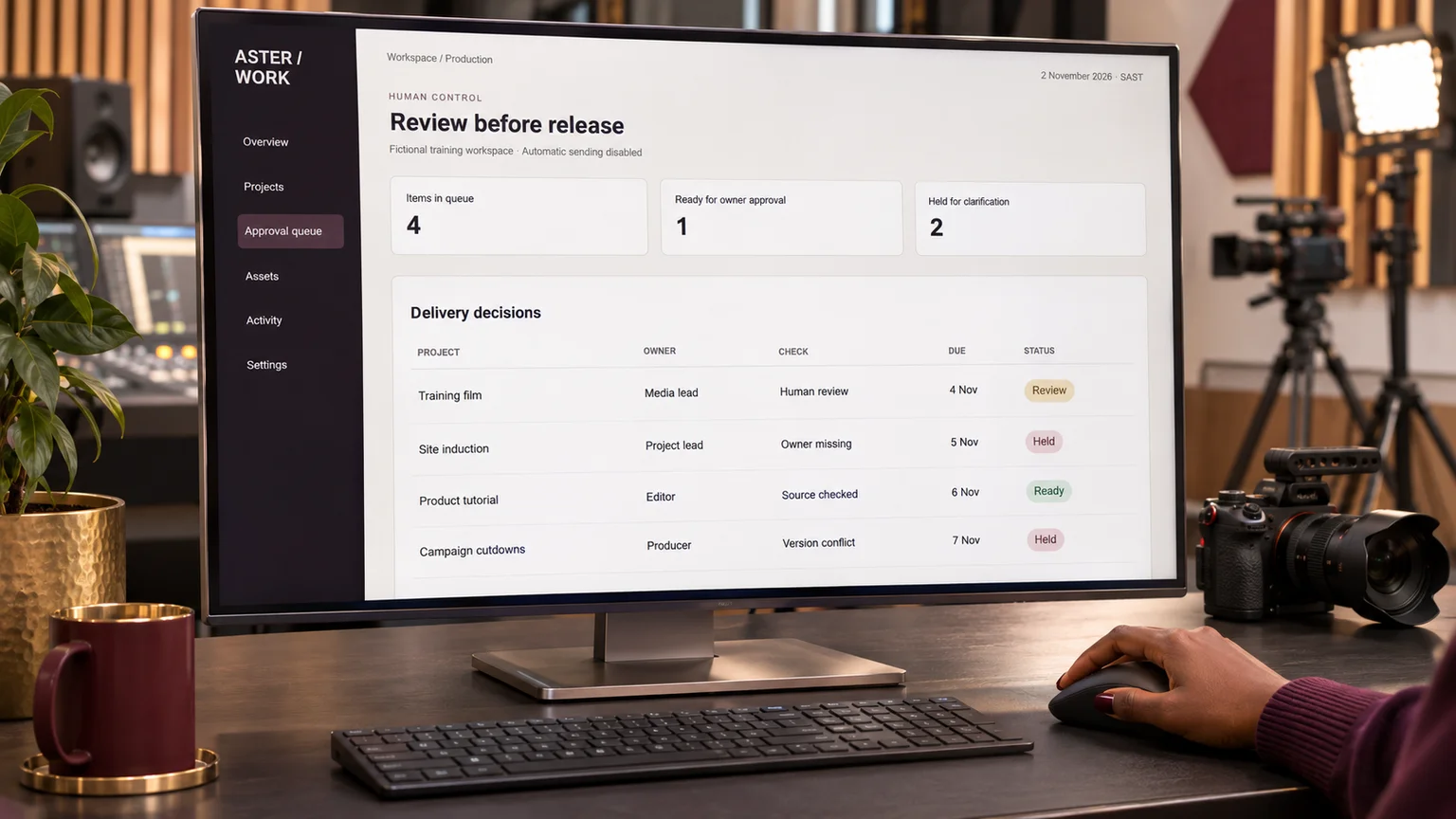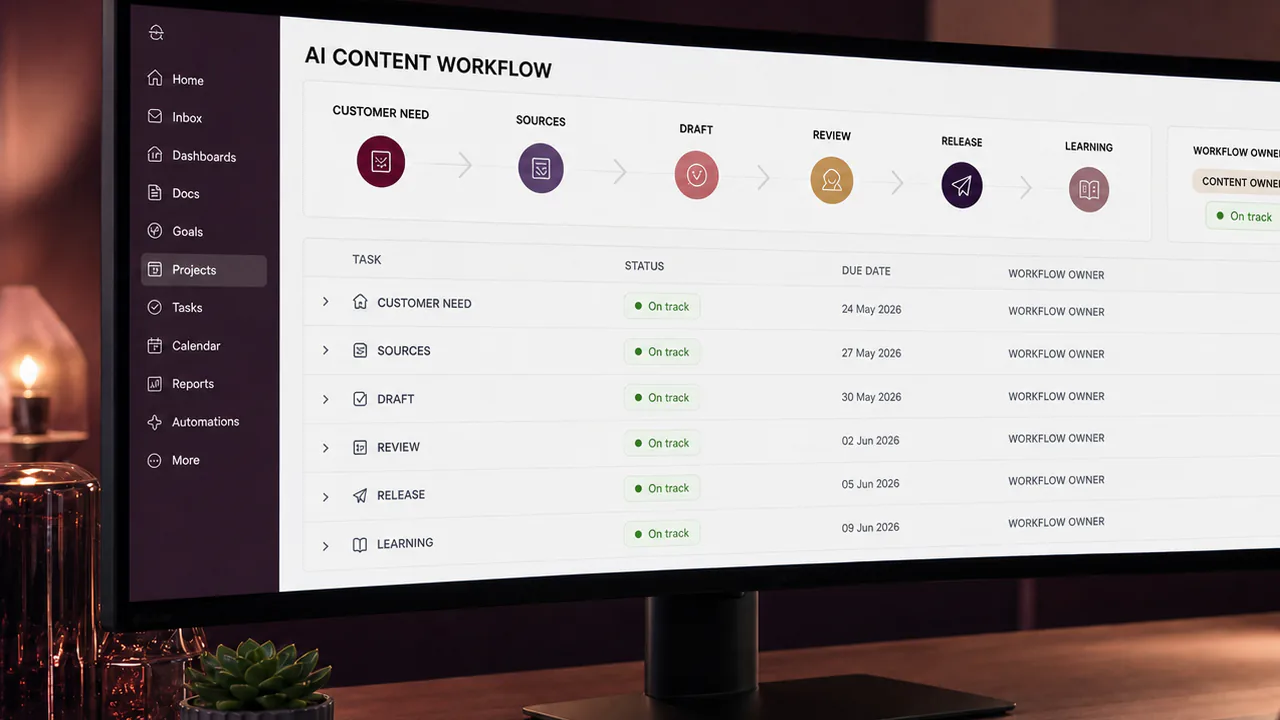

An AI tool can produce a long action list very quickly. That does not tell me how much useful project work has been completed. Somebody may still need to remove duplicates, correct owners, verify dates and decide which suggestions belong in the plan.
I would assess a pilot by looking at the complete path to an accepted result. The first output is one stage in that path. Preparation, review, correction and recording also use time, and mistakes can create consequences that are more important than a faster draft.
For this guide, I use a fictional pilot that turns permitted meeting notes into draft project actions. It never sends messages or changes a live schedule automatically. The figures are illustrative calculations, not results from an engagement or a promise about an AI product.
I define the task before choosing the measure
I would state exactly what the pilot is expected to produce. In this case, a useful draft action needs a clear task, a supported owner, a source reference and an explicit indication when the deadline is unknown. A tidy sentence with an invented owner would not meet that definition.
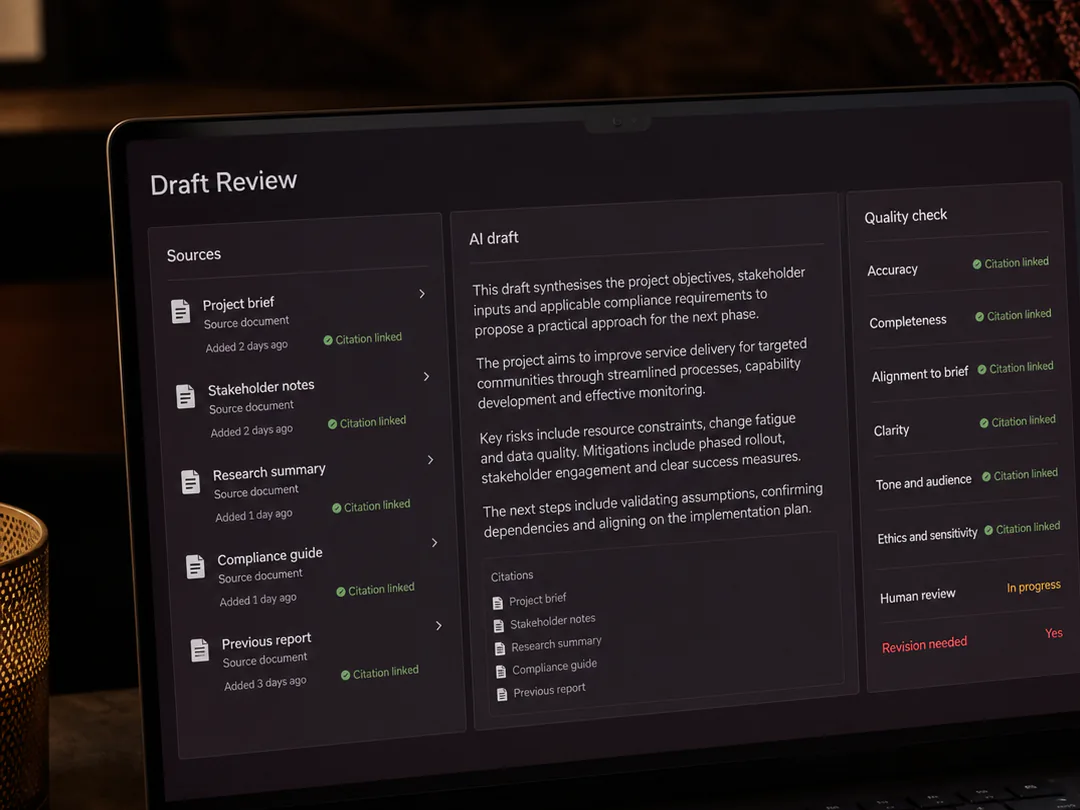
I would also state what the tool must leave to a person. It cannot infer approval from silence, settle conflicting commitments or turn an informal suggestion into an agreed task. Those boundaries affect how I assess the output.
PMI's October 2026 announcement places new AI learning alongside human judgement and professional skills. That is relevant context for a supervised pilot. The measurement method here is my own proposal, not a PMI benchmark or a claim to have applied its complete AI standard. PMI announcement, 22 October 2026.
I establish a comparison that covers the same work
I would observe the existing manual method on a small set of comparable notes. The comparison needs a similar level of difficulty and the same acceptance criteria. Comparing a simple AI-assisted meeting with a complex manual workshop would tell me little about the tool.
For each example, I would record preparation, drafting, review and correction time. I would also record the volume and nature of the source material, because a ten-minute discussion and a two-hour planning session are different inputs.
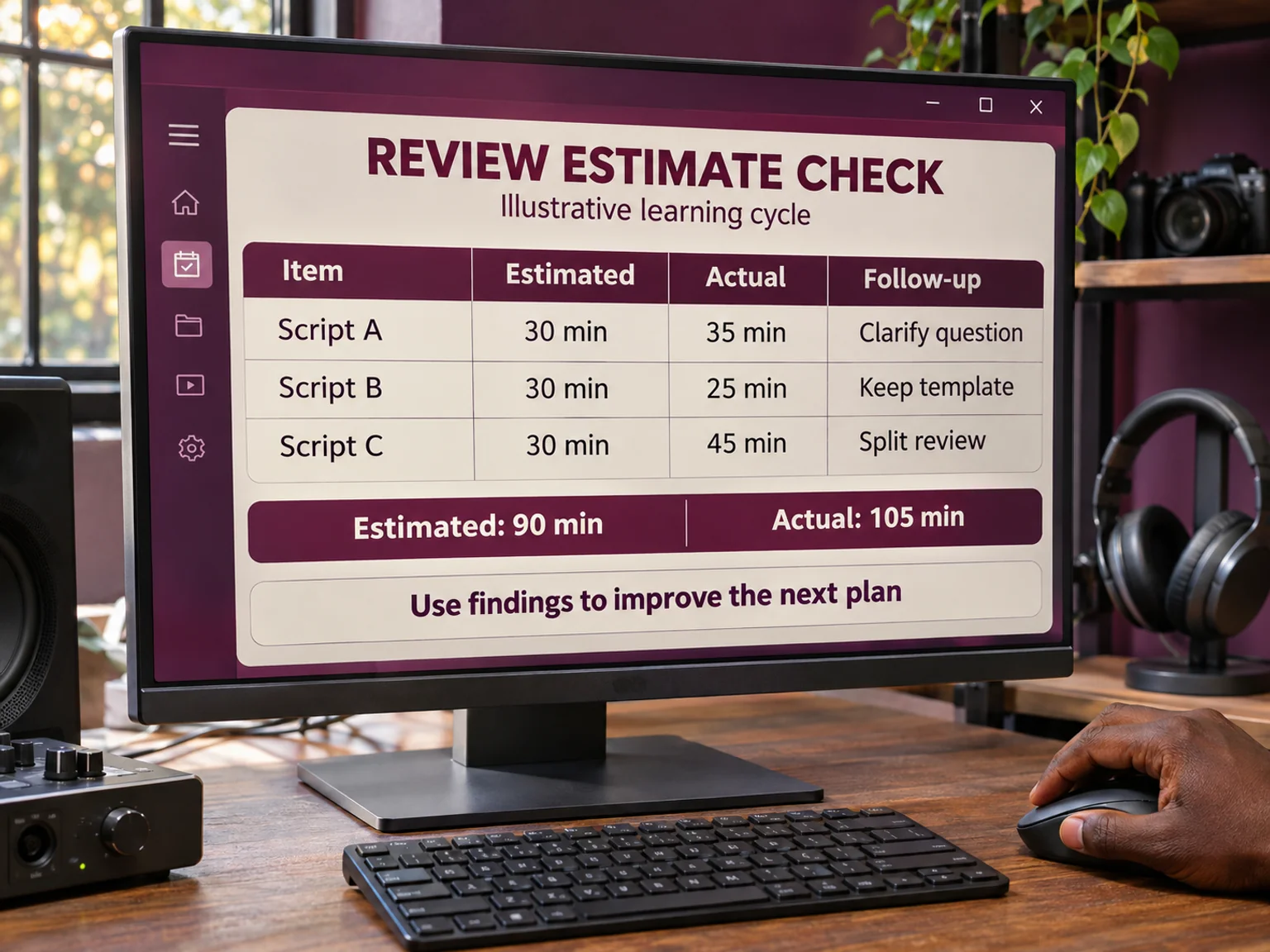
Suppose the fictional manual process takes 25 minutes to reach an accepted action record. The assisted process takes three minutes to prepare the input, two to produce the draft, twelve to review it and five to correct it: 22 minutes in total. The relevant difference in this example is three minutes, not the 23-minute gap between manual completion and the initial AI draft.
I distinguish cosmetic changes from consequential errors
I would classify corrections by their effect. Adjusting a heading is different from correcting a deadline that could move a dependency. A missing source reference is different from an unauthorised commitment attributed to a stakeholder.
My review record would therefore include both the count and the type of correction. I would look for unsupported owners, invented dates, duplicated tasks, omitted conditions and actions that the source does not support. A small number of serious errors can matter more than many minor wording changes.
I would not combine these categories into a single success percentage without explaining what that percentage means. If nine drafts need only punctuation edits and one invents a consequential approval, “90% accurate” would hide the most useful finding.
I test uncertainty deliberately
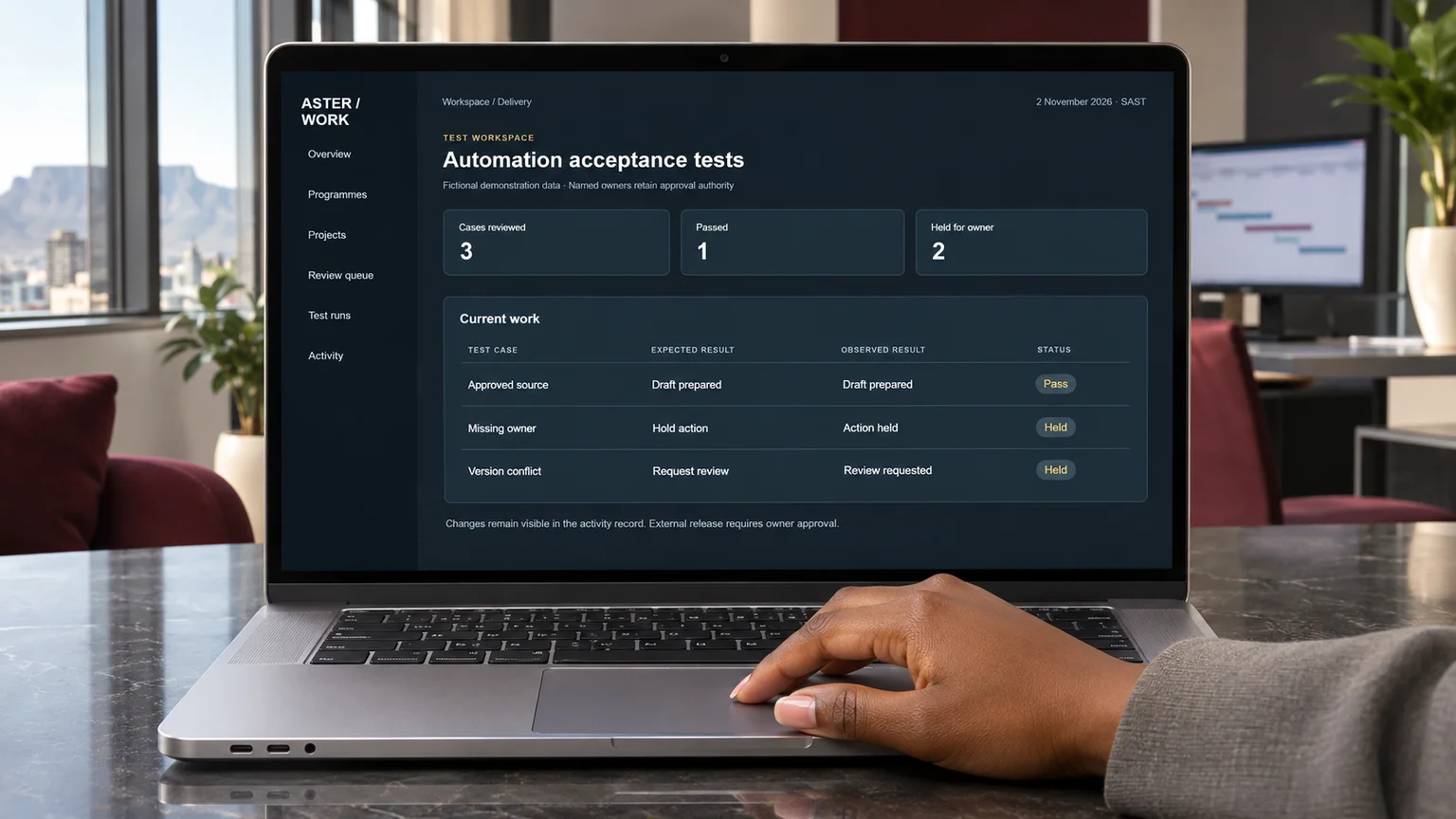
Clean inputs are useful for establishing a baseline, but real notes may contain uncertainty. I would include a small, clearly fictional test set with an unnamed owner, a conflicting date and a proposal that has not been accepted.
The expected behaviour should be defined before the test. For the unnamed owner, I would expect the draft to flag that ownership needs a decision. For the conflicting date, I would expect the discrepancy to remain visible. Guessing confidently should not receive credit for producing a complete-looking table.
I would retain the input, the tool or prompt version and the reviewed output. That record lets me compare a later change with the same example. Otherwise an apparent improvement might simply reflect an easier input or a different reviewer.
I count the work transferred to other people
A pilot can save one person's time while increasing another person's workload. I would ask who checks the output, who resolves exceptions and who maintains the workflow. Those responsibilities belong in the assessment.
In the meeting-notes example, a coordinator may spend less time drafting but a project lead may need to investigate several ambiguous actions. That can still be worthwhile, but it should be an explicit choice rather than an invisible transfer of effort.
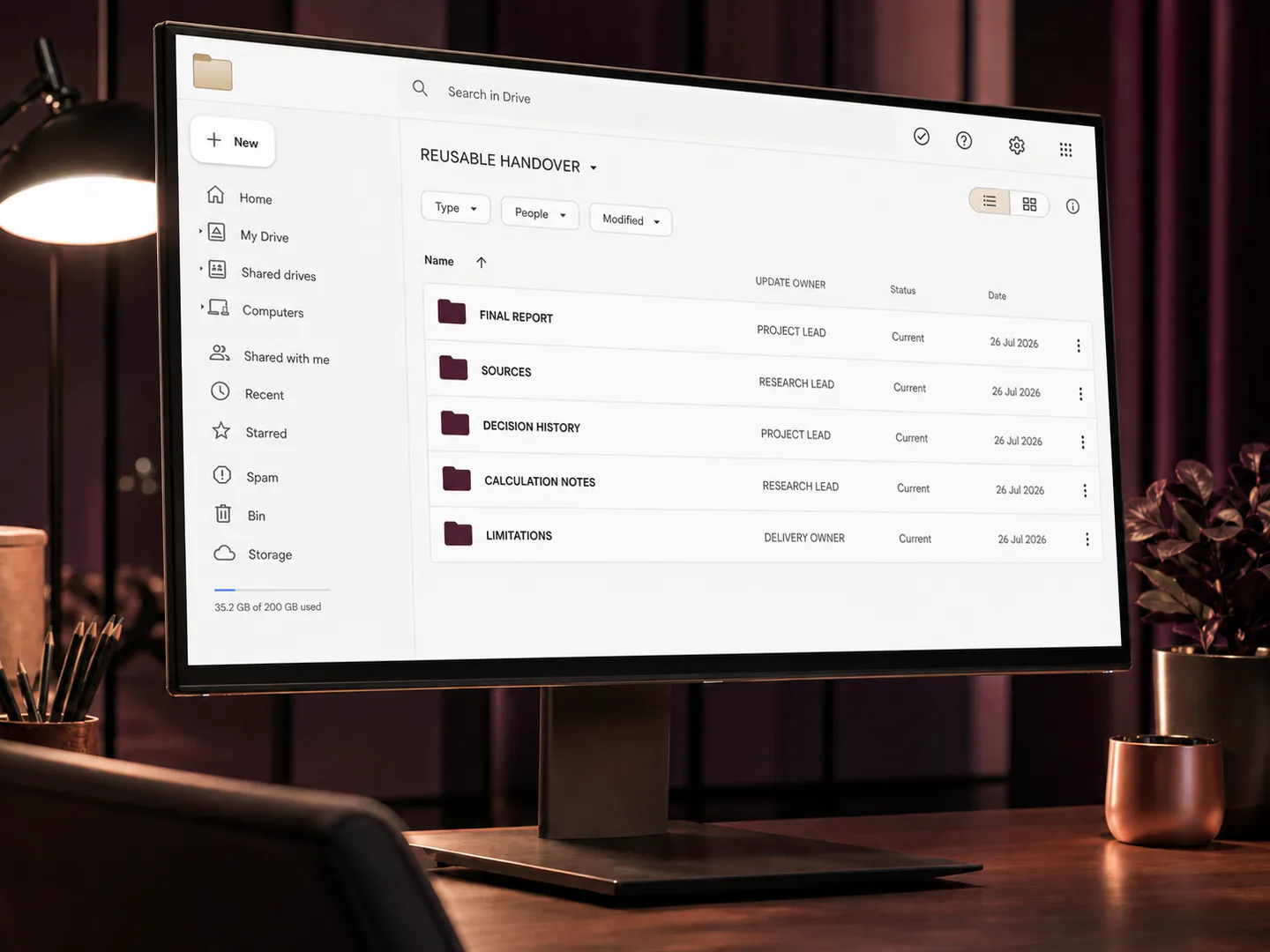
I would also check whether the assisted process leaves a better or worse project record. Can another person find the source of a decision? Can they distinguish a proposal from an accepted commitment? The quality of that record matters after the pilot demonstration is over.
I decide what would justify continuing

Before starting, I would agree a small set of continuation conditions. They might include acceptable review effort, no unauthorised actions, traceable sources and a workable manual fallback. The exact conditions depend on the task and its consequences.
I would review the evidence after a defined period and choose whether to continue, narrow the task, change the workflow or stop. A useful outcome can be a smaller scope: perhaps the tool is helpful for organising notes but should not propose deadlines.
For me, the question is whether the complete workflow produces an accepted result more reliably or with less total effort. Counting drafts can help describe activity. It cannot, on its own, demonstrate delivery.
Research and editorial note
Retrospective series date: 22 October 2026. Research checked on 2 November. All calculations and test cases are fictional. The public publication date must reflect the actual release, and this guide makes no claim about the performance of a particular AI system.