Project Delivery Playbook · 2026-07-27 · 6 min read
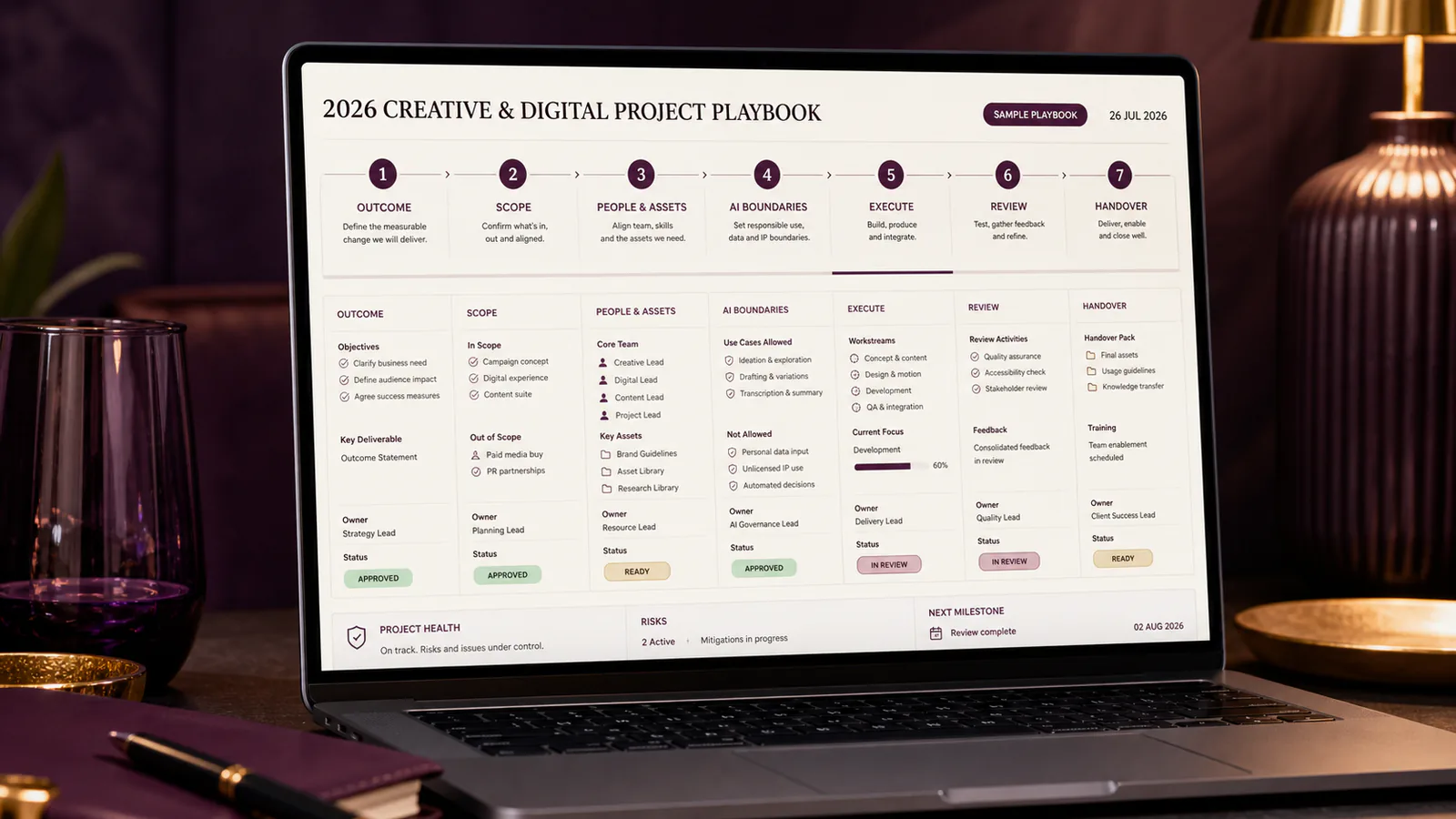
Strong delivery is not one heroic final push. It is a sequence of visible decisions that keeps the customer outcome, contributors, content, quality and final handover connected from the beginning.
The tools available to creative and digital teams in 2026 can accelerate research, drafts, adaptation, analysis and coordination. They do not remove the need to define the right outcome, assign responsibility, resolve stakeholder decisions, protect quality or leave the customer with an organised result.
PMI’s 2026 work on complex projects, Microsoft’s research on human-agent operating models and Adobe’s creator research all point towards the same practical requirement: faster execution creates more value when people set clear intent, document handoffs, supervise quality and retain judgement at the final decision.
This is the playbook I use to connect project management with multimedia understanding. It is proportionate rather than bureaucratic: enough structure to keep the work visible, protect the customer promise and support a dependable handover.
Key takeaways
- Define the customer outcome and acceptance test before activity begins.
- Convert the outcome into scope, deliverables, milestones, responsibilities and dependencies.
- Organise the people, approved information and assets required for delivery.
- Give AI-assisted work boundaries, evidence requirements and human decision gates.
- Control execution, review, quality, approval and handover as one connected process.
Section 01
Stage one: define the outcome
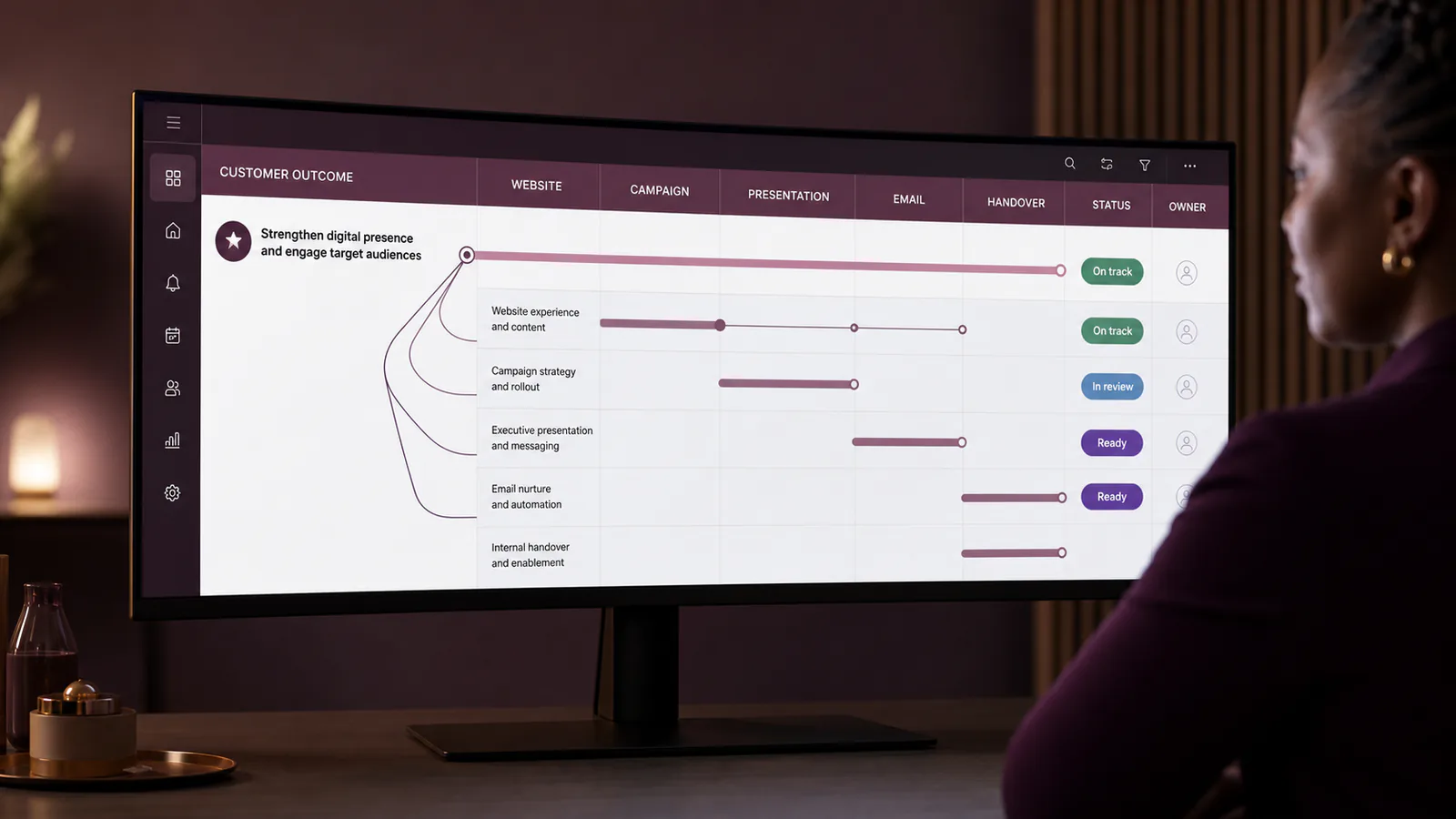
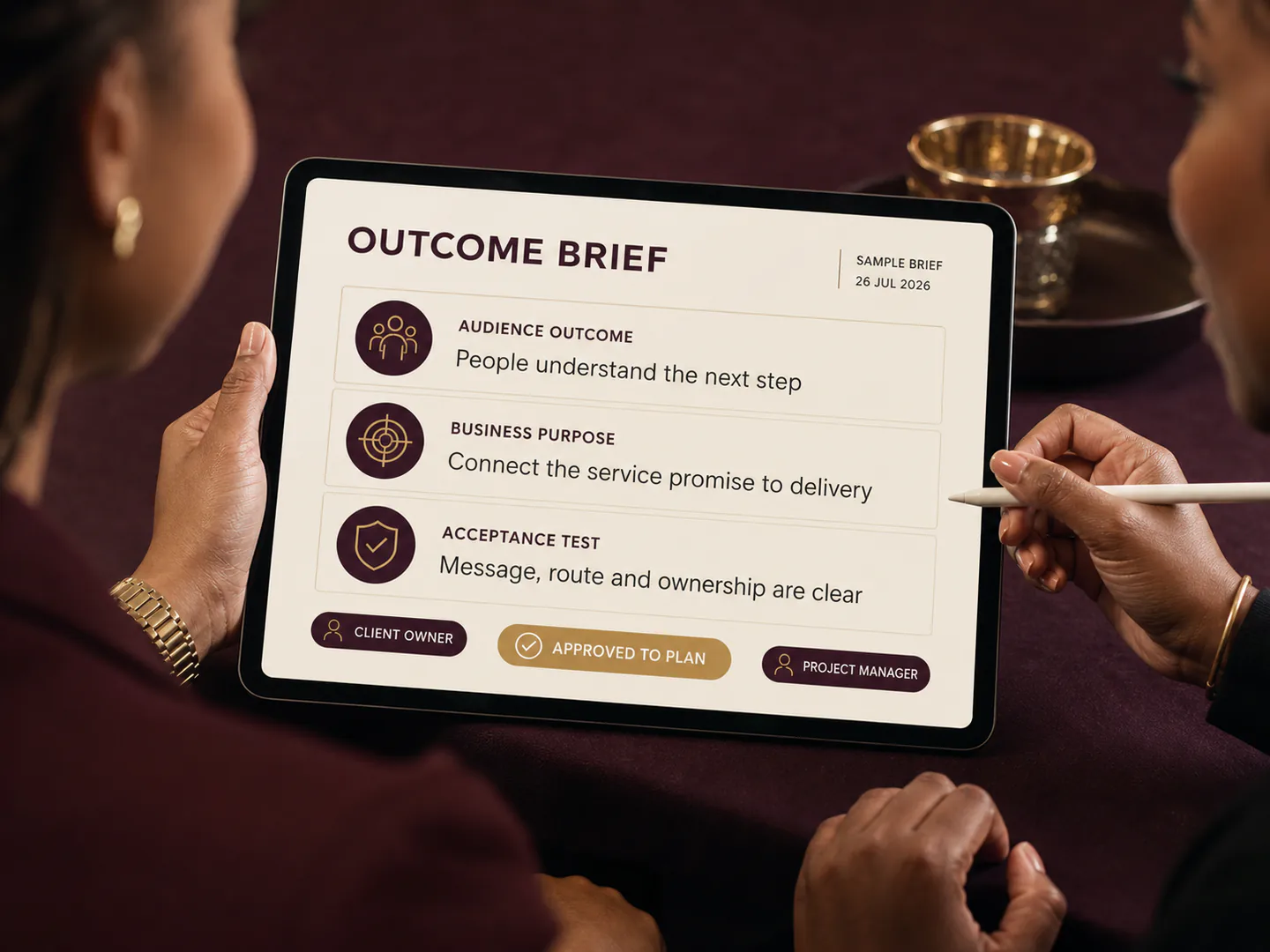
I clarify who the project serves, what should change for that audience, which business purpose the work supports and how completion will be recognised. The outcome becomes a concise reference that every contributor and stakeholder can use.
I also confirm the deadline, decision-makers, constraints and the customer problem that currently makes the work necessary.
Section 02
Stage two: scope and plan the deliverables
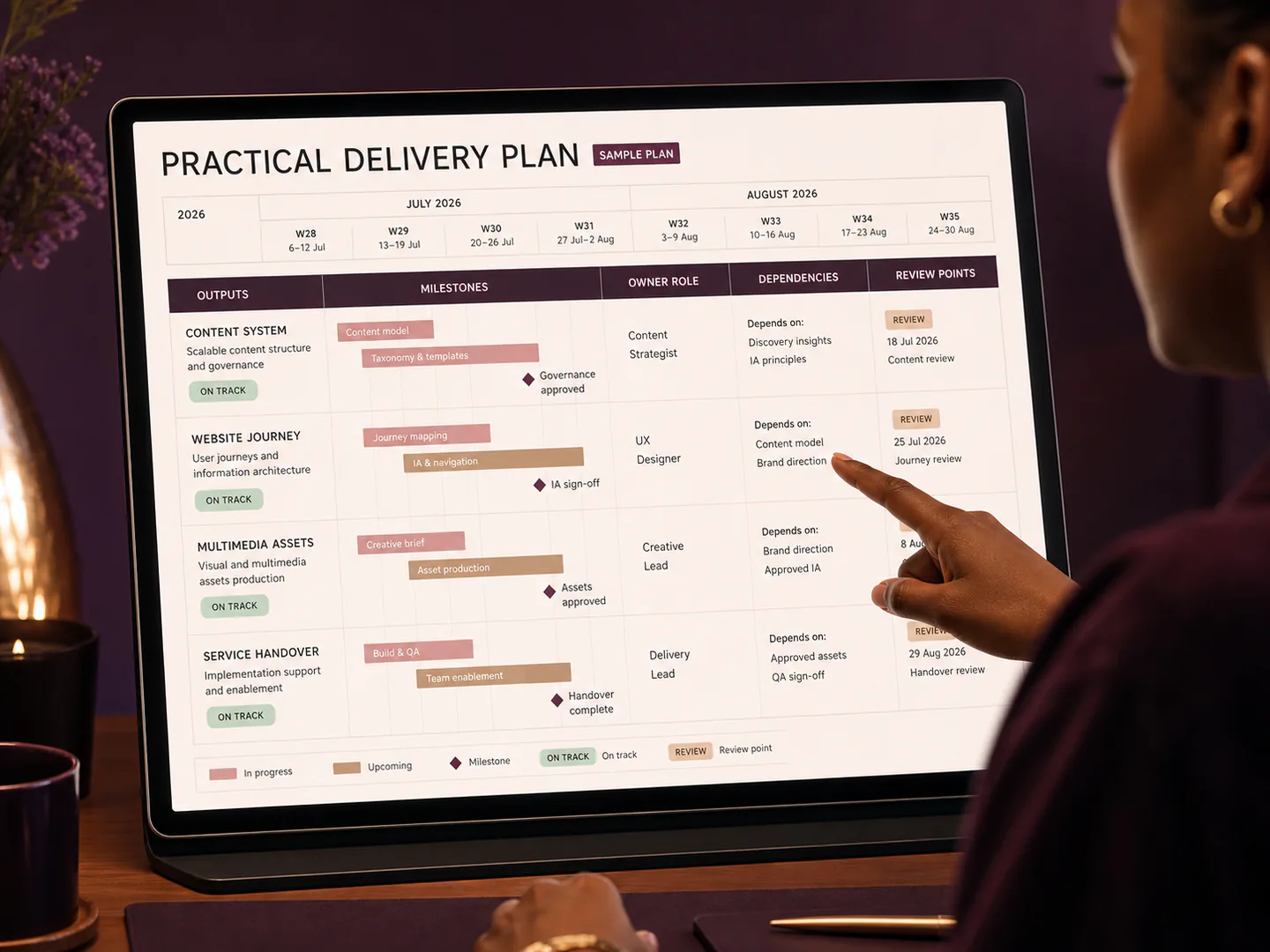
I break the outcome into defined outputs, priorities, milestones, dependencies, review points and acceptance criteria. I distinguish required work from optional ideas and identify the effect of a later change.
The plan remains practical. It gives the team enough structure to coordinate without pretending that every creative decision can be predicted at the start.
Section 03
Stage three: organise people, information and assets
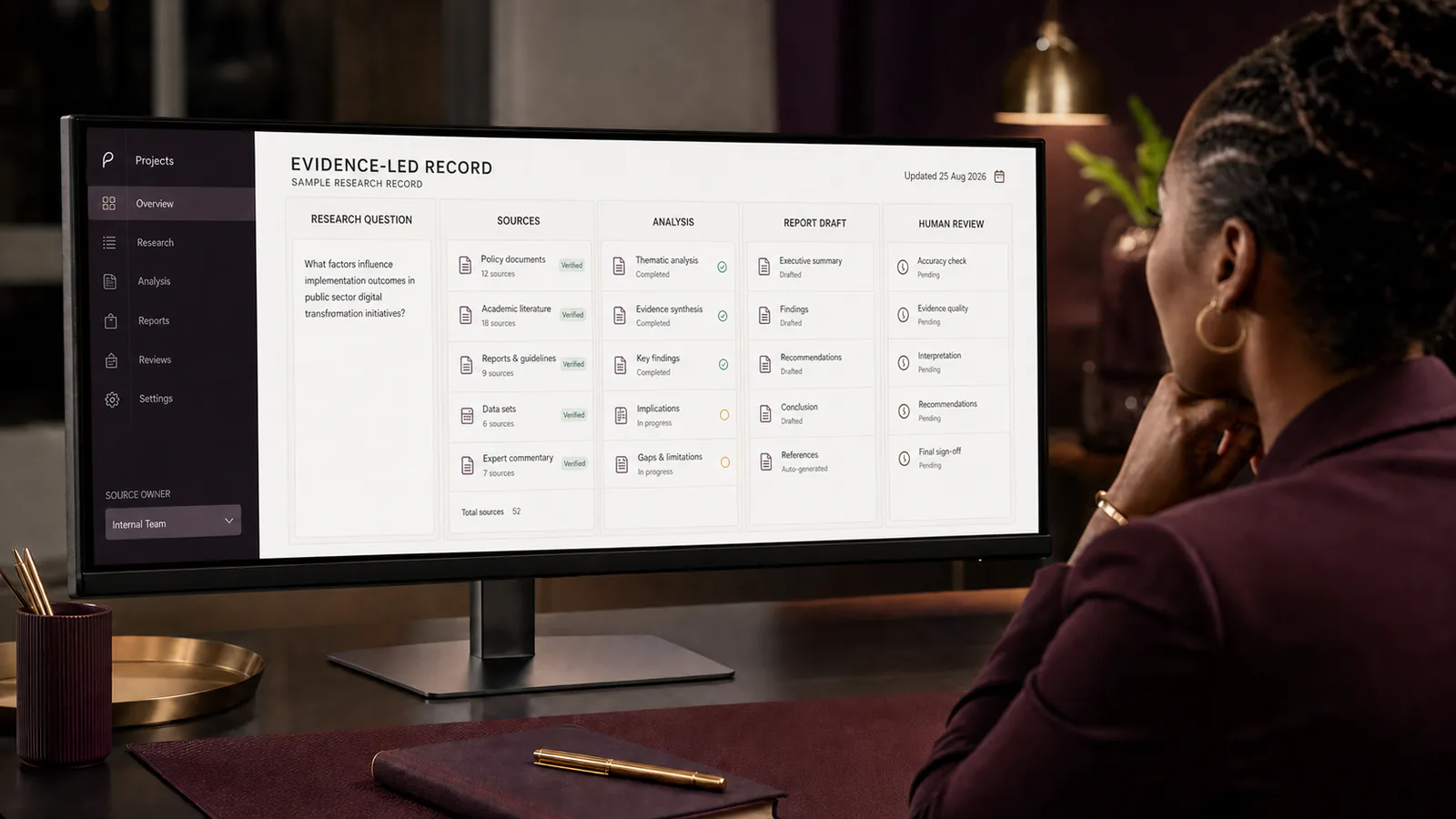
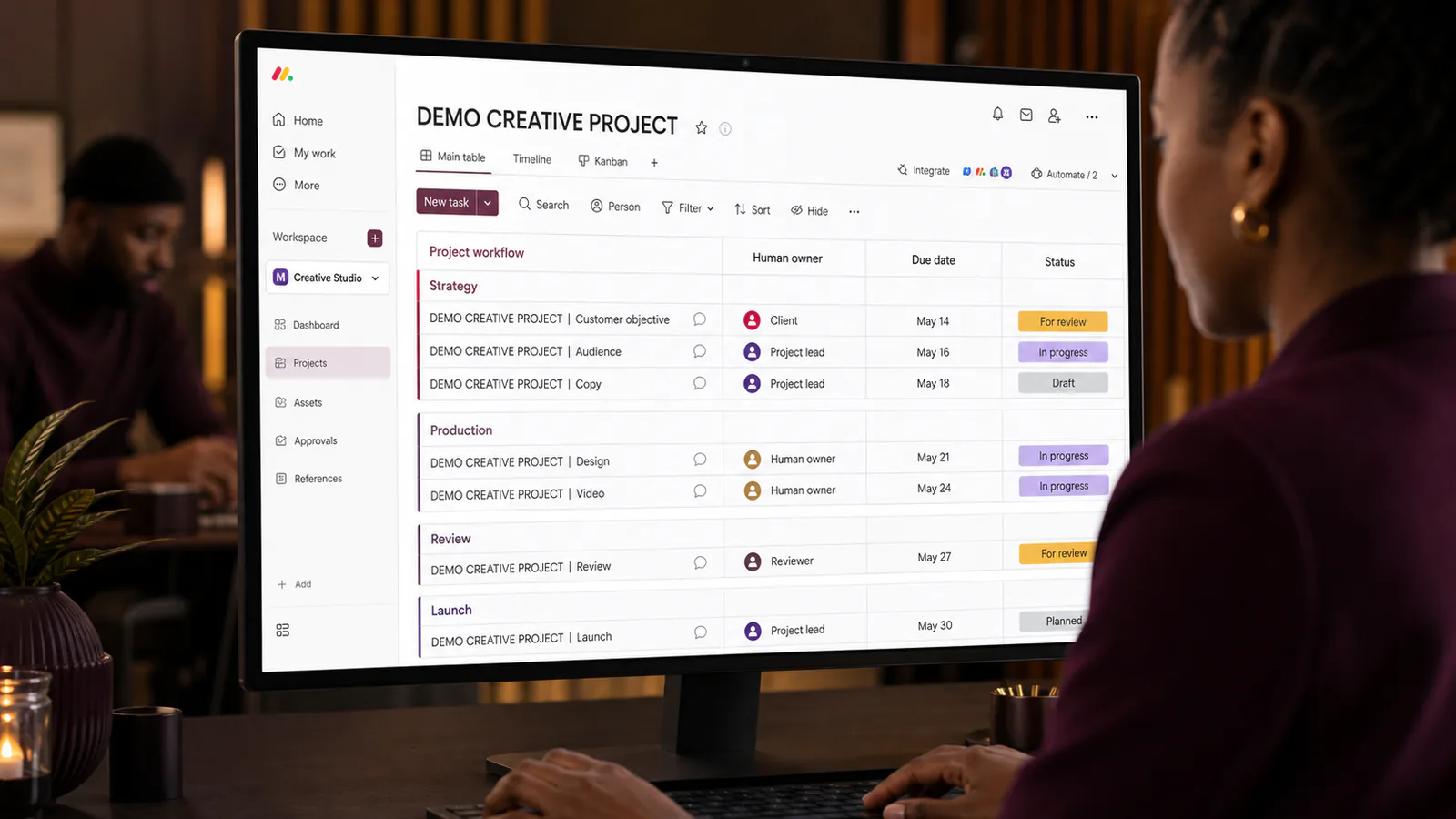
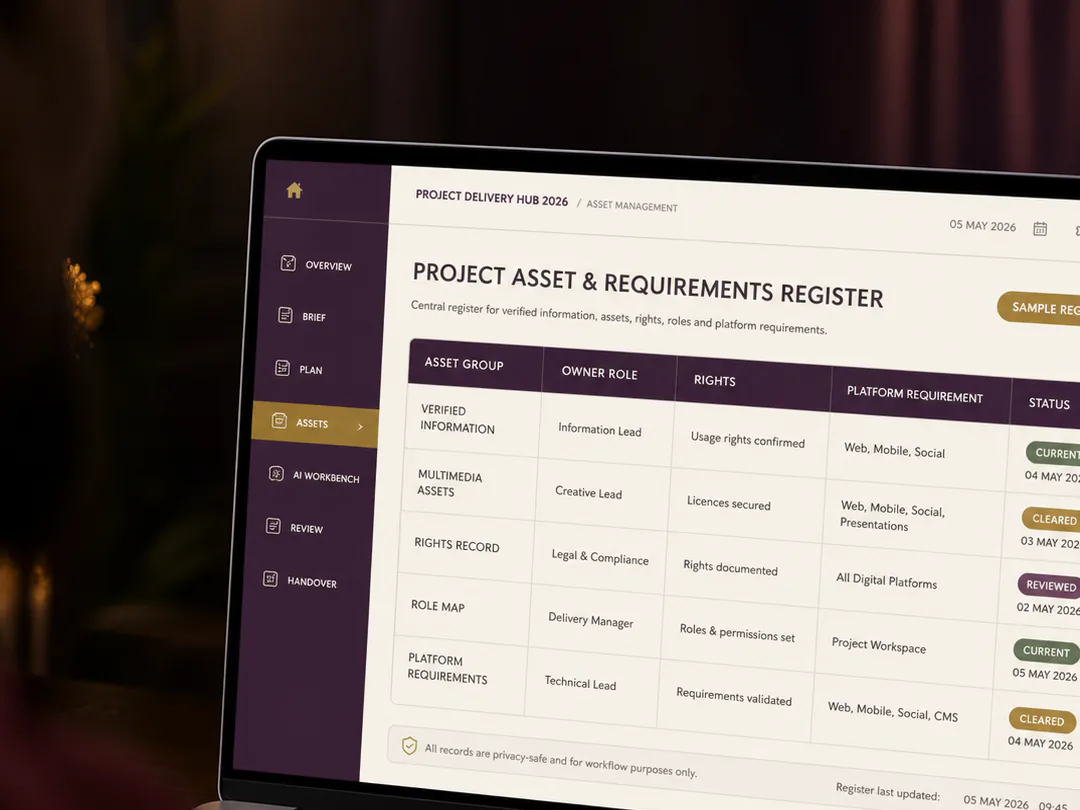
I establish contributors, reviewers, approvers and task ownership. I organise verified facts, brand guidance, source documents, media, rights, platform requirements and file locations.
Missing material is recorded with an owner and due date. The team should not discover at final review that a core claim, image or permission was never confirmed.
Bring the moving parts into one delivery process.
I can apply this playbook to a creative, digital, website, presentation, campaign or multimedia project—either leading the delivery process or strengthening the brief, coordination, review and handover where a project is already under way.
Section 04
Stage four: define AI and automation boundaries
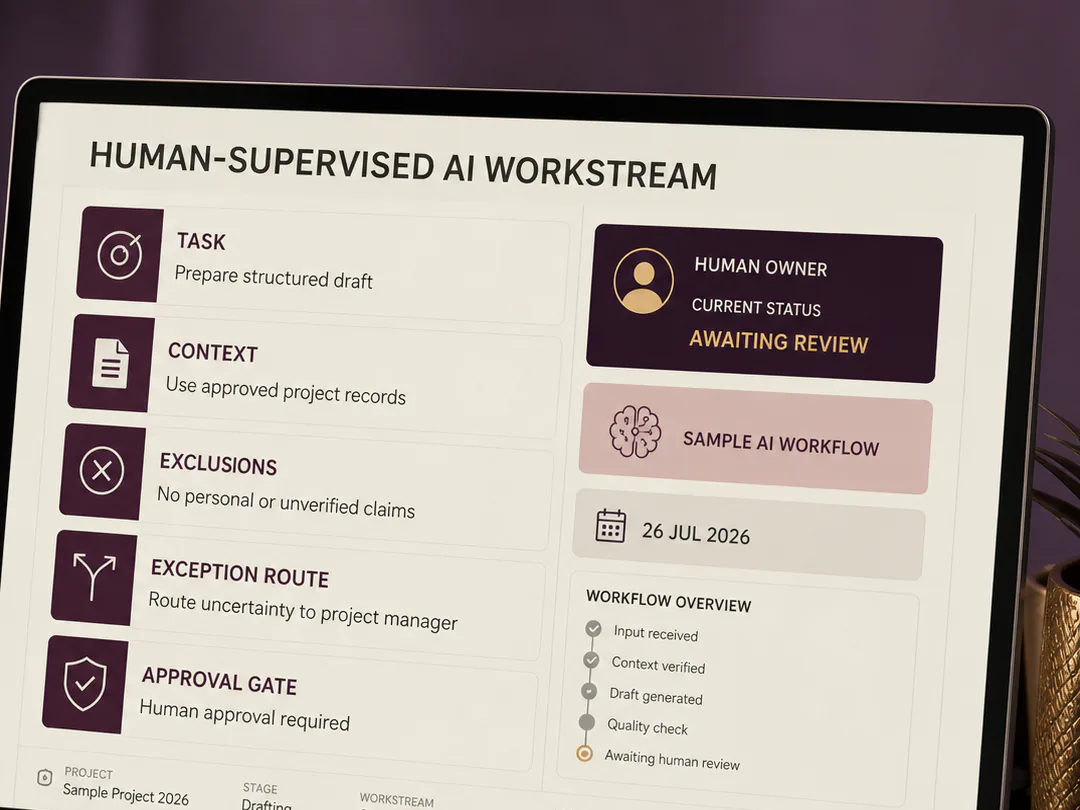
Where AI assists research, content, analysis or workflow steps, I define the permitted task, approved context, exclusions, personal-information and rights controls, human review, exception route and stop condition.
AI output remains working material until a named person checks it against the project’s evidence and quality standard.
Section 05
Stage five: coordinate execution visibly
I track progress, decisions, dependencies, blockers, versions and outstanding information. Stakeholder communication focuses on what changed, what needs a decision and what the effect will be.
When conditions shift, I reassess the outcome and plan rather than allowing informal changes to accumulate invisibly.
Section 06
Stage six: control review, quality and approval
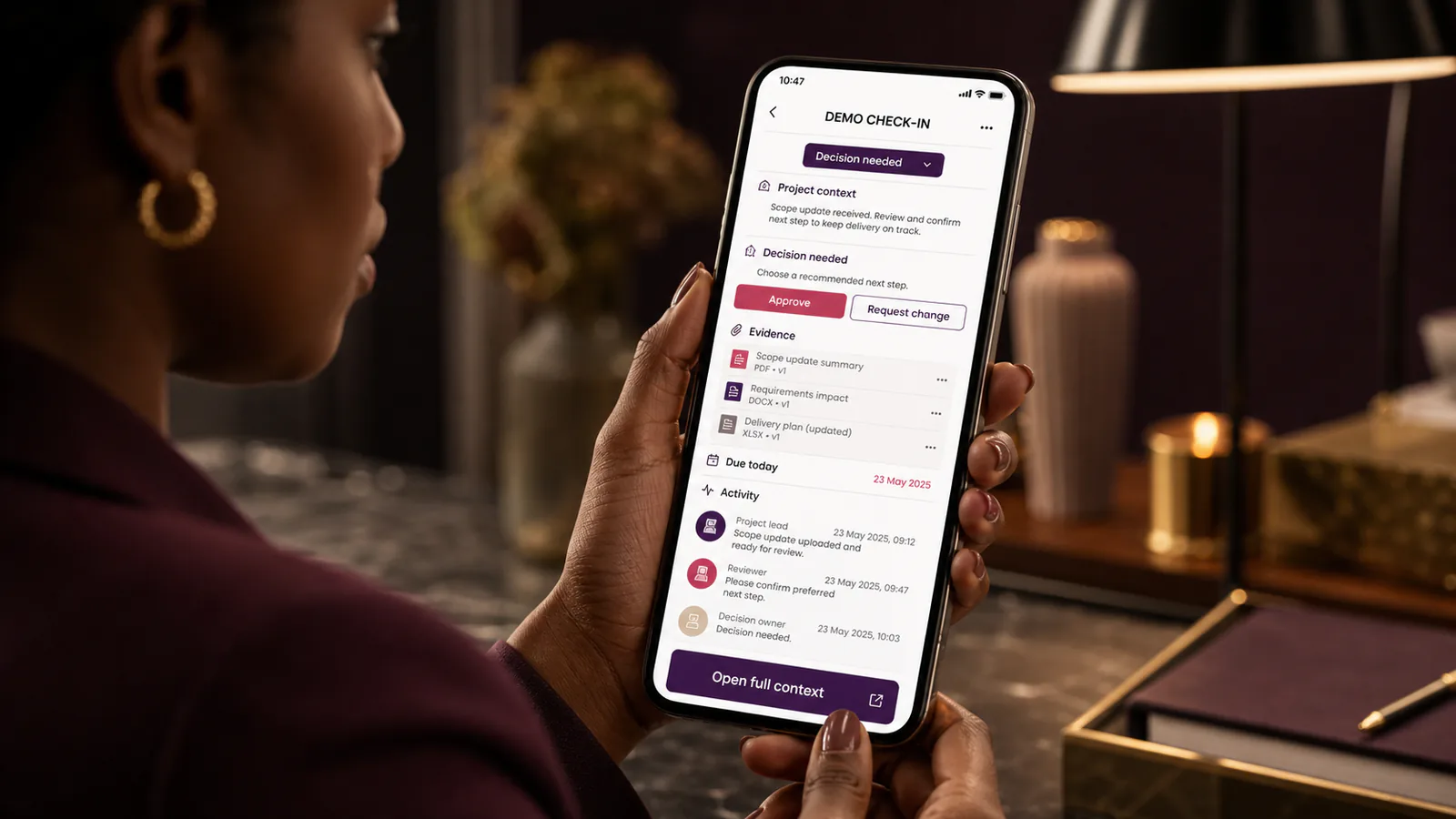
I define each review round, select reviewers by responsibility, consolidate feedback and protect version status. The quality check covers accuracy, audience relevance, brand, representation, accessibility, technical readiness, permissions and connected customer experience.
Final approval identifies the exact release version, conditions and accountable person. Silence or a scattered collection of comments does not become approval by accident.
Section 07
Stage seven: close, hand over and learn
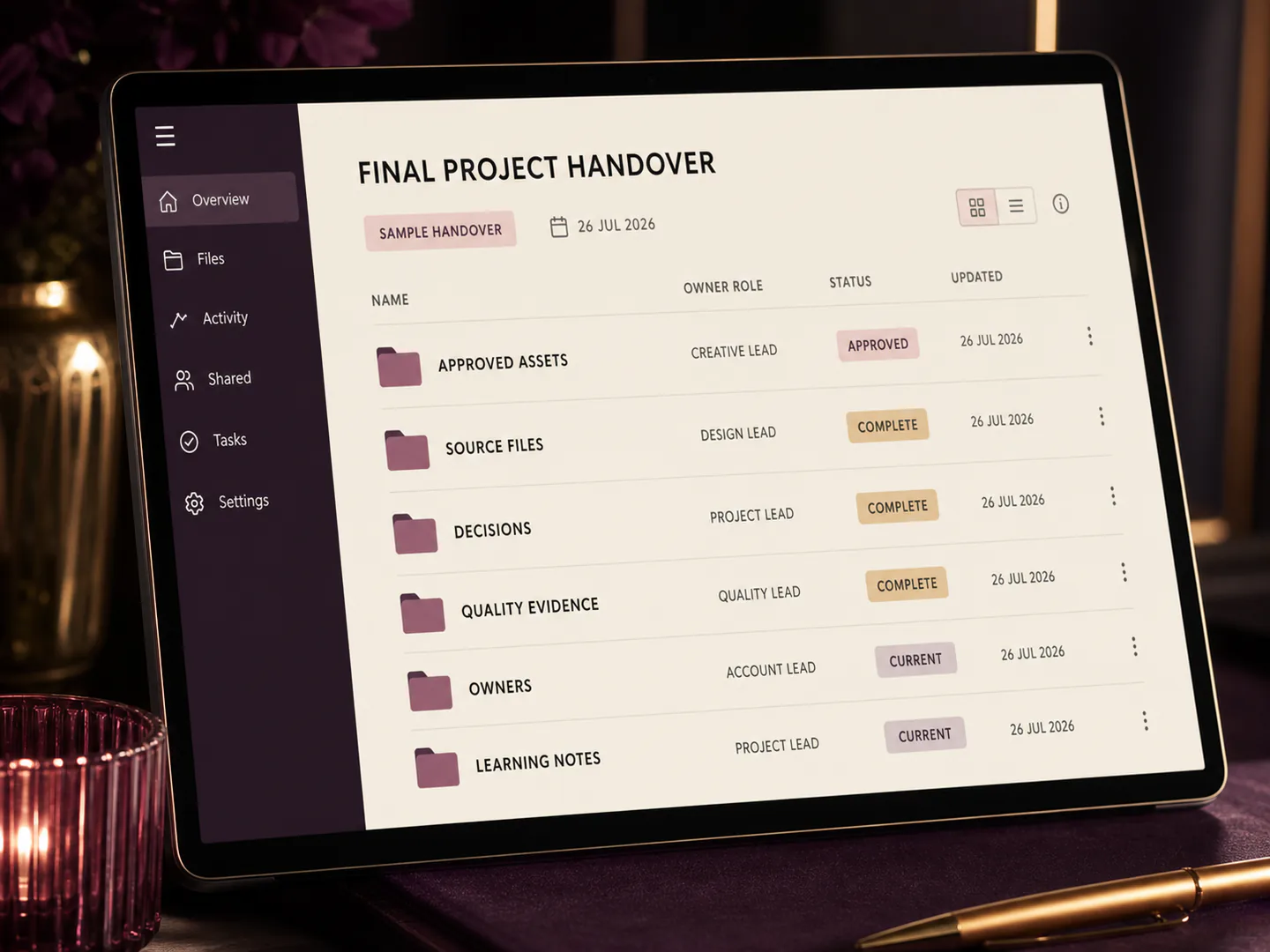
I deliver the approved files, source assets, rights and usage notes, decision record, quality evidence, open items, owners and future maintenance route. The customer should be able to understand and operate the result after the project team steps away.
I also capture what should change in the next project: recurring blockers, effective prompts or templates, customer feedback, reusable assets and improvements to the workflow.
Turn this insight into an organised next step.
A dependable project does not separate structure from creativity. Structure protects the decisions, information and working conditions that allow meaningful creative work to reach the audience in the right form.
My contribution is to keep that complete path visible: clarity before activity, accountability throughout delivery and an organised result at handover.
Start with the short version: the outcome, intended audience, deadline, available assets, stakeholders and the delivery problem that is currently blocking progress.
Sources and related reading
- PMI — Pulse of the Profession 2026: Driving Success in Complex Projects (May 2026) — Complexity is now common; outcome focus, alignment and learning distinguish stronger delivery.
- Microsoft — 2026 Work Trend Index: Agents, Human Agency and Opportunity — Repeatable handoffs and documented quality standards distinguish more mature human-agent work.
- Adobe — 2026 Creators' Toolkit Report (16 June 2026) — Creative AI is becoming infrastructure, but creators still place final decisions, voice, taste and judgement with people.
- Adobe — 2026 AI and Digital Trends Report — Customers give promotional content only seconds to earn attention and still expect AI-assisted experiences to feel human and brand-aligned.
- W3C — Web Content Accessibility Guidelines (WCAG) 2.2 Overview — WCAG organises accessible content around perceptible, operable, understandable and robust experiences.