Creative Project Management · 2026-03-09 · 6 min read
A review meeting should not be the first place the team discovers that the brief is unclear, the claim is unverified or the wrong version is on screen. I prepare the campaign so reviewers can make decisions rather than diagnose unfinished work.
Campaign review becomes expensive when it is used as a substitute for project preparation. Stakeholders spend the session asking which audience the work is for, whether a statistic is correct, why a format is missing or which version they are supposed to approve.
I treat review as a decision stage. The work should arrive with its context, evidence, limitations and requested decision visible. That allows stakeholders to judge the campaign against the agreed outcome rather than reconstructing the project in the room.
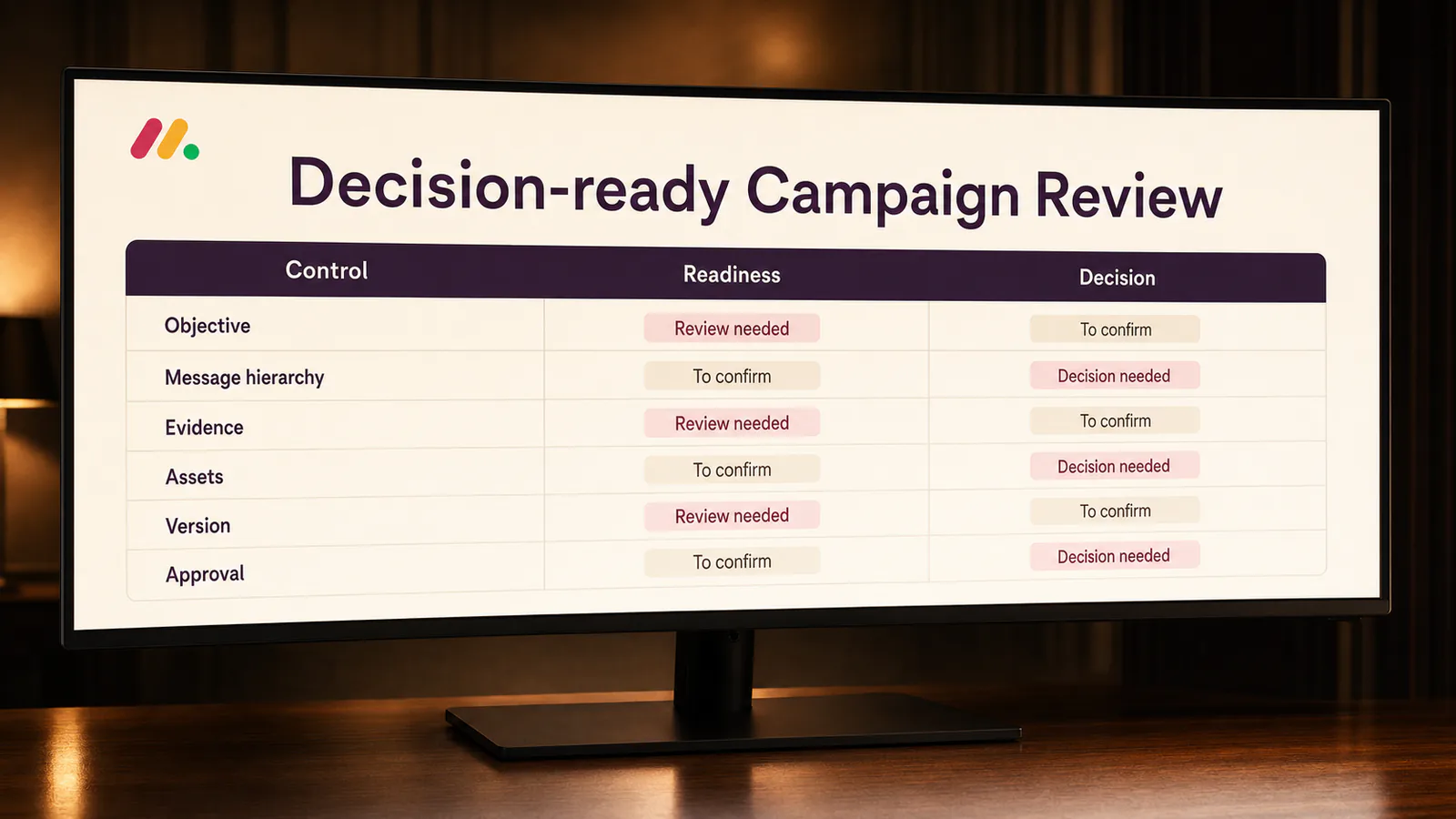
Before a multimedia campaign enters formal review, I check seven controls.
Key takeaways
- Review material should identify the audience, outcome and requested decision.
- Every public claim needs an approved source or responsible owner.
- Assets should be complete enough for the review question being asked.
- Versions and channel adaptations must be easy to distinguish.
- Accessibility and final-delivery requirements belong in review preparation.
Section 01
Control one: the campaign outcome is still visible
I place the intended audience, communication objective, key promise and required customer action at the beginning of the review pack. This reminds everyone what the creative work is trying to achieve.
If the objective has changed, that change is addressed before individual design comments begin.

Section 02
Control two: the message hierarchy is agreed
The campaign needs one primary message, supporting proof and a clear next step. I check that the hierarchy survives across the headline, visual, caption, landing destination and any longer-form explanation.
Reviewers can then focus on whether the hierarchy works instead of trying to promote several competing messages at once.
Section 03
Control three: claims have owners and evidence
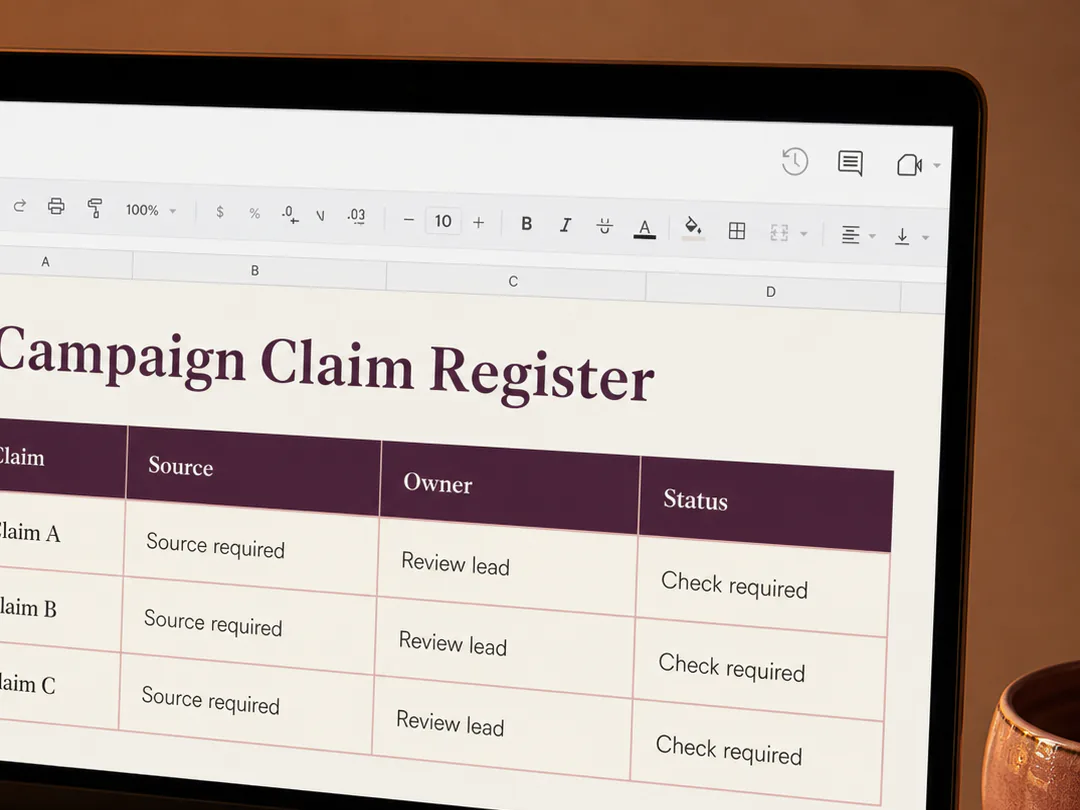
Statistics, product statements, testimonials, dates, pricing and public-interest information are linked to approved sources or a named stakeholder who can confirm them.
Where confirmation is still outstanding, the campaign is labelled accordingly. An attractive layout does not turn an unverified statement into an approved claim.
Bring the moving parts into one delivery process.
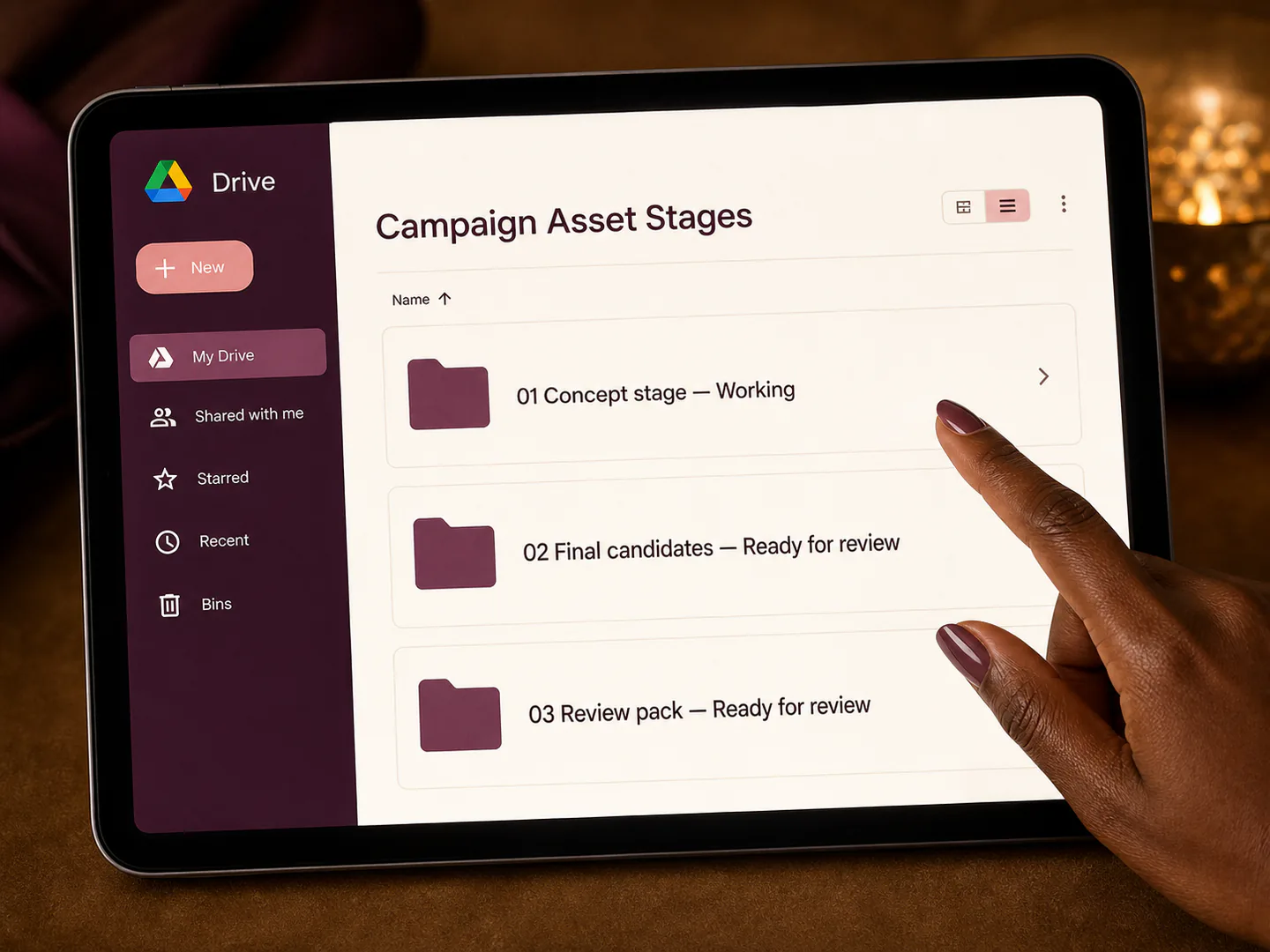
I can prepare a multimedia campaign for structured review by consolidating the brief, source evidence, asset status, version record, accessibility checks and the exact decisions stakeholders need to make.
Section 04
Control four: the asset set matches the review stage
An early concept review may use representative mock-ups. A final review requires complete copy, correct images, captions, calls to action and channel formats. I state what is real, what is provisional and what is outside the current decision.
This prevents stakeholders from approving a concept while assuming they have approved details that were never presented.
Section 05
Control five: the version and change history are clear
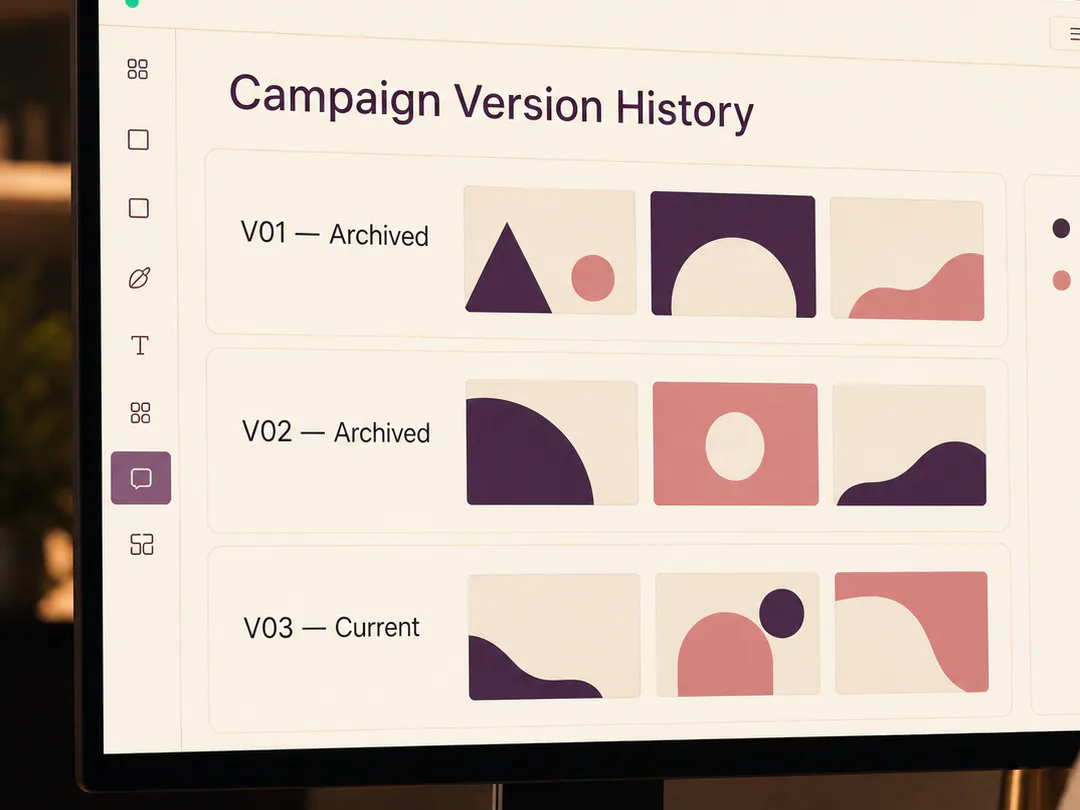
I label the current version, review date and material changes since the previous round. Older options are removed from the primary review view unless comparison is required.
The feedback record shows which issues were accepted, rejected or still need a decision, making the next round traceable.
Section 06
Control six: accessibility and channel realities are represented
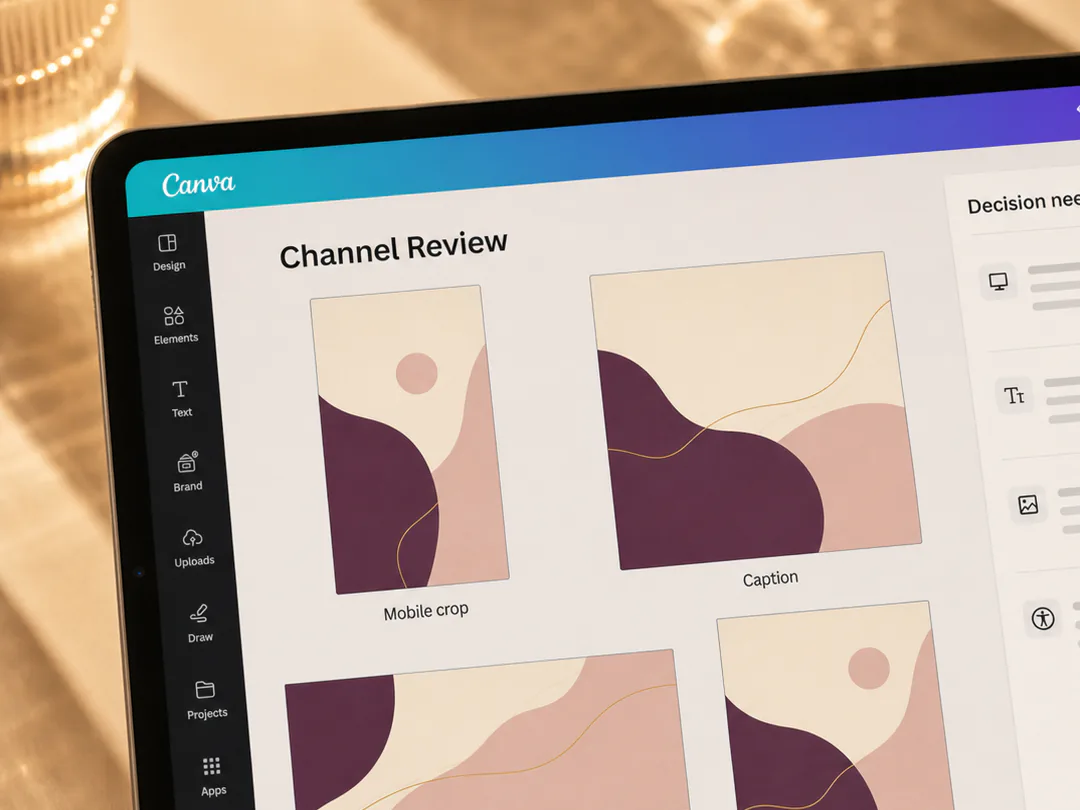
I include captions, alt-text direction, readable type, contrast, safe areas, mobile crops and sound-off behaviour where relevant. A campaign is not ready for review if the audience cannot reliably access the message in its intended context.
Stakeholders should see the campaign as customers will encounter it, not only as a beautiful widescreen master.
Section 07
Control seven: the requested decision is explicit
The review invitation and pack state whether stakeholders must approve the concept, message, final assets, release date or a specific exception. The final approver and response deadline are named.
A review concludes with a recorded decision, actions, owners and the next gate. Silence does not become accidental approval.
Turn this insight into an organised next step.
A well-prepared review respects every participant. Creators receive focused feedback, decision-makers receive the evidence they need and the customer avoids paying for repeated diagnosis of the same project gaps.
When review cycles are multiplying without clear progress, I can help reset the campaign around one decision path and a controlled route to approval.
Start with the short version: the outcome, intended audience, deadline, available assets, stakeholders and the delivery problem that is currently blocking progress.
Sources and related reading
- PMI — Step Up: Redefining the Path to Project Success with M.O.R.E. (December 2025) — Project success increasingly depends on ownership, perception management, reassessment and a wider view of value.
- W3C — Web Content Accessibility Guidelines (WCAG) 2.2 Overview — WCAG organises accessible content around perceptible, operable, understandable and robust experiences.