AI-Assisted Project Delivery · 2026-02-02 · 6 min read
When more work can be drafted, analysed or delegated at speed, the coordination problem does not disappear. It becomes more demanding because decisions, sources, permissions and review must keep pace.
AI can summarise a meeting, create a first-pass schedule, organise research and generate options in minutes. Those capabilities are useful, but they do not remove the project-management problem. They increase the number of outputs, choices and dependencies that a team can create before the organisation has decided what should happen next.
Microsoft’s 2025 Work Trend Index described a move towards human-agent teams. OpenAI’s newly announced Codex app makes the same management shift visible in a technical environment: the challenge becomes how people direct, supervise and review parallel work rather than whether an agent can produce something at all.
For me, this raises the professional standard. A project manager must design the conditions under which AI-assisted work is useful, reviewable and connected to a customer outcome.
Key takeaways
- AI accelerates output, but project managers must still define purpose and acceptance.
- Parallel work requires stronger coordination, not less.
- Source quality, permissions and human review belong in the project plan.
- Automation should reduce low-value effort while preserving meaningful decisions.
- A customer should never have to guess who is accountable for an AI-assisted deliverable.
Section 01
The bottleneck moves from production to judgement
When drafting becomes faster, teams can generate more concepts, reports and variants than they can responsibly evaluate. The constraint shifts towards selection, prioritisation and decision-making.
I respond by defining the decision criteria before inviting more output. The question is not “What else can the tool create?” It is “Which evidence and outcome will tell us that one option is worth pursuing?”

Section 02
Every agent or tool needs a bounded brief
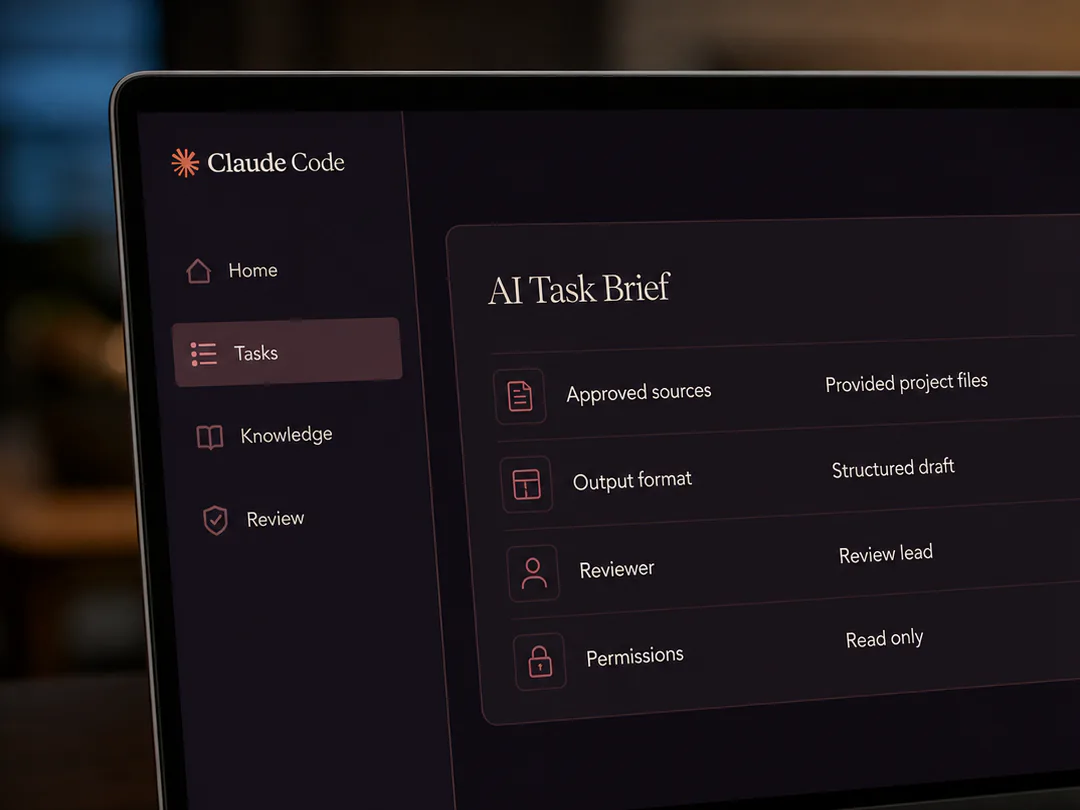
An AI task should have an objective, permitted sources, output format, constraints and a named reviewer. Without those boundaries, a polished response can quietly introduce new assumptions or use information that was never approved for the project.
I treat the tool as a contributor inside the workflow. It receives only the context required for the task and does not acquire authority simply because it can act quickly.
Section 03
Parallel work needs one coordination view
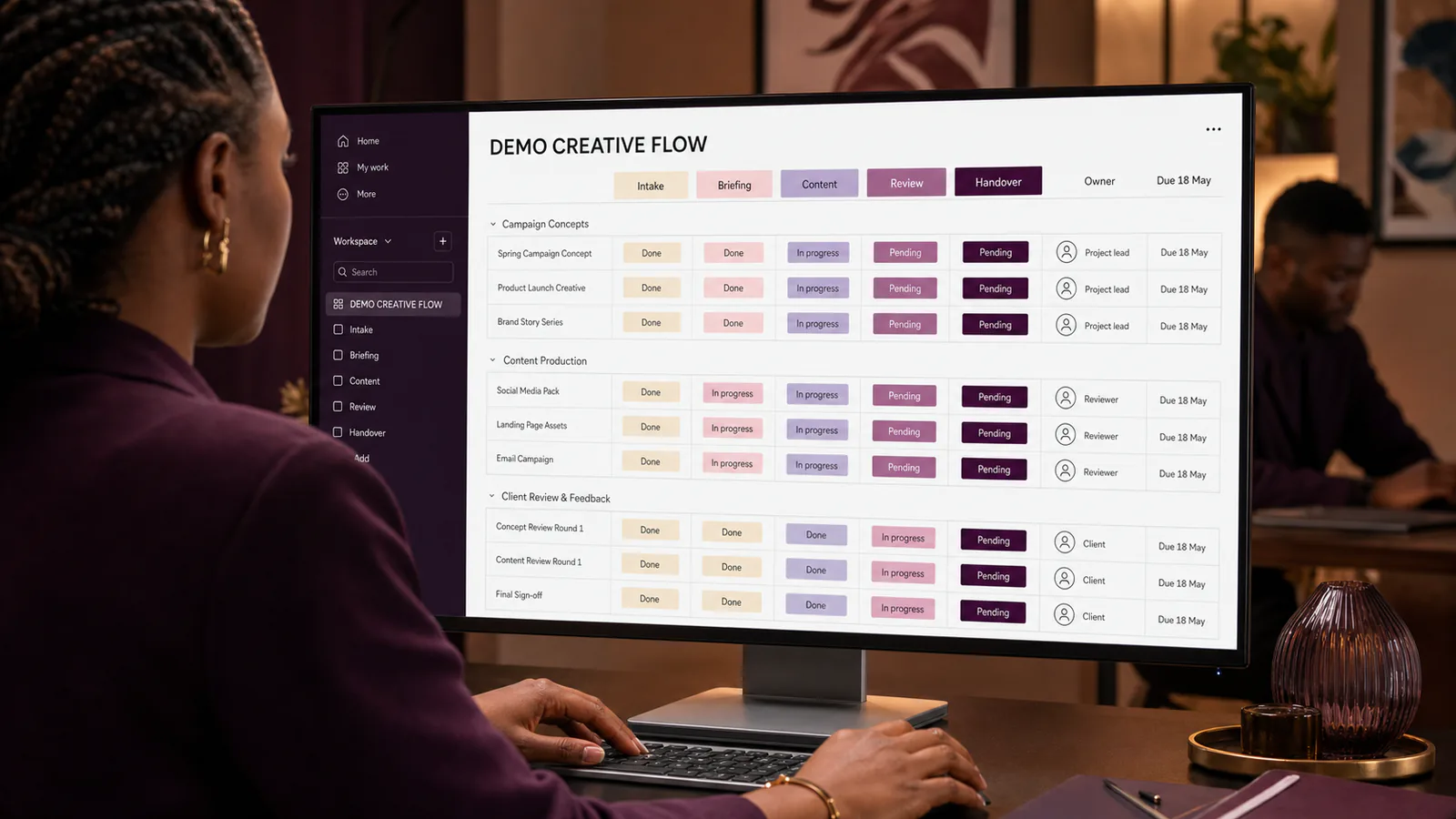
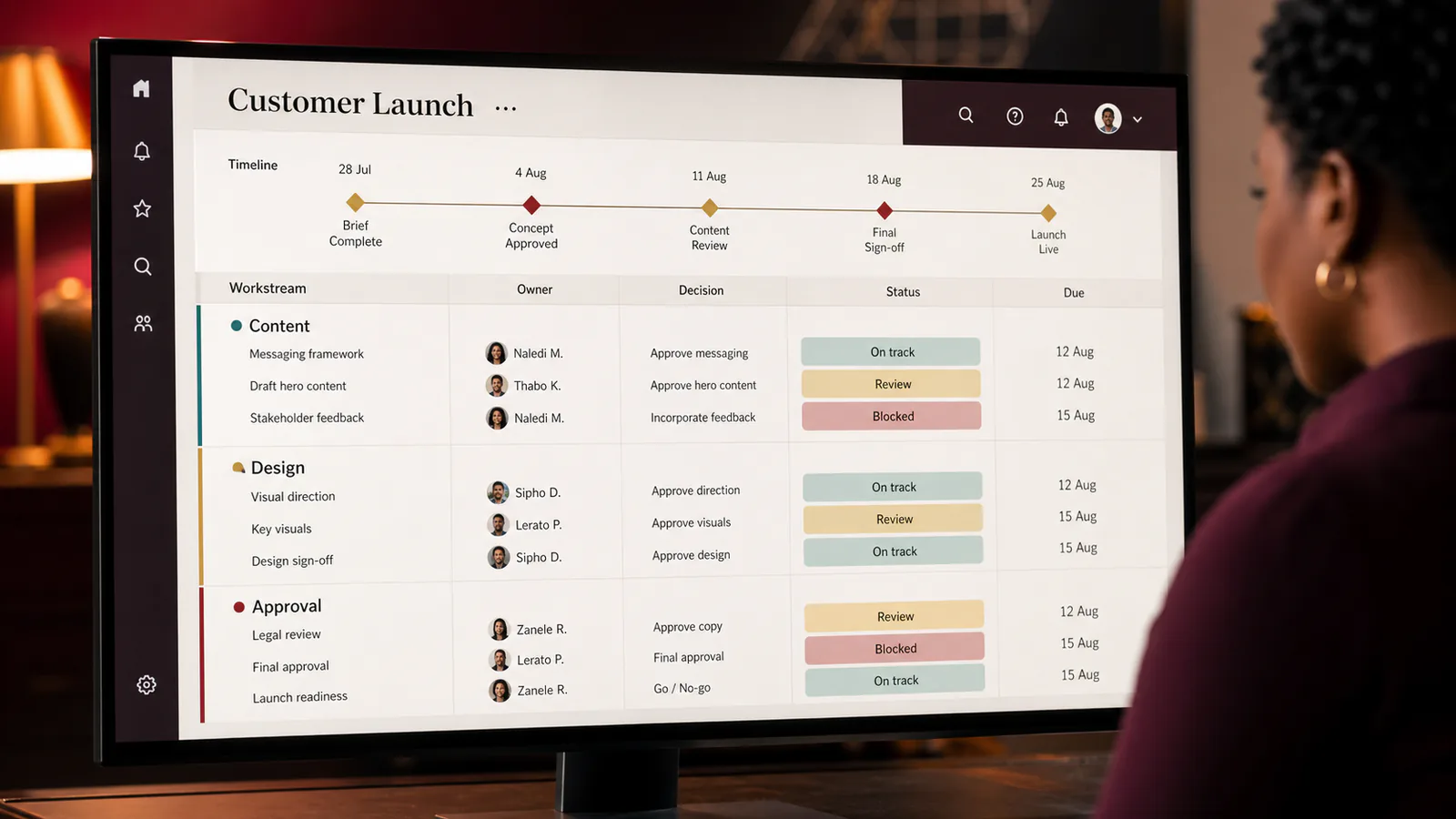
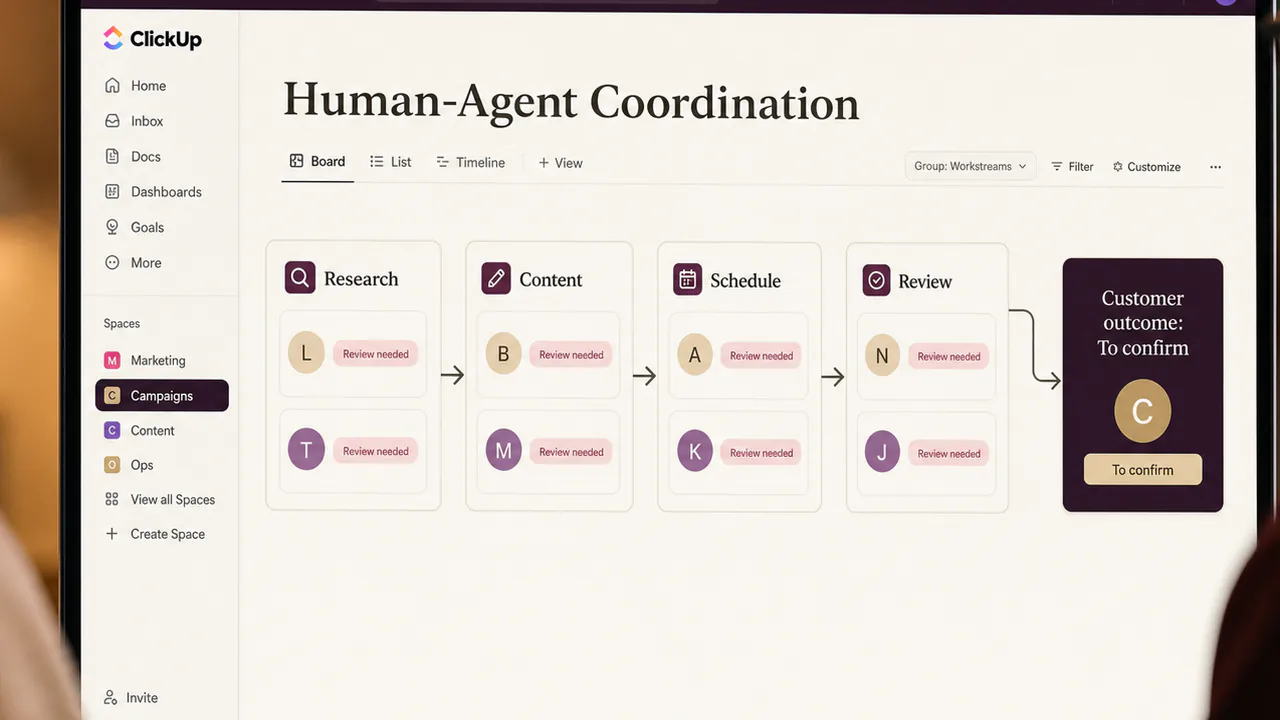
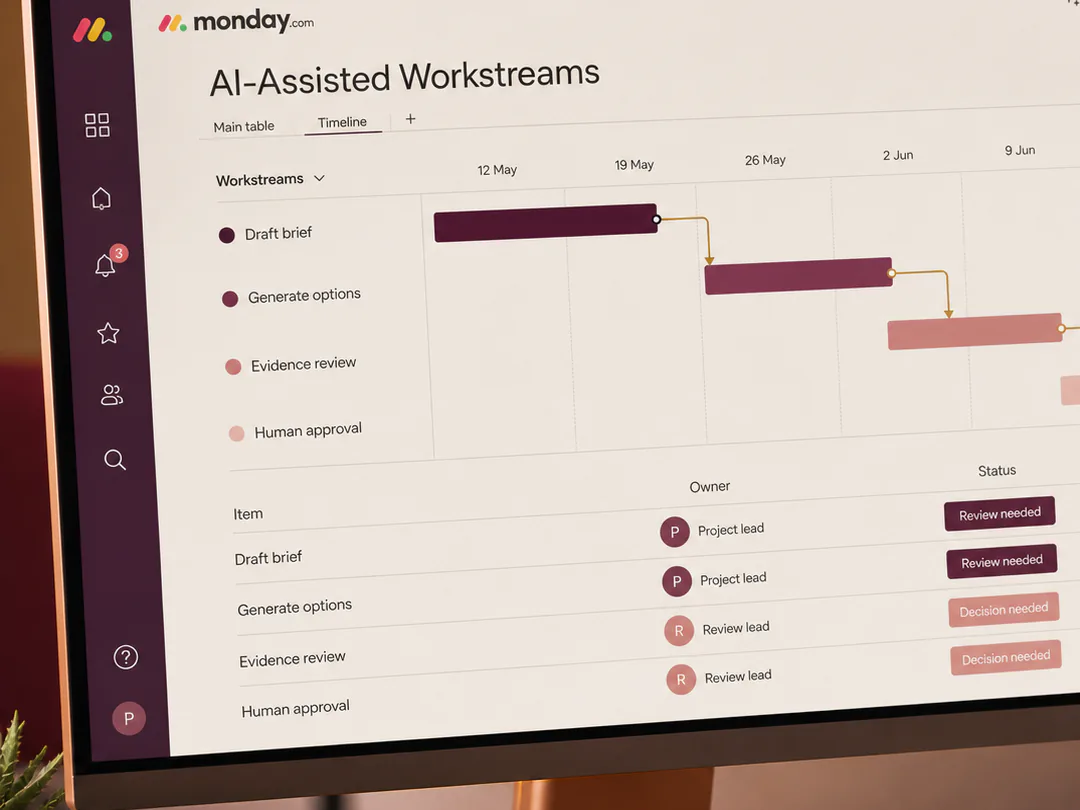
Several AI-assisted tasks may run at the same time: research, content outlines, data checks, presentation structures or asset preparation. The project still needs one place where the team can see their purpose, owner, status, dependencies and review decision.
This is how I prevent speed from turning into duplication. Parallel activity is valuable only when its outputs can be compared, integrated and either accepted or stopped.
Bring the moving parts into one delivery process.
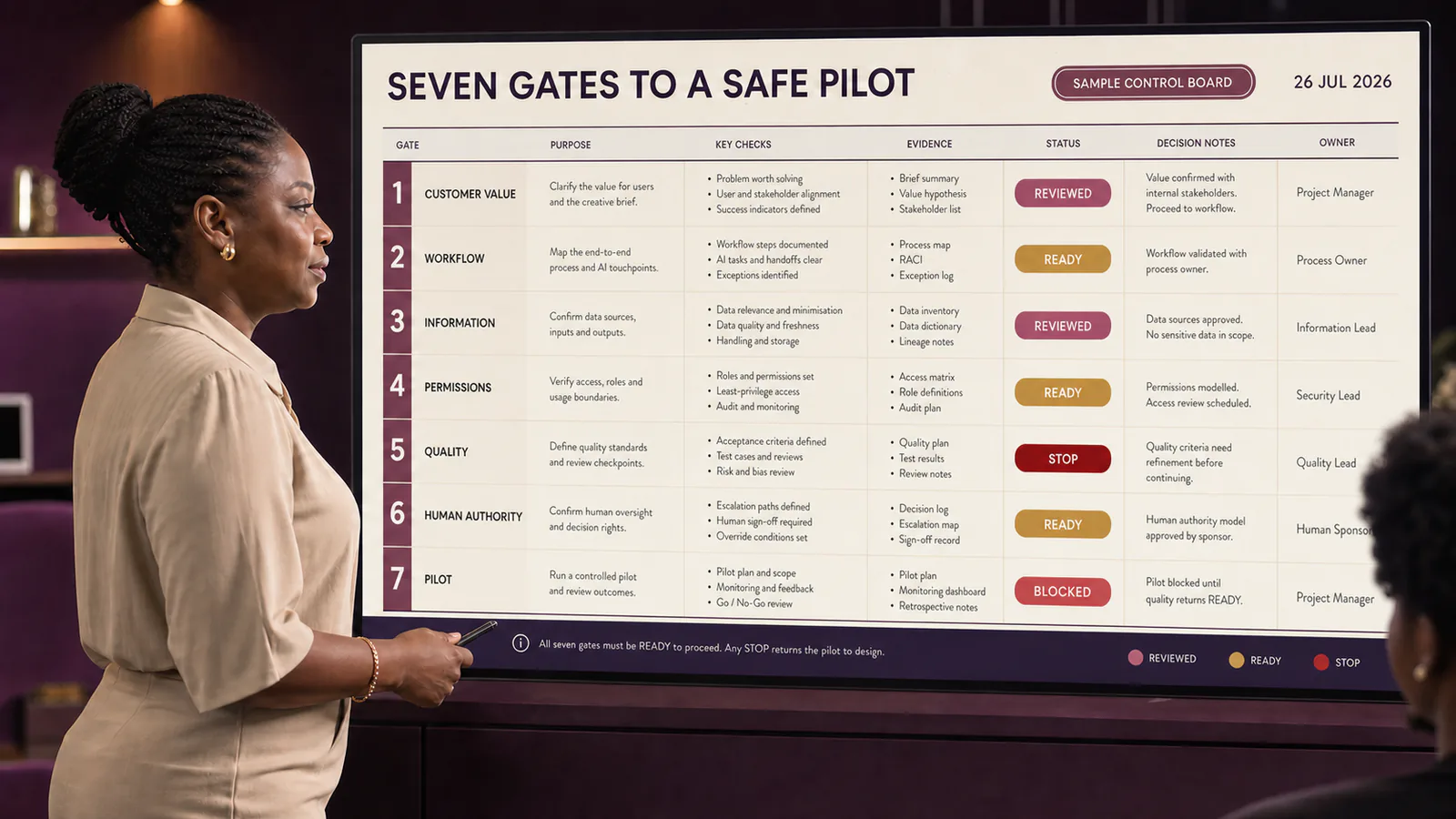
I can map where AI-assisted research, preparation or automation fits inside a creative or digital project, then define the brief, access boundary, review gate, decision owner and handover record around it.
Section 04
Permission is a project-management concern
Tool access, source documents, customer data and publishing rights are not only technical settings. They are project constraints. I ask what the tool may read, change, share or trigger, and who may approve a broader level of access.
The safest workflow grants the least access required, separates draft from release and makes escalation visible when a task needs something outside its approved boundary.
Section 05
Human review must be designed, not assumed
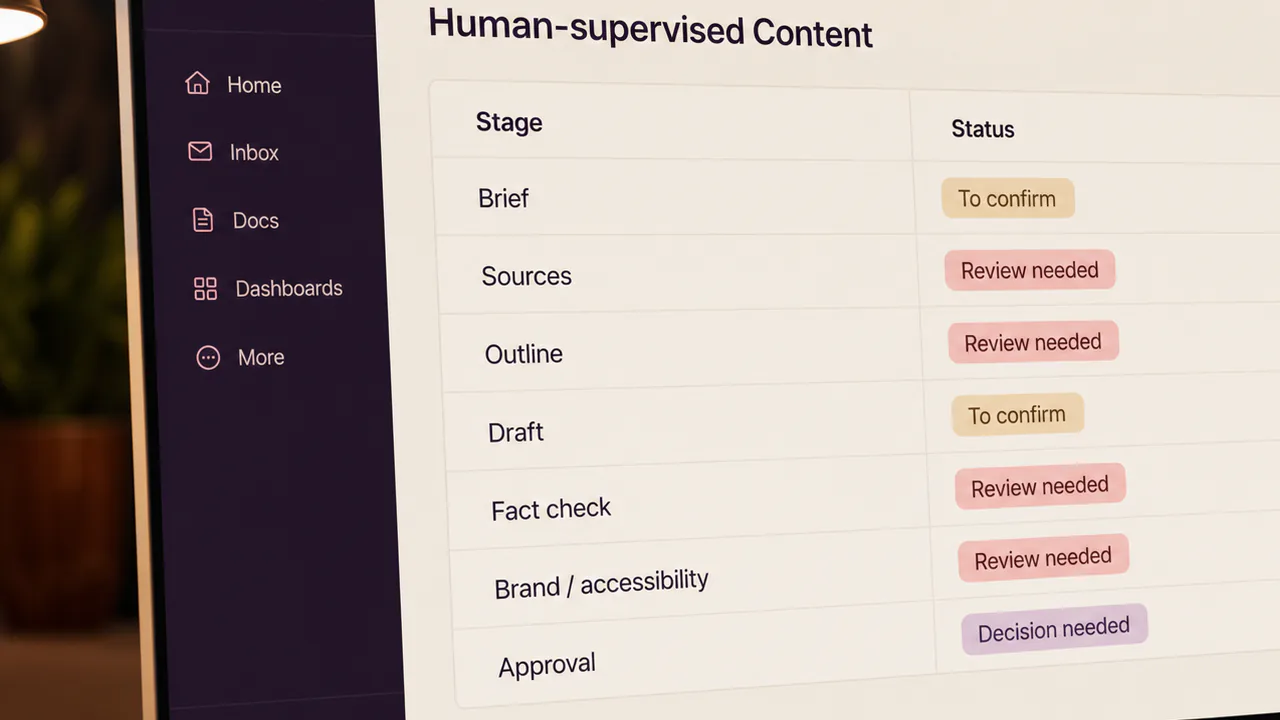
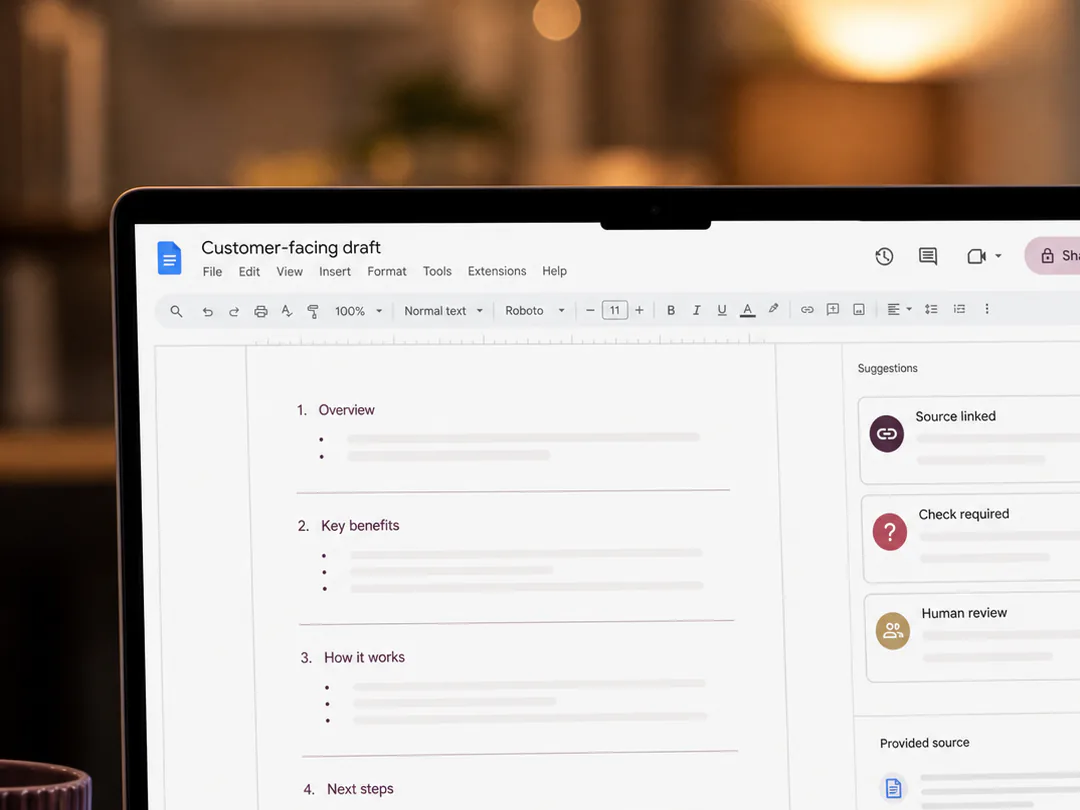
A label saying “human in the loop” is weak if the reviewer is rushed, lacks context or does not know what to check. I define the reviewer, evidence pack, decision window and rejection route.
For customer-facing content, the review includes factual accuracy, tone, brand alignment, accessibility, rights, personal information and whether the output genuinely serves the intended audience.
Section 06
The project record should distinguish evidence from generation
Research sources, customer requirements and approved facts should remain separate from generated summaries or creative options. I keep that distinction visible so reviewers can trace claims and avoid treating a generated sentence as source evidence.
This also improves handover. The customer receives not only the final output but an understandable record of what informed it.
Section 07
AI value appears when the delivery system improves
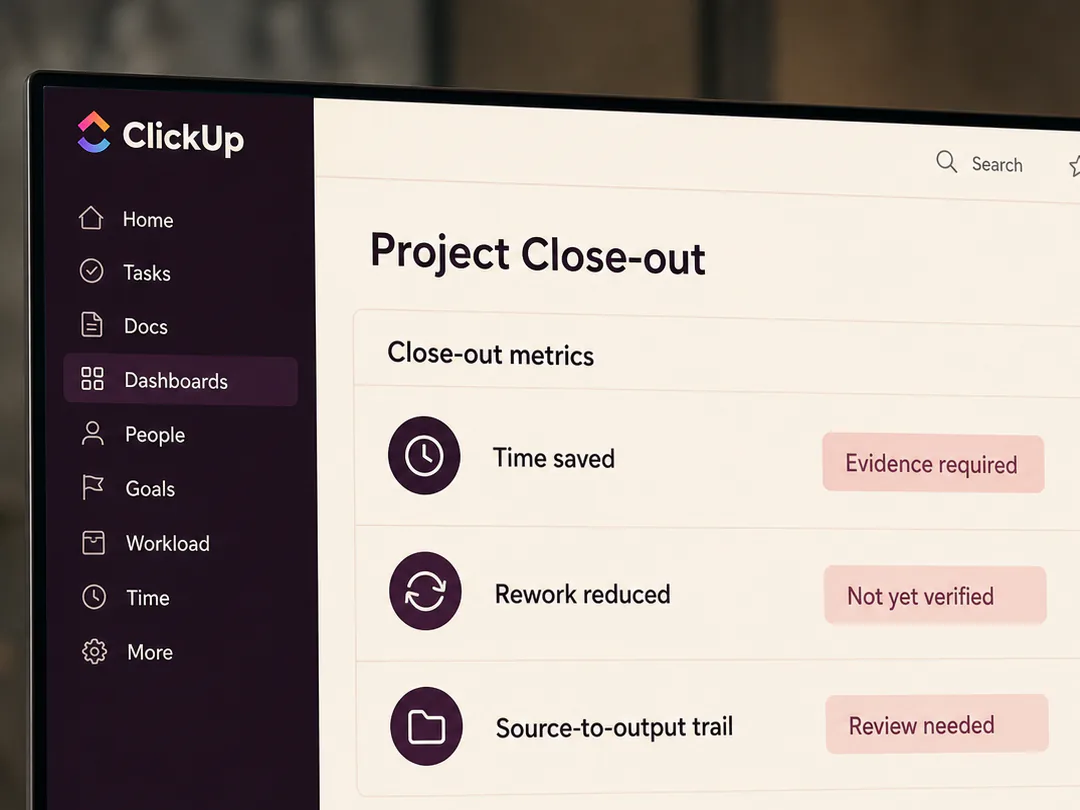
I measure whether AI reduces waiting, repeated preparation, administrative friction or avoidable rework. Producing more drafts is not automatically a benefit if review time, confusion or risk increases.
The useful outcome is a better project: clearer decisions, faster access to reliable information, more time for creative judgement and a stronger final handover.
Turn this insight into an organised next step.
AI does not make project management unnecessary. It exposes weak project management faster. Unclear requirements, scattered sources and vague approval routes become more expensive when tools can multiply work at speed.
A disciplined project manager turns that speed into controlled progress. I help organisations use AI as a supervised capability while keeping customer outcomes and human accountability visible.
Start with the short version: the outcome, intended audience, deadline, available assets, stakeholders and the delivery problem that is currently blocking progress.
Sources and related reading
- Microsoft — 2025 Work Trend Index: The Frontier Firm Is Born — Human-agent teams increase the need for direction, supervision, workflow design and judgement.
- OpenAI — Introducing the Codex App (2 February 2026) — The app introduced supervision of multiple agents, parallel tasks, isolated work and reviewable changes.
- PMI — Step Up: Redefining the Path to Project Success with M.O.R.E. (December 2025) — Project success increasingly depends on ownership, perception management, reassessment and a wider view of value.